
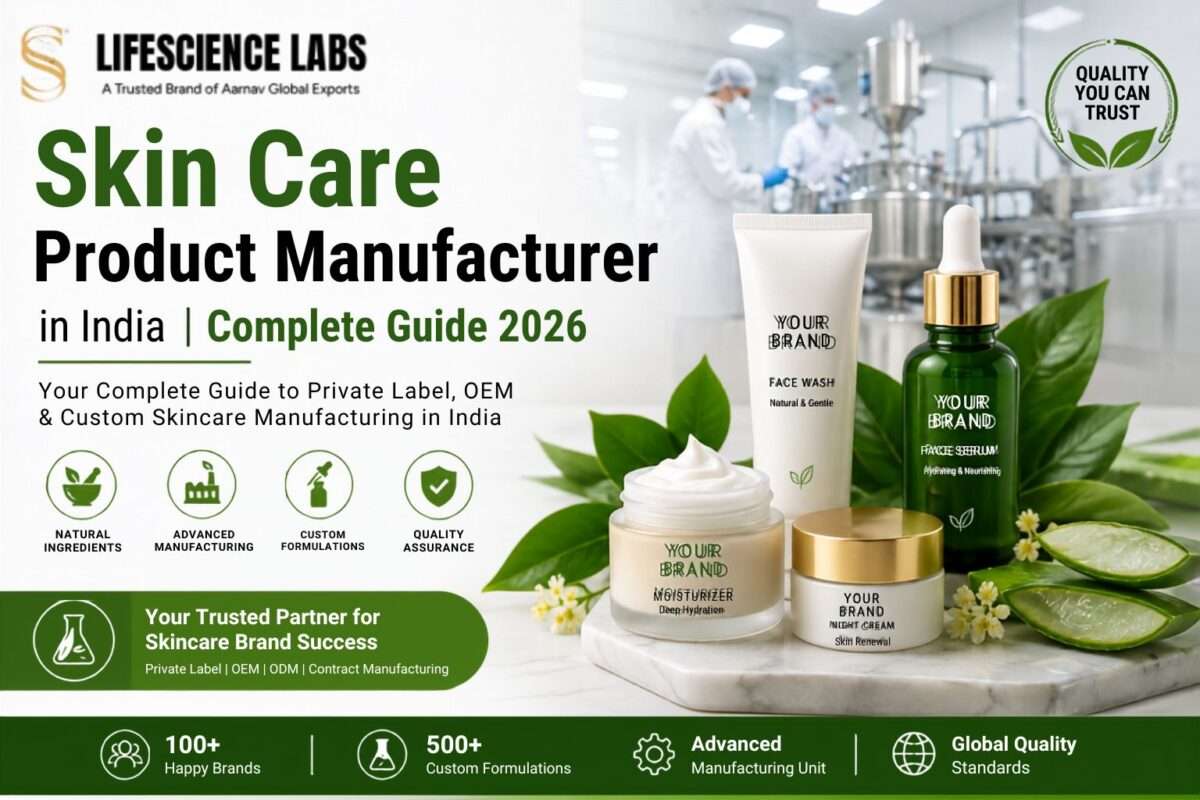
Skin Care Product Manufacturer: Complete Guide to Starting Your Skincare Range
Starting a skincare brand can look simple from the outside: choose a few products, create attractive packaging, add your brand name, and start selling. In reality, building a skincare range requires careful decisions about the target customer, product selection, formulation direction, samples, packaging, quantities, manufacturing, pricing, and future expansion.
Choosing the right Skin Care Product Manufacturer is therefore one of the most important steps in the process. A suitable manufacturing partner should match your product requirements and help you understand the manufacturing options available for the type of skincare range you want to build.
Whether you are planning a small startup range or expanding an existing beauty business, having a clear plan before production can help you avoid unnecessary products, confusing positioning, excess inventory, and repeated changes during development.
This guide explains the complete process—from developing your initial skincare idea to preparing for samples, packaging, production, launch, and repeat orders.
What Does a Skin Care Product Manufacturer Do?
A Skin Care Product Manufacturer manufactures skincare products for beauty and personal care brands according to an agreed manufacturing model and product requirements.
Depending on the manufacturer’s capabilities, the product range may include face cleansers, serums, moisturizers, creams, toners, sunscreens, masks, scrubs, body-care products, and other skincare solutions. Services may also differ according to whether a business requires private label, OEM, ODM, third-party, or customized manufacturing.
For a beauty brand, this means the manufacturer should be evaluated according to the products the business actually wants to launch—not simply according to the size of its catalogue.
A startup planning a focused facial-care range, for example, has very different requirements from an established brand developing multiple skincare and personal-care categories.
Brands exploring skincare production can review the available Skin Care Product Manufacturer solutions from SS LifeScience Labs according to their product and business requirements.
Why Is Choosing the Right Manufacturer Important?
Your manufacturer is responsible for turning an approved product concept into physical products that customers will eventually use.
That makes manufacturing much more than a purchasing decision.
Product requirements, available customization, minimum quantities, samples, packaging, commercial terms, production requirements, and repeat-order planning can all influence whether a manufacturing arrangement is suitable for your business.
The lowest quotation is therefore not automatically the best option.
A manufacturer offering an attractive price but unsuitable MOQ, limited product capability, or a manufacturing arrangement that does not match your business model may ultimately be less useful than a supplier whose capabilities align with your actual plan.
Before comparing suppliers, understand what your own brand needs first.
Step 1: Define Your Target Customer Before Selecting Products
One of the most common mistakes new skincare businesses can make is starting with products rather than customers.
Instead of asking:
“Which skincare products should I sell?”
Start with:
“Who am I building these products for?”
Your target audience might include customers looking for simple everyday skincare, premium skincare, ingredient-focused products, products for oily or dry skin, age-specific skincare, or another clearly defined segment.
Once the customer is clear, product selection becomes easier.
For example, a simple everyday facial-care range might start with:
Cleanser → Toner → Serum → Moisturizer → Sunscreen
A brand does not necessarily need ten or twenty products at launch.
A smaller range with a clear purpose can be easier for customers to understand and easier for the business to market, stock, and manage.
If you are still researching which categories may fit your audience, the guide Top Trending Skincare and Haircare Products for 2025: What Brands Should Be Offering can provide additional product ideas before finalizing your range.
Step 2: Create a Clear Skincare Product Brief
Once you understand your target customer, create a product brief before approaching manufacturers.
A product brief does not need to contain every technical detail. Its purpose is to explain what you are trying to create clearly enough for meaningful discussions to begin.
Include information such as:
| Requirement | What You Should Define |
|---|---|
| Target Customer | Who will use the product? |
| Product Category | Cleanser, serum, cream, sunscreen, etc. |
| Positioning | Affordable, mid-range, premium, etc. |
| Product Direction | What do you want the product to offer? |
| Quantity | Approximate initial requirement |
| Packaging | Bottle, tube, jar, pump, etc. |
| Customization | What would you like to discuss? |
| Launch Plan | Approximate target timeline |
This is much more useful than simply asking a manufacturer to send its complete catalogue and price list.
A clear brief also makes it easier to compare manufacturers because you can discuss similar requirements with each shortlisted supplier.
Step 3: Decide Which Skincare Products to Launch First
A large catalogue may look impressive, but every additional SKU requires inventory, packaging, artwork, product content, marketing, and eventually repeat-order management.
New brands should therefore think carefully about the role of every product.
Ask three questions:
Does my target customer need it?
Does it fit naturally into my range?
Can I realistically market and maintain inventory for it?
For example, a new facial skincare brand might start with four products:
Face Cleanser – everyday cleansing
Face Serum – targeted step
Moisturizer – hydration and routine support
Sunscreen – daytime protection
Once the brand receives real sales and customer feedback, additional products can be introduced more strategically.
This focused approach is particularly useful when working with a manufacturer because quantities and packaging need to be planned for every separate SKU.
Step 4: Understand Private Label, OEM and ODM Options
Not every skincare manufacturing arrangement works in exactly the same way.
Private label manufacturing generally allows a business to sell products under its own brand using manufacturing options provided by a supplier.
OEM manufacturing typically involves a manufacturer producing products for another company according to agreed requirements.
ODM arrangements may involve broader product development capabilities, depending on the manufacturer.
The exact scope can differ from one company to another. Therefore, never select a manufacturing model only because a particular term sounds appropriate.
Ask what is actually included.
For example, understand what can be customized, how samples work, what packaging responsibilities apply, what the MOQ is, and what needs to be finalized before production.
For a detailed comparison of these models, read Private Label Cosmetics vs OEM vs ODM Cosmetics: Which Manufacturing Model Is Right for Your Brand?
Step 5: Decide How Much Customization You Actually Need
Customization can help a skincare brand create a more specific product experience, but more customization is not automatically better.
Every requested change should have a reason.
Depending on the manufacturing arrangement and available capabilities, discussions may involve formulation direction, texture, fragrance, product experience, packaging, or other project requirements.
Instead of saying:
“I want something completely unique.”
Give the manufacturer useful direction about the intended customer and product.
For example:
“We are developing a lightweight facial product for customers who prefer a simple daytime skincare routine. We want to discuss suitable product and packaging options for this positioning.”
This gives the manufacturer more useful information than requesting uniqueness without explaining the purpose behind it.
Step 6: Understand MOQ Before Finalizing Your Product Range
MOQ means Minimum Order Quantity—the minimum quantity required for a particular product or manufacturing arrangement.
MOQ is especially important for new brands because it affects inventory and initial investment.
Imagine launching eight products at the same time. Even if each individual MOQ looks manageable, the combined inventory across all eight products can become significant.
This is another reason focused product ranges can be useful.
Before confirming your range, ask about the MOQ for each SKU and understand whether packaging or customization creates additional quantity requirements.
Businesses specifically planning branded skincare ranges can also explore Private Label Cosmetics Supplier options to understand how private label manufacturing may fit their product plans.
Step 7: Take the Sample Stage Seriously
Samples allow brands to evaluate a product before approving bulk manufacturing.
Do not treat this stage as a formality.
Evaluate the product according to the criteria relevant to your project. This might include appearance, texture, fragrance, packaging compatibility, product experience, and whether the sample aligns with the agreed product direction.
Keep feedback organized.
Instead of giving vague feedback such as:
“Make it better.”
Provide clear observations about what you want reviewed.
If multiple people are involved in the brand, consolidate their feedback before sending it to the manufacturer. Contradictory feedback from different team members can create unnecessary confusion.
Once the required product is agreed upon, make sure you understand what is being approved for the next stage.
Step 8: Choose Packaging According to the Product
Packaging influences both presentation and usability.
A beautiful package is not useful if it creates a poor customer experience.
Consider whether a bottle, jar, tube, pump, dropper, or another format is suitable for the product and intended positioning.
You should also consider practical factors such as storage, transportation, label space, usability, and how the finished product will appear online.
For digital-first brands, packaging often needs to work in two environments:
In the customer’s hand and on the customer’s screen.
Product photographs, marketplace listings, social media, advertisements, and website pages all rely heavily on visual presentation.
However, avoid choosing packaging purely because it looks premium. The final choice should make sense for the product, customer, brand positioning, and overall commercial plan.
Step 9: Understand the Complete Cost, Not Just Manufacturing Price
When comparing manufacturing options, brands should understand what is and is not included in the quotation.
The product manufacturing cost may be only one component of the finished product.
Depending on your arrangement, other costs may involve packaging, labels, printing, boxes, product development or samples, transportation, and other agreed requirements.
Create a simple costing sheet:
| Cost Area | Confirm Before Production |
|---|---|
| Product Manufacturing | Included cost |
| Primary Packaging | Bottle/tube/jar etc. |
| Label & Printing | Applicable charges |
| Outer Packaging | If required |
| Development/Samples | If applicable |
| Transportation | Confirm separately |
| Other Costs | Any agreed additional requirement |
Then estimate the total cost per finished unit.
This provides a much better foundation for pricing decisions than looking only at the manufacturing quotation.
Brands wanting a broader understanding of manufacturer selection can also read How to Choose the Best Private Label Cosmetics Supplier in India 2026 Complete Buyer’s Guide.
Step 10: Review Everything Before Bulk Production
Before approving bulk manufacturing, review all important agreed details.
This can include the approved product/sample, quantity, packaging, artwork, customization requirements, commercial information, and other project-specific requirements.
Do not assume that a detail discussed weeks earlier is automatically understood exactly the same way by everyone involved.
A final written review can help keep the brand and manufacturer aligned.
A practical approval flow might look like this:
Product Idea → Brief → Manufacturing Discussion → Sample → Feedback → Final Sample → Packaging → Artwork → Commercial Confirmation → Production Approval
The exact process can vary, but having a structured workflow reduces unnecessary confusion.
Step 11: Prepare Your Marketing Before Products Are Ready
Manufacturing and marketing should not operate as completely separate projects.
While production is progressing, the brand can prepare its website, product descriptions, marketplace listings, social media content, launch assets, product photography plan, FAQs, and customer-support information.
This helps avoid a situation where finished inventory arrives but the business is not ready to sell it.
Product positioning should also remain consistent.
If the brand developed a product for a particular target customer and need, its website, packaging, advertisements, and social content should communicate the same idea.
Businesses researching the broader manufacturing ecosystem may find Cosmetic Products Manufacturer in India | OEM Cosmetic Manufacturer useful for understanding how cosmetic manufacturing supports different beauty product categories.
Step 12: Use Customer Feedback After Launch
Launching the product is not the end of product development.
Once customers begin using the range, brands receive real-world information.
Track questions such as:
Which product sells fastest?
Which receives repeat purchases?
What do customers frequently ask?
Which products are commonly purchased together?
Are the same packaging concerns appearing repeatedly?
Which product gets the strongest positive feedback?
Avoid making major decisions because of one isolated comment. Look for repeated patterns.
Customer feedback can help determine which products deserve larger repeat orders, which need further review, and what new products customers may actually want.
Step 13: Plan Repeat Manufacturing Before You Run Out of Stock
Inventory planning becomes increasingly important as a skincare brand grows.
Do not wait until a successful product reaches zero stock before thinking about the next order.
Track sales velocity, available inventory, expected demand, marketing campaigns, and the requirements for repeat manufacturing.
Over time, the question should shift from:
“How many units should we order?”
to:
“Based on sales and expected demand, when should we reorder?”
This creates a more structured relationship between sales, inventory, and manufacturing.
For brands evaluating outsourced production as they scale, 3rd Party Cosmetic Manufacturing in India | OEM Cosmetics provides additional information about third-party and OEM manufacturing approaches.
How Do You Choose the Right Skin Care Product Manufacturer?
The right Skin Care Product Manufacturer should be selected according to your actual business and product requirements rather than a single factor such as price.
Compare shortlisted manufacturers using consistent criteria:
| Factor | What to Ask |
|---|---|
| Product Capability | Can they manufacture the products you need? |
| Manufacturing Model | Private label, OEM, ODM or another arrangement? |
| MOQ | Does it fit your initial plan? |
| Samples | What is the sampling process? |
| Customization | What options are actually available? |
| Packaging | What support/options are available? |
| Commercial Terms | What is included and excluded? |
| Production | What must be approved before manufacturing? |
| Repeat Orders | How are future requirements handled? |
| Communication | Are requirements clearly understood? |
The goal is not simply to find a manufacturer.
The goal is to find a manufacturing arrangement that makes sense for your product, customer, budget, inventory plan, and future growth.
When Should You Contact a Skin Care Product Manufacturer?
You should ideally begin manufacturer discussions after developing a basic product and business plan but before finalizing decisions that depend on manufacturing capabilities.
At minimum, know your target customer, desired product categories, approximate quantity, positioning, packaging direction, and expected launch period.
You do not need to know every technical detail.
A manufacturer discussion can help clarify what options are available, but the conversation becomes much more productive when the brand already understands what it is trying to achieve.
What Should You Ask Before Starting Skincare Manufacturing?
Before proceeding, ask questions such as:
- Which skincare categories can you manufacture?
- What is the MOQ for each product?
- How does sampling work?
- What customization options are available?
- What packaging options can be discussed?
- What information do you need from our brand?
- What needs to be approved before bulk manufacturing?
- What costs should we consider beyond the product itself?
- How are repeat orders handled?
- What manufacturing model best fits our requirements?
Clear questions produce more useful answers.
Frequently Asked Questions
What is a Skin Care Product Manufacturer?
A Skin Care Product Manufacturer produces skincare products for beauty and personal care brands according to agreed product and manufacturing requirements. Depending on its capabilities, a manufacturer may work with products such as cleansers, serums, creams, moisturizers, toners, sunscreens, masks, and other skincare categories.
Why should I use a skincare manufacturer for my brand?
Working with a skincare manufacturer allows a business to access existing manufacturing capabilities rather than establishing its own production infrastructure. Depending on the arrangement, brands may also be able to discuss samples, customization, packaging, private label, OEM, ODM, or related production requirements.
When should I approach a skincare manufacturer?
Approach manufacturers once you have a reasonably clear understanding of your target customer, product categories, positioning, approximate quantity, and launch plan. You do not need every detail finalized, but a clear product brief will make discussions more productive.
What is private label skincare manufacturing?
Private label skincare manufacturing allows a business to sell skincare products under its own brand through a manufacturing arrangement with a supplier. Available products, customization, MOQ, packaging, and other requirements vary between manufacturers.
What does MOQ mean for skincare products?
MOQ stands for Minimum Order Quantity. It represents the minimum quantity required for a particular product or manufacturing arrangement. Brands should understand MOQ for every planned SKU because it directly affects inventory and initial investment.
Can a startup work with a Skin Care Product Manufacturer?
Yes. Startups can explore skincare manufacturing, including private label and other available models. However, new businesses should carefully consider MOQ, product selection, packaging, total inventory investment, marketing budget, and expected customer demand before approving production.
How many skincare products should a new brand launch?
There is no universal number. A focused range of complementary products may be easier for a new business to market and manage than a very large catalogue. Product selection should be based on target customers, positioning, available budget, and manufacturing requirements.
What should I check before approving bulk skincare production?
Review the approved product or sample, final quantity, packaging, artwork, customization, commercial information, and all other agreed requirements. Any unclear details should be resolved before final production approval.
Final Checklist for Starting Your Skincare Range
Before moving forward, make sure you have completed these stages:
Target Customer → Product Selection → Product Brief → Manufacturer Research → Manufacturing Model → MOQ → Samples → Packaging → Costing → Artwork → Final Approval → Production → Marketing → Customer Feedback → Repeat Order
Starting a skincare range becomes much easier to manage when each decision is made in the correct order.
Conclusion
Building a skincare brand requires more than selecting popular products and creating attractive packaging. Successful planning begins with understanding the target customer and then building a focused product range around genuine needs.
A suitable Skin Care Product Manufacturer should match your product requirements, quantities, manufacturing model, customization needs, packaging direction, and future plans.
SS LifeScience Labs supports businesses exploring skincare, haircare, personal care, private label, OEM, ODM, and related cosmetic manufacturing solutions. Whether you are planning your first skincare range or expanding an existing beauty business, approaching manufacturing with a clear product brief, realistic inventory plan, structured approval process, and long-term strategy can help create a stronger foundation for growth.