
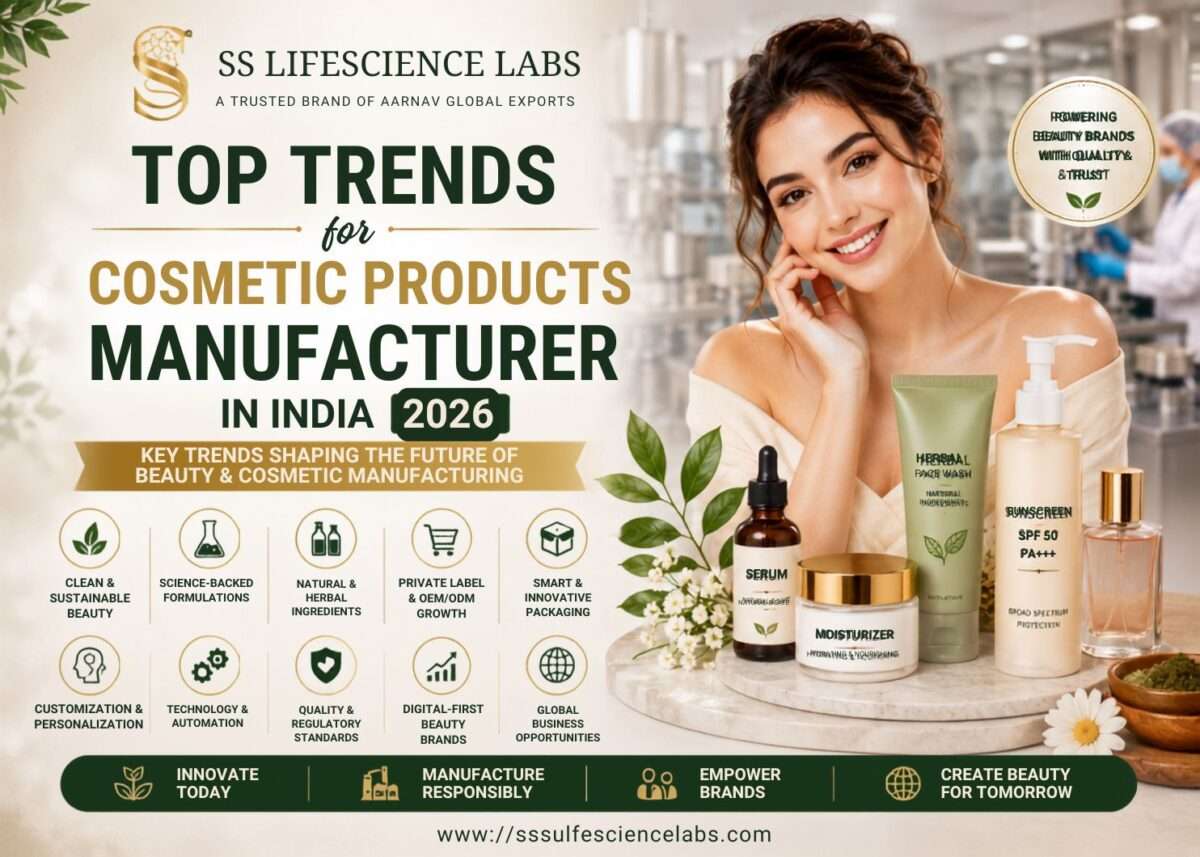
Top Trends Every Cosmetic Products Manufacturer in India Should Watch in 2026
India’s beauty and personal care market is changing quickly. Customers are no longer choosing products only because of attractive packaging or popular advertising. They are paying more attention to product quality, ingredients, performance, value for money, convenience, and whether a product actually fits their needs.
For every Cosmetic Products Manufacturer in India, this shift creates both an opportunity and a responsibility. Manufacturers need to understand what beauty brands and their customers are looking for now, while brands need manufacturing partners that can support product development, packaging, customization, and future growth.
India is also becoming increasingly important to the wider beauty industry. Recent industry research points to India as one of the more promising beauty growth markets, while new-age Indian consumer brands are expanding quickly with support from digital commerce, rapid product innovation, and changing consumer preferences.
For brands planning new launches in 2026, understanding these changes before starting production can help them make better decisions about products, positioning, packaging, and manufacturing.
What Is Changing in Cosmetic Manufacturing in India in 2026?
The biggest change is simple: customers expect more from every product they buy.
A beauty product now needs to do more than look good on a shelf. Customers increasingly want products that address specific needs and provide clear value. Industry research also indicates that product quality remains a major purchase consideration and that consumers are becoming more careful about whether beauty products justify their price.
This is affecting the way beauty brands plan their product ranges. Instead of launching many similar products, brands have stronger reasons to think about the exact customer problem each product is intended to address.
Manufacturers therefore need to understand not only production, but also the changing expectations behind the products brands want to develop.
Brands looking for manufacturing support can explore SS LifeScience Labs as a Cosmetic Products Manufacturer in India for skincare, haircare, personal care, OEM, private label, and related cosmetic manufacturing requirements.
Why Should Cosmetic Manufacturers Follow Beauty Trends?
Beauty trends influence what customers search for, what brands want to launch, and which product categories receive greater attention.
However, following trends does not mean copying every product that becomes popular on social media.
A useful trend should be evaluated from three sides: customer need, product relevance, and long-term business potential.
For example, if customers increasingly want simple skincare routines, a brand may benefit more from developing a focused cleanser, serum, moisturizer, and sunscreen range than from launching fifteen products without a clear purpose.
The strongest manufacturers and brands will be those that can separate short-lived hype from changes that genuinely influence buying behaviour.
1. Targeted Skincare Will Remain an Important Product Direction
Skincare continues to be one of the most important areas within beauty. McKinsey expects skincare to account for around 40% of the value of the global core beauty market by 2030, illustrating the category’s importance within the broader beauty industry.
But customers increasingly want more than a generic “skin cream.”
They often shop according to specific concerns and routines. This creates opportunities around products such as face cleansers, moisturizers, facial serums, sunscreens, and other targeted skincare formats.
For manufacturers, the important point is not simply to add more products to a catalogue. Product development should begin with questions such as:
- Who will use this product?
- What need is the product intended to address?
- Where will it fit within the customer’s routine?
- What price segment is the brand targeting?
- How will the brand explain the product clearly?
A Skincare Products Manufacturer in India that understands these questions can have more useful conversations with brands than one that simply provides a long catalogue.
Beauty businesses planning their next skincare or haircare range can also read Top Trending Skincare and Haircare Products for 2025: What Brands Should Be Offering for additional product ideas.
2. Product Performance and Value Are Becoming More Important
A major 2026 trend is not a particular ingredient or package. It is value.
Customers have access to reviews, ingredient discussions, comparison videos, creator content, marketplaces, and competing products at almost every price point.
That makes it harder for a product to succeed only because its branding looks premium.
McKinsey’s beauty research found that consumers are increasingly focused on whether products deliver, and product quality remains an important purchase consideration. It also found that consumers may be willing to spend differently depending on the category—for example, facial serums can be viewed differently from more basic products such as cleansers.
For beauty brands, this means product positioning should answer a simple question:
Why should the customer buy this product at this price?
A manufacturer can support this process by understanding the intended product, target segment, required product experience, packaging direction, and commercial requirements before bulk production begins.
3. Natural, Herbal and Ayurveda-Inspired Positioning Will Continue to Matter
Natural and herbal beauty has a long-standing presence in India, and it continues to influence product positioning. IBEF has highlighted consumer interest in organic, herbal and Ayurvedic cosmetic products, while more recent Indian beauty developments also show continued interest in Ayurveda-inspired premium skincare.
For manufacturers, however, “natural” should not simply become a marketing word added to every product.
Brands should clearly understand the product concept they want to create and avoid making vague or unsupported claims.
The better approach is to define the desired product direction first.
For example, is the brand building around traditional ingredients? Is it trying to create a modern skincare range with selected botanical ingredients? Is the positioning mass, premium, wellness-led, or something else?
Clear positioning helps the manufacturer and brand work toward the same product goal.
4. Private Label Manufacturing Will Remain Attractive to New Brands
Starting an independent manufacturing facility requires significant infrastructure and operational capability. For many beauty entrepreneurs, working with an existing manufacturer can therefore provide another route to launching products.
Private label manufacturing is particularly relevant to businesses that want products under their own brand while using available manufacturing capabilities.
But private label should not be treated as simply selecting a product and putting a logo on it.
Brands still need to understand their target customer, product category, quantity, packaging requirements, commercial expectations, and what level of customization is available.
Before beginning development, prepare a basic product brief containing:
| Requirement | What the Brand Should Define |
|---|---|
| Product | What you want to launch |
| Customer | Who will use it |
| Positioning | Mass, mid-range, premium, etc. |
| Quantity | Approximate initial requirement |
| Customization | What you want to discuss |
| Packaging | Preferred format |
| Launch Plan | Approximate timeline |
Businesses considering this model can explore Private Label Cosmetics Supplier solutions and understand the available options according to their product requirements.
5. Customization Will Become More Customer-Focused
Customization is useful when it creates a meaningful difference.
It becomes less useful when brands request changes simply because they want their product to be different from everything else.
The better question is:
What does our customer actually need from this product?
Customization might involve product experience, formulation direction, fragrance, texture, packaging, positioning, or other project-specific requirements.
The manufacturer and brand should discuss what is practical before repeatedly developing samples.
This can help prevent a common problem: making endless changes without knowing whether those changes make the final product better for the customer.
Brands that are unsure which manufacturing route fits their requirements can read Private Label Cosmetics vs OEM vs ODM Cosmetics: Which Manufacturing Model Is Right for Your Brand?
6. OEM and Third-Party Manufacturing Will Support Brand Expansion
OEM and third-party manufacturing remain relevant for businesses that want to outsource manufacturing rather than build their own production infrastructure.
These arrangements can be useful for both new and established brands, but the exact process and services can vary between manufacturers.
A brand should therefore avoid assuming that terms such as OEM, private label, ODM, and third-party manufacturing mean exactly the same thing everywhere.
Ask what the manufacturer actually provides.
Understand product development, quantities, samples, packaging responsibilities, customization, commercial requirements, and repeat production before approving a project.
For a deeper explanation of outsourced manufacturing, brands can review 3rd Party Cosmetic Manufacturing in India | OEM Cosmetics.
7. Focused Product Ranges Can Be Stronger Than Large Catalogues
A new beauty brand does not need twenty products on launch day.
A focused product range can often be easier to explain, market, manage, and reorder.
For example, a skincare brand might begin with:
Face Cleanser → Serum → Moisturizer → Sunscreen
This creates a simple routine customers can understand.
A haircare business might begin with:
Shampoo → Conditioner → Hair Serum
The right range will depend on the target customer and positioning, but the principle remains the same: every SKU should have a reason to exist.
India’s new-age consumer brands are benefiting from rapid innovation and the ability to address emerging preferences and underserved demand, according to recent IBEF reporting.
That does not mean brands should constantly launch more products. It means product development should respond to genuine market opportunities.
8. Packaging Will Be Part of the Customer Experience
Packaging is no longer only about making a product look attractive.
It affects usability, product presentation, shipping, storage, brand perception, and the overall experience customers have after purchasing.
A premium-looking bottle that is difficult to use can create a poor customer experience.
Similarly, unnecessarily complicated packaging may increase costs without creating meaningful value for the customer.
Brands should evaluate packaging alongside the product.
Ask:
- Is it suitable for the product?
- Is it easy for customers to use?
- Does it fit the brand’s positioning?
- Will the label remain readable?
- Is it practical for storage and shipping?
- Does the final product still make commercial sense?
This becomes particularly important for skincare products where pumps, bottles, jars, tubes, and other formats can create very different user experiences.
Brands developing skincare ranges can explore relevant Skin Care Product Manufacturer options while planning products and packaging together.
9. Premiumisation Will Continue, but Products Must Justify the Price
Premium beauty continues to attract attention in India. Recent investment and market developments point toward continued demand for premium beauty, wellbeing, and higher-value personal care products.
However, premium does not simply mean expensive packaging.
Customers increasingly question whether a product delivers enough value to justify its price.
For brands, premium positioning should therefore be built around the complete product experience.
That may include product quality, formulation direction, packaging, usability, brand communication, and customer service.
A ₹1,500 product should have a clear reason for costing more than a ₹500 alternative.
Manufacturing decisions need to support that positioning from the beginning.
10. Digital-First Beauty Brands Will Influence Manufacturing Decisions
Beauty discovery and purchasing are increasingly connected to digital channels.
McKinsey expects online channels to account for nearly one-third of global beauty sales by 2030, while recent Indian consumer-brand growth has also been linked to digital commerce and quick commerce.
This changes how brands should think about products.
A product may first be discovered through a short video, searched on Google, compared on a marketplace, reviewed by creators, and finally purchased online.
Packaging therefore needs to communicate clearly even through a small screen.
Product claims and positioning need to be understandable quickly.
Brands also need strong product information for websites, marketplaces, social content, and advertising.
Manufacturing and marketing may be different business functions, but the product needs to work for both.
11. Customer Feedback Will Play a Bigger Role in Repeat Manufacturing
The first production order should not be treated as the final version of a brand’s entire strategy.
Once products reach customers, brands gain information they did not have during development.
Which product sells fastest?
Which receives repeat purchases?
What questions do customers ask?
Do customers repeatedly mention packaging?
Which product receives the strongest reviews?
Brands should look for patterns rather than reacting to one comment.
If many customers raise the same issue, it may deserve attention before the next production run.
Likewise, if customers repeatedly praise a particular product feature, brands should think carefully before changing it.
Customer feedback turns manufacturing into an ongoing improvement process.
12. Repeat-Order Planning Will Become More Important as Brands Scale
Successful products need inventory.
Waiting until stock reaches zero before contacting the manufacturer can create unnecessary business pressure.
Brands should monitor sales velocity and available inventory and understand what is required for repeat production.
This is particularly important when marketing campaigns, marketplaces, distributors, or retail partners depend on consistent stock availability.
A growing brand should gradually move from:
“How much should we manufacture?”
to:
“Based on our sales, inventory, and expected demand, when should we manufacture again?”
That shift makes production planning more data-driven.
What Does a Cosmetic Products Manufacturer in India Do?
A Cosmetic Products Manufacturer in India produces beauty and personal care products for brands according to the manufacturing arrangement agreed between both parties. Depending on capabilities and project requirements, this can include skincare, haircare, personal care, private label, OEM, ODM, third-party manufacturing, product development, packaging coordination, and related production support.
The exact services differ between manufacturers.
That is why brands should discuss their specific requirements rather than assuming every manufacturer provides the same services.
Why Are Beauty Brands Choosing Cosmetic Manufacturing Partners in India?
India offers a large and growing beauty and personal care market, manufacturing capabilities across multiple product categories, and a rapidly developing ecosystem of new consumer brands.
Industry executives have identified India as one of the more promising beauty growth markets, while recent Indian data shows new-age consumer brands growing rapidly across categories including beauty and personal care.
For brands, however, location alone should never determine the manufacturer.
Product capabilities, quality requirements, MOQ, samples, customization, packaging, communication, commercial fit, and repeat-production needs remain important.
When Should a Beauty Brand Contact a Cosmetic Manufacturer?
A brand should ideally contact manufacturers once it has a reasonably clear product idea.
You do not need every detail finalized.
But you should know enough to explain:
Target Customer → Product Category → Product Idea → Positioning → Approximate Quantity → Packaging Direction → Launch Plan
A vague request such as “send your catalogue and lowest price” provides limited information about what your business actually needs.
A clear product brief makes the conversation more useful for both sides.
Where Can Brands Find Cosmetic Manufacturing Support in India?
Brands can research manufacturers through company websites, industry searches, business networks, trade events, referrals, and direct discussions.
Before selecting one, verify that its available manufacturing capabilities match your actual product requirements.
SS LifeScience Labs works with businesses exploring skincare, haircare, personal care, private label, OEM, ODM, and related cosmetic manufacturing solutions.
The final decision should still be based on the needs of the individual brand rather than marketing claims alone.
How Do You Choose the Right Cosmetic Products Manufacturer in India?
Start with your own requirements and then compare manufacturers against the same criteria.
A practical evaluation should include:
| Check | What to Understand |
| Product Capability | Can they manufacture your required category? |
| MOQ | Is the quantity suitable for your business? |
| Samples | Can you evaluate the product before bulk production? |
| Customization | What can actually be changed? |
| Packaging | What options and responsibilities apply? |
| Commercial Terms | What is included in the agreed cost? |
| Communication | Are requirements explained clearly? |
| Repeat Orders | How will future production be handled? |
Do not select a manufacturer only because it offers the lowest quotation.
A better choice is the manufacturer whose capabilities and commercial requirements fit the product you are actually trying to build.
For a detailed manufacturer-selection process, read How to Choose the Best Private Label Cosmetics Supplier in India 2026 Complete Buyer’s Guide.
What Should Beauty Brands Ask Their Manufacturer in 2026?
Before approving production, brands should ask clear questions.
What is the MOQ for each product?
This helps you understand inventory commitment.
How does the sample process work?
You should know how products will be evaluated before bulk production.
What can be customized?
Understand what customization is practical for the project.
What packaging options are available?
Packaging can affect presentation, usability, and cost.
What needs approval before production?
Know when product, packaging, artwork, quantity, and other requirements become final.
How are repeat orders handled?
This becomes important if the product sells faster than expected.
2026 Cosmetic Manufacturing Checklist for Beauty Brands
Before starting bulk production, make sure you have clearly reviewed:
- Target customer
- Product category
- Product brief
- Final sample
- MOQ and quantity
- Customization requirements
- Packaging selection
- Artwork
- Commercial information
- Production requirements
- Finished product review
- Inventory and reorder plan
This checklist does not replace detailed discussions with your manufacturer, but it can help prevent important decisions from being missed.
Frequently Asked Questions
1. What does a Cosmetic Products Manufacturer in India do?
A cosmetic manufacturer produces beauty and personal care products for brands according to agreed manufacturing requirements. Depending on the company, services may include skincare, haircare, personal care, private label, OEM, ODM, third-party manufacturing, product development, and packaging-related support.
2. Why should a beauty brand work with a cosmetic manufacturer?
Working with an established manufacturer allows a beauty brand to access manufacturing capabilities without building its own production facility. The right arrangement can also support product development, samples, packaging, bulk production, and repeat manufacturing.
3. What beauty trends should brands watch in 2026?
Important directions include targeted skincare, stronger focus on product performance and value, natural or Ayurveda-inspired positioning, private label products, customization, practical packaging, premiumisation, digital-first product discovery, and customer-led product development.
4. What is OEM cosmetic manufacturing?
OEM generally refers to a manufacturing arrangement in which products are manufactured for another business according to agreed requirements. Exact services vary, so brands should confirm what product development, customization, packaging, quantities, and production support are included.
5. What is private label cosmetic manufacturing?
Private label manufacturing allows businesses to sell cosmetic products under their own brand using manufacturing solutions available from a supplier. The exact level of customization and support depends on the manufacturer and project.
6. When should I contact a cosmetic manufacturer for my new brand?
Contact manufacturers once you have a basic idea of your target customer, product category, positioning, expected quantity, and launch plan. You do not need every detail finalized, but a clear initial brief makes discussions more useful.
7. Where are cosmetic products manufactured in India?
Cosmetic manufacturing takes place across different regions of India through companies serving skincare, haircare, personal care, colour cosmetics, and related categories. Brands should select a manufacturing partner based on capabilities and business fit rather than location alone.
8. How do I choose a Cosmetic Products Manufacturer in India?
Compare product capabilities, MOQ, samples, customization, packaging, commercial requirements, communication, and repeat-order support. Give shortlisted manufacturers similar requirements so you can make a fair comparison.
9. Can one manufacturer produce both skincare and haircare products?
Some manufacturers work across multiple categories, while others specialize. Ask the manufacturer directly whether the specific skincare, haircare, or personal care products you require are within its available manufacturing capabilities.
10. What should I check before approving bulk cosmetic production?
Confirm the approved product or sample, quantity, packaging, artwork, customization, commercial information, and other agreed requirements. Resolve unclear points before giving final production approval.
11. What does MOQ mean in cosmetic manufacturing?
MOQ means Minimum Order Quantity. It is the minimum quantity required for a particular product or manufacturing arrangement. MOQ can vary by product, packaging, customization, and manufacturer.
12. Can a startup use private label cosmetic manufacturing?
Yes, private label manufacturing can be considered by startups as well as established brands. New businesses should still evaluate product fit, MOQ, total inventory investment, packaging, marketing budget, and expected customer demand before placing an order.
Preparing Your Beauty Brand for 2026
The biggest lesson for 2026 is that successful cosmetic manufacturing will not be about following every trend.
It will be about understanding which trends matter to your customer.
Targeted skincare may be relevant to one brand. Natural positioning may be central to another. A third may succeed because it offers a small number of products with strong performance and clear value.
For a Cosmetic Products Manufacturer in India, understanding these differences is becoming increasingly important as beauty brands become more focused on customer needs, product quality, customization, packaging, and repeatable growth.
SS LifeScience Labs works with brands exploring cosmetic, skincare, haircare, personal care, private label, OEM, ODM, and third-party manufacturing requirements. Businesses should begin with a clear product plan and then evaluate the manufacturing options that best fit their requirements.
The strongest beauty products of 2026 are unlikely to succeed simply because they follow a trend. They will succeed when the trend, product, customer need, manufacturing plan, and brand positioning all make sense together.
Related Blogs You May Find Helpful
How to Choose the Best Private Label Cosmetics Supplier in India 2026: Complete Buyer’s Guide
A detailed guide for brands comparing private-label cosmetic suppliers and planning their first or next manufacturing project.
Top Trending Skincare and Haircare Products for 2025: What Brands Should Be Offering
Useful for brands researching skincare and haircare categories while planning future product ranges.
Private Label Cosmetics vs OEM vs ODM Cosmetics: Which Manufacturing Model Is Right for Your Brand?
Understand the differences between common cosmetic manufacturing models before deciding which approach fits your requirements.
Why SSL Life Science Labs is a Trusted Cosmetic Products Manufacturer in India
Learn more about SS LifeScience Labs and its positioning within cosmetic product manufacturing.
Cosmetic Products Manufacturer in India | OEM Cosmetic Manufacturer
Additional information for businesses researching cosmetic product and OEM manufacturing options in India.
3rd Party Cosmetic Manufacturing in India | OEM Cosmetics
A useful resource for brands exploring third-party cosmetic production and OEM manufacturing.
Private Label Cosmetics Supplier in India: Complete OEM & ODM Manufacturing Guide (2026)
Learn more about private label, OEM, and ODM manufacturing options for cosmetic brands.
How to Choose the Best Cosmetic Company in Delhi: A Complete Guide for Beauty Brands
A Delhi-focused guide for brands researching and comparing cosmetic companies.
Top Cosmetics Manufacturers in Delhi: Complete Guide (2026)
Additional guidance for businesses researching cosmetic manufacturers in Delhi and comparing their options.
Private Label Cosmetics Supplier in India: Complete OEM & ODM Manufacturing Guide (2026)
Learn more about private label, OEM, and ODM manufacturing options for cosmetic brands.
How to Choose the Best Cosmetic Company in Delhi: A Complete Guide for Beauty Brands
A Delhi-focused guide for brands researching and comparing cosmetic companies.
Top Cosmetics Manufacturers in Delhi: Complete Guide (2026)
Additional guidance for businesses researching cosmetic manufacturers in Delhi and comparing their options.
How to Find Trusted Beauty Product Manufacturers in Delhi: Complete Guide for Brands
A practical guide to help beauty brands find and evaluate trusted beauty product manufacturers in Delhi.