
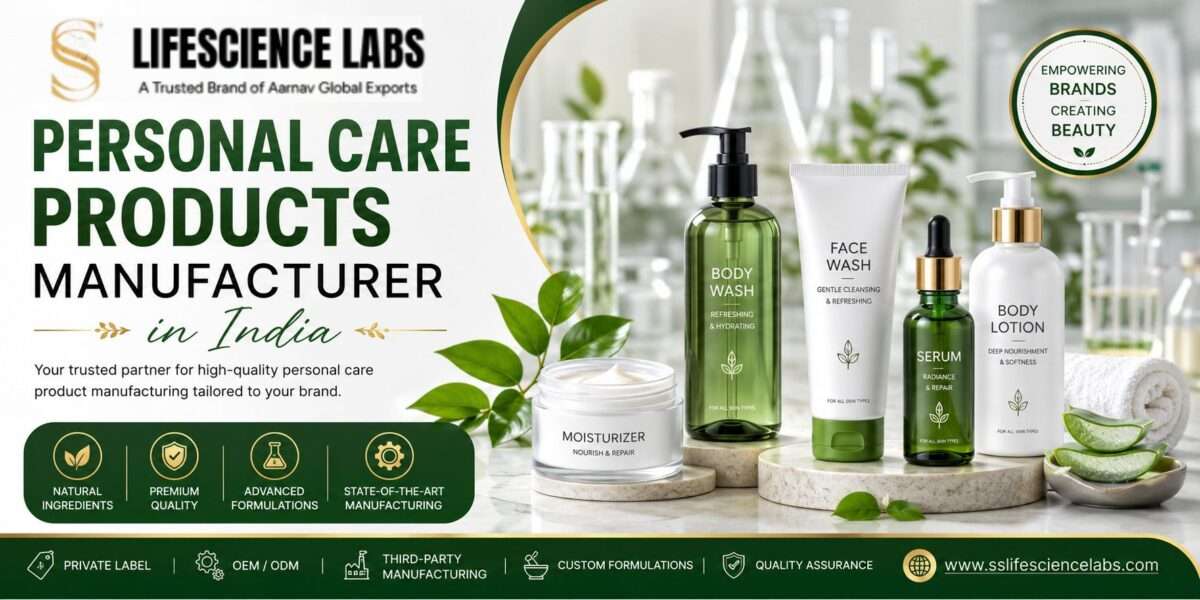
Personal Care Products Manufacturer in India: Complete Guide for Beauty Brands 2026
India’s beauty and personal care market is evolving rapidly as consumers become more selective about the products they use in their everyday routines. From face and body care to haircare and specialized personal care products, customers increasingly look for products that match their lifestyle, preferences, and specific requirements.
For entrepreneurs, startups, retailers, and established beauty businesses, this growing demand creates an opportunity to develop their own product ranges. However, building a successful personal care brand requires more than choosing a few products and creating attractive packaging. Product planning, manufacturing capabilities, customization, packaging, quality considerations, minimum order quantities, and long-term production planning all play an important role.
Choosing the right Personal Care Products Manufacturer in India can therefore become one of the most important decisions for a beauty or personal care business.
A suitable manufacturing partner can help a brand move from an initial product concept toward a structured product range while allowing the business to concentrate on branding, marketing, distribution, and customer acquisition.
This guide explains how personal care manufacturing works, what brands should consider before production, the differences between manufacturing models, and how businesses can build a scalable personal care product range in 2026.
What Is a Personal Care Products Manufacturer?
A personal care products manufacturer is a company that manufactures products designed for everyday beauty, hygiene, skin, hair, body, and personal care requirements.
Depending on the manufacturer’s capabilities, the product portfolio may cover multiple categories such as skincare, haircare, body care, cleansers, creams, lotions, serums, oils, and other personal care formulations.
The exact manufacturing process and available options can vary depending on the manufacturer, product category, quantity, customization requirements, and chosen manufacturing model.
For a brand, this means choosing a manufacturer should not simply involve asking for a product catalogue.
Businesses should first understand what they want to launch, who their target customers are, and how they want their products positioned in the market.
Why Is Personal Care Manufacturing Important for Beauty Brands?
Launching a personal care business without outsourced manufacturing may require production infrastructure, equipment, operational resources, technical expertise, raw-material management, packaging coordination, and ongoing production management.
For many startups and growing brands, establishing all of these capabilities independently may not be practical.
Working with an established manufacturer gives businesses another route.
Instead of investing heavily in their own production infrastructure, brands can focus their resources on areas such as:
- Brand development
- Marketing
- Product positioning
- E-commerce
- Distribution
- Customer acquisition
- Retail partnerships
- Packaging design
- Sales growth
Manufacturing remains an essential part of the business, but it can be handled through an appropriate manufacturing partnership.
This is one reason personal care contract manufacturing has become relevant for businesses that want to build their own product portfolios without establishing an independent production operation.
What Products Can Personal Care Brands Develop?
Personal care is a broad category, which gives brands considerable flexibility when developing a product portfolio.
A business does not necessarily need to enter every category at once.
For example, a brand could begin with a focused skincare collection and later expand into body care or haircare after establishing its initial customer base.
Depending on the manufacturer’s available categories, a personal care portfolio may include products related to:
Skincare: Face cleansers, face washes, serums, toners, moisturizers, creams, masks and other skincare products.
Body Care: Body lotions, creams, washes, oils and other products designed around body-care routines.
Haircare: Shampoos, conditioners, hair oils, treatments and other haircare products.
Specialized Personal Care: Products developed around particular consumer routines or specific product categories.
The right starting range depends on the brand’s audience and commercial strategy.
Launching fewer well-positioned products can often be more manageable than launching a very large catalogue without a clear product strategy.
How Does Personal Care Contract Manufacturing Work?
Personal care contract manufacturing allows a business to work with a manufacturer for the production of products that will ultimately be sold by the brand.
The process usually begins with defining the product requirements.
A business should communicate what products it wants, its intended customer segment, approximate quantities, expected positioning, packaging preferences, customization requirements, and proposed launch plans.
The manufacturer and brand can then discuss the available manufacturing possibilities.
Depending on the project, the process may involve product selection or development, sampling, feedback, packaging discussions, commercial confirmation, approval, and bulk manufacturing.
A simplified process can be understood as:
Brand Idea → Product Requirements → Manufacturer Discussion → Sample → Evaluation → Finalization → Packaging → Approval → Bulk Production → Market Launch
The exact steps can vary according to the manufacturer and product.
The important point is that brands should understand the process before committing to production.
Private Label vs OEM vs Third-Party Manufacturing
Businesses researching personal care manufacturing frequently encounter terms such as private label, OEM, and third-party manufacturing.
Although these models can overlap depending on the manufacturer, understanding their general purpose helps brands have clearer conversations with potential manufacturing partners.
Private Label Manufacturing
Private label manufacturing can be suitable for businesses that want to sell products under their own brand identity while outsourcing manufacturing.
Brands should discuss available product options, customization, MOQ, packaging, samples, artwork, and other requirements before proceeding.
Businesses specifically considering this model can explore Private Label Cosmetics Supplier solutions to understand manufacturing options for building branded beauty and personal care ranges.
OEM Manufacturing
OEM manufacturing can support brands with specific product and manufacturing requirements.
The scope of OEM services can vary, so businesses should confirm exactly what is included for their particular project.
Product specifications, quantities, customization, samples, packaging, and commercial requirements should be discussed clearly.
Third-Party Manufacturing
Third-party manufacturing is another outsourcing model used by cosmetic and personal care businesses.
Instead of operating their own manufacturing setup, brands can work with a third-party manufacturer for production according to the agreed requirements.
The right model depends on the business’s product idea, budget, quantity, customization needs, and long-term strategy.
How to Choose a Personal Care Products Manufacturer in India
Selecting a manufacturer should involve more than comparing quotations.
A low manufacturing price does not automatically make a manufacturer the right choice for every brand.
Businesses should evaluate whether the manufacturer’s capabilities align with their current and future requirements.
Start by examining the product categories available.
If you are launching skincare now but plan to expand into additional personal care categories later, understanding broader manufacturing capabilities can help with long-term planning.
Brands looking for broader cosmetic manufacturing capabilities can review Cosmetic Products Manufacturer in India solutions from SS LifeScience Labs.
Other considerations include manufacturing options, MOQ, samples, customization, packaging support, communication, production requirements, and repeat-order planning.
The objective should be finding a manufacturing arrangement that supports both the first launch and future growth.
Why Should Brands Start With a Product Brief?
A product brief is one of the simplest ways to improve communication between a brand and manufacturer.
Instead of approaching a manufacturer with only a general request such as “I want to start a personal care brand,” provide structured information.
A useful brief can contain:
Target Customer: Who is expected to purchase the product?
Product Category: What products are you planning to launch?
Brand Positioning: Mass market, premium, specialized, professional, or another segment?
Initial Quantity: What approximate production quantity are you considering?
Customization: Do you have particular product requirements?
Packaging: What packaging direction are you considering?
Launch Timeline: When do you expect to introduce the range?
Future Plans: Which categories might you add later?
Providing this information makes the initial manufacturing discussion much more focused.
Why Is MOQ Important?
MOQ stands for Minimum Order Quantity.
For new personal care brands, MOQ can directly influence the amount of capital required for the initial launch.
Suppose a startup plans to introduce ten products simultaneously. If each product has its own minimum manufacturing quantity, the business may need to invest significantly more in initial inventory.
The same business could potentially begin with three or four focused products, understand customer demand, and then expand.
This approach can make inventory easier to manage.
Brands should therefore ask about applicable MOQ before finalizing the number of products in their initial range.
MOQ should be evaluated alongside packaging costs, marketing budget, expected sales, storage requirements, and working capital.
Why Are Samples Important Before Bulk Production?
Samples allow brands to evaluate products before approving larger-scale manufacturing.
This stage should be taken seriously.
When reviewing a sample, businesses should provide specific feedback instead of broad comments.
For example, rather than saying:
“The product doesn’t feel premium.”
Explain what needs to be reviewed:
“The texture feels heavier than the direction planned for the product. We would like to discuss whether a lighter texture is possible.”
Specific feedback helps keep communication clear.
When reviewing several products, brands should also maintain separate feedback for every SKU.
Comments about a face wash, serum, moisturizer, and shampoo should not be combined into one unclear message.
Organized sample feedback can make the revision process easier to track.
How Important Is Packaging in Personal Care Manufacturing?
Packaging is an important part of the overall product experience.
Customers often see the packaging before they have an opportunity to use the product itself.
However, brands should not choose packaging based only on visual appeal.
Packaging decisions should consider product suitability, usability, storage, transportation, branding, customer experience, and commercial requirements.
Brands selling through e-commerce should also consider how their products will appear in photographs and digital advertising.
A premium-looking bottle may appear attractive, but the packaging also needs to make sense for the actual product and intended customer.
Packaging and product planning should therefore happen together.
Why Is Skincare Important Within Personal Care Manufacturing?
Skincare remains one of the most visible categories within beauty and personal care.
Consumers increasingly build routines around cleansers, serums, moisturizers, toners, creams, sunscreens, and other skincare products.
For new businesses, this creates an opportunity but also significant competition.
A skincare brand needs a clear identity rather than simply offering the same broad product range as every competitor.
A focused initial range can make brand communication easier.
Businesses planning a dedicated skincare portfolio can explore Skin Care Product Manufacturer options to understand available skincare manufacturing categories.
After establishing a successful skincare range, the business can consider expanding into complementary personal care categories based on customer demand.
When Should a Brand Expand Its Product Range?
A common mistake is assuming that growth always means adding more products.
Product expansion should ideally be based on evidence.
Useful signals can include:
- Consistent sales of existing products
- Repeat customer purchases
- Customer requests
- Search demand
- Retailer feedback
- Available working capital
- Inventory performance
- Clear complementary product opportunities
For example, if customers regularly purchase a face cleanser and serum and frequently request a moisturizer, adding a complementary moisturizer may make more strategic sense than introducing an unrelated product category.
Existing sales data can help brands make better expansion decisions.
Who Should Consider Personal Care Contract Manufacturing?
Contract manufacturing can be relevant for several types of businesses.
Beauty Startups: Entrepreneurs launching their first branded products.
Existing Cosmetic Brands: Businesses expanding into additional product categories.
Retail Businesses: Retailers interested in developing products under their own brand.
E-commerce Brands: Online businesses building direct-to-consumer personal care ranges.
Distributors: Businesses exploring branded products alongside existing distribution operations.
International Businesses: Companies exploring manufacturing options in India for particular product requirements.
The suitability of any manufacturing arrangement depends on the individual project.
Where Can Brands Find a Personal Care Products Manufacturer in India?
Brands can research manufacturers through industry directories, online searches, business networks, exhibitions, referrals, and direct manufacturer websites.
However, finding a company is only the first stage.
The more important step is evaluating whether the manufacturer is suitable for the specific project.
Prepare a shortlist and discuss the same core requirements with each potential manufacturing partner.
This makes comparison easier.
Rather than asking only for pricing, ask about product categories, manufacturing models, MOQ, sampling, customization, packaging, production requirements, and repeat manufacturing.
A structured comparison helps businesses make a more informed decision.
What Should Be Confirmed Before Bulk Production?
Before approving bulk manufacturing, review all important project details.
Brands should ensure that the agreed product, packaging, quantities, artwork, commercial requirements, and other relevant specifications are clear.
Maintain written records of important approvals wherever possible.
A final checklist can include:
- Approved product/sample
- Product quantity
- Packaging selection
- Artwork
- Label information
- Customization requirements
- Commercial terms
- Production requirements
- Expected timelines
- Delivery arrangements
Clear approvals reduce confusion once manufacturing begins.
Personal Care Manufacturing Trends Brands Should Watch in 2026
Personal care businesses in 2026 should pay attention not only to individual trending products but also to broader consumer behavior.
Customers increasingly research products online before making purchase decisions. Product information, positioning, packaging, reviews, ingredients, brand communication, and digital presentation can all influence purchasing decisions.
This means manufacturers and brands need to think beyond production alone.
Successful product development starts with understanding the intended customer and continues through manufacturing, packaging, marketing, customer feedback, and repeat production.
Brands that collect real customer data after launch can use those insights to improve future product decisions.
How Can a Personal Care Brand Scale Successfully?
Scalability begins with a manageable initial product range.
Rather than investing heavily in numerous SKUs, businesses can first identify their strongest product opportunities.
After launch, monitor sales velocity, customer feedback, repeat purchases, inventory, and product profitability.
Products performing consistently can receive greater marketing support and timely repeat orders.
New categories can then be introduced according to demonstrated demand.
Manufacturing planning should also become more organized as the business grows.
Brands should forecast inventory needs and begin repeat-production discussions before popular products completely sell out.
This creates a more reliable customer experience and reduces avoidable stock gaps.
Why Work With SS LifeScience Labs?
SS LifeScience Labs supports beauty and personal care businesses exploring manufacturing solutions in India.
The company works across skincare, haircare, personal care, private label, OEM, and third-party cosmetic manufacturing requirements.
For startups, the manufacturing journey may begin with a small, focused product range. For established businesses, the objective may involve expanding an existing portfolio or introducing additional categories.
SS LifeScience Labs works with businesses according to their individual product and manufacturing requirements, helping brands explore suitable options for building and expanding their beauty and personal care ranges.
Frequently Asked Questions
What is a personal care products manufacturer?
A personal care products manufacturer produces products across beauty, skincare, haircare, body care, and related personal care categories according to its manufacturing capabilities and the requirements agreed with a brand.
What is personal care contract manufacturing?
Personal care contract manufacturing is an arrangement where a brand outsources the manufacturing of its products to a manufacturing company rather than operating its own production facility.
What products can a personal care manufacturer produce?
Available categories vary by manufacturer but may include skincare, haircare, body care, cleansers, serums, creams, lotions, oils, and other personal care products.
Why should startups consider contract manufacturing?
Contract manufacturing can allow startups to develop branded products without establishing their own manufacturing infrastructure, enabling them to focus more resources on branding, marketing, distribution, and sales.
What is MOQ in personal care manufacturing?
MOQ means Minimum Order Quantity. It is the minimum quantity of a particular product that a manufacturer requires for an order. The applicable MOQ can vary by manufacturer and product.
What is the difference between private label and OEM personal care manufacturing?
Private label generally involves products manufactured for sale under a brand’s identity, while OEM arrangements may involve manufacturing according to more specific product requirements. Exact services vary by manufacturer, so brands should confirm the scope directly.
How do I choose a personal care products manufacturer in India?
Evaluate product capabilities, manufacturing models, MOQ, sampling, customization options, packaging requirements, communication, commercial terms, production requirements, and the manufacturer’s ability to support future growth.
When should I order samples?
Samples should generally be evaluated before bulk production so that the brand can review the proposed product and discuss necessary changes before final approval.
How many personal care products should a new brand launch?
There is no universal number. A focused range of complementary products may be easier for a startup to manage than a large catalogue. The decision should consider target customers, MOQ, budget, inventory, and marketing strategy.
Can a personal care brand expand into skincare and haircare later?
Yes. A brand can begin with a focused category and expand according to customer demand, sales performance, business strategy, and available manufacturing capabilities.
Conclusion
Finding the right Personal Care Products Manufacturer in India requires more than comparing product catalogues and prices.
Beauty brands should first understand their customers, decide which products they want to launch, prepare a clear product brief, evaluate manufacturing models, understand MOQ, review samples, plan packaging, and confirm requirements before bulk production.
Private label, OEM, and contract manufacturing can provide different routes for businesses depending on their goals.
For new brands, beginning with a focused product range can make inventory, marketing, and customer communication easier. Established businesses can use sales data and customer feedback to identify logical opportunities for expansion.
With structured planning and an appropriate manufacturing strategy, businesses can develop personal care ranges designed not only for launch but also for sustainable long-term growth.
Related Articles
Explore these helpful guides to learn more about cosmetic manufacturing, skincare production, private label solutions, and building a successful beauty and personal care brand.
- Skin Care Product Manufacturer: Complete Guide to Starting Your Skincare Range
Learn how to plan and develop a skincare range with the right manufacturing approach. - Cosmetic Products Manufacturer in India | OEM Cosmetic Manufacturer
Explore cosmetic manufacturing options for skincare, haircare, and personal care brands. - Private Label Cosmetics vs OEM vs ODM Cosmetics: Which Manufacturing Model Is Right for Your Brand?
Understand the differences between private label, OEM, and ODM before choosing a manufacturing model. - How to Choose the Best Private Label Cosmetics Supplier in India 2026 Complete Buyer’s Guide
Learn what brands should evaluate before selecting a private label manufacturing partner. - Private Label Cosmetics Supplier in India: Complete OEM & ODM Manufacturing Guide (2026)
Explore private label, OEM, and ODM manufacturing options for launching branded products. - 3rd Party Cosmetic Manufacturing in India | OEM Cosmetics
Understand how third-party manufacturing works for cosmetic and personal care businesses. - Top Trends Every Cosmetic Products Manufacturer in India Should Watch in 2026
Discover important beauty and cosmetic manufacturing trends shaping the industry in 2026. - Why SS LifeScience Labs is a Trusted Cosmetic Products Manufacturer in India
Learn more about SS LifeScience Labs and its cosmetic and personal care manufacturing capabilities.