Categories
Blog

Cosmetic Manufacturers in Vadodara: Complete Private Label & OEM Guide 2026

Cosmetic Manufacturers in Vadodara: Complete Private Label & OEM Guide 2026

India’s beauty and personal care industry is entering a phase where launching a cosmetic brand is easier than before, but building a brand consumers repeatedly choose is considerably harder. Customers now compare ingredients, product experience, packaging, positioning and value before making a purchase. Behind all of these visible elements sits one decision that can influence almost everything that follows: choosing the right manufacturing partner.

For a startup planning its first skincare range or an established company expanding into new categories, researching cosmetic manufacturers in Vadodara should therefore involve much more than collecting quotations. A suitable manufacturer needs to align with the brand’s product category, quality expectations, manufacturing model, quantity requirements, packaging plans and future growth.

Vadodara is part of Gujarat’s significant industrial landscape, making it a relevant location for companies researching manufacturing opportunities. However, a beauty business does not have to restrict its supplier search to one city. Comparing local options with a broader  Cosmetic Products Manufacturer in India can help decision-makers understand differences in capabilities, product categories and manufacturing support before making a commitment.

This 2026 guide explains how private label, OEM, custom and third-party cosmetic manufacturing work, what businesses should compare, which questions matter before production, and how to select a manufacturing partner without allowing price alone to determine the decision.


What Do Cosmetic Manufacturers in Vadodara Actually Do?

A cosmetic manufacturer transforms a product concept or defined requirement into a commercially manufacturable product. Depending on the company’s capabilities, this may include formulation selection, customization, raw-material sourcing, batch manufacturing, filling, packaging coordination and quality-related processes.

Consider a skincare startup that wants to launch a facial cleanser, serum and moisturizer. The founders may understand their audience and desired market positioning but lack an in-house production facility. Instead of investing heavily in machinery, manufacturing infrastructure and a dedicated production team, they can evaluate an external manufacturing partner.

The arrangement can vary considerably. Some businesses require relatively ready-to-market private label products, while others want greater control over formulation and specifications. Established companies may simply want to outsource production.

This is where models such as private label, OEM and third-party manufacturing become important.

A company researching a manufacturer should therefore begin with one question:

“What exactly do we need the manufacturer to do for our brand?”

Until that question is answered, comparing suppliers accurately is difficult.


Why Is Vadodara Relevant for Cosmetic Manufacturing?

Vadodara has an established industrial environment and sits within Gujarat, one of India’s major manufacturing states. For beauty businesses, however, geographical location should be treated as one selection factor rather than the primary indicator of manufacturing quality.

A manufacturer located close to the brand may offer logistical advantages, but a company located elsewhere may provide stronger capabilities for a specific product category. This is why brands should compare manufacturers based on what they can actually deliver.

The same principle applies when researching different cities. A company evaluating Vadodara manufacturers may also learn from the criteria discussed while researching  Cosmetic Manufacturers in Delhi, because MOQ, customization, packaging, quality processes and scalability remain important regardless of manufacturing location.

The best manufacturing decision is therefore usually based on a combination of capability + quality + commercial suitability + communication + scalability, rather than city alone.


Private Label, OEM or Third-Party Manufacturing: What Should You Choose?

One of the first decisions a beauty business needs to make is which manufacturing model fits its strategy. These terms are sometimes used interchangeably in marketing, but their practical application can differ.

Manufacturing Model Suitable For Customization Level Main Benefit
Private Label Startups & growing brands Low–Moderate Faster market entry
OEM Brands with defined requirements Moderate–High Greater product control
Third-Party Manufacturing Businesses outsourcing production Varies Reduced manufacturing burden
Custom Manufacturing Differentiated/premium brands High Greater product differentiation

Private Label Cosmetic Manufacturing

Private label can be particularly attractive to businesses that want to establish their own cosmetic brand without building a production facility from scratch. Depending on the manufacturer, the brand may choose from existing product options and customize selected elements such as packaging, fragrance, presentation or other available specifications.

For businesses evaluating this route, working with an experienced  Private Label Cosmetics Supplier can simplify the journey from product selection to commercial production, particularly when the manufacturer supports multiple beauty and personal care categories.

Private label should not, however, be treated as a shortcut that eliminates brand strategy. Even if the formulation is based on an existing option, the business still needs clear positioning, attractive packaging, a defined audience and a strong reason for customers to choose the product.


What Is OEM Cosmetic Manufacturing?

OEM, or Original Equipment Manufacturing, is generally relevant when a brand has more specific product or manufacturing requirements.

A company may have requirements related to texture, fragrance, ingredients, packaging, product performance or positioning. The precise degree of customization depends on the manufacturer and project.

For example, two brands could both sell facial serums while targeting completely different audiences. One may position itself around lightweight everyday skincare, while another targets a premium segment with specialized product characteristics.

The manufacturing partner must understand these differences.

When evaluating an OEM cosmetic manufacturer Vadodara, ask exactly which elements can be customized rather than relying only on the “OEM” label.


What Is Third-Party Cosmetic Manufacturing?

Third-party manufacturing allows a brand or company to outsource production to another manufacturer instead of operating its own manufacturing infrastructure.

This can be useful for startups, marketing-led beauty brands, distributors and established businesses looking to expand production.

The commercial benefit is straightforward: instead of allocating significant resources to running a manufacturing facility, the company can concentrate on areas such as:

  • Brand development
  • Distribution
  • Sales
  • Digital marketing
  • Retail expansion
  • Customer acquisition
  • Product portfolio strategy

Third-party manufacturing does not remove the brand’s responsibility for selecting the right partner. The manufacturer still needs to meet the company’s product, quality, quantity and operational requirements.


Cosmetic Products Brands Can Consider Manufacturing

A manufacturer’s product range matters because not every supplier will have the same experience across skincare, haircare, body care, cosmetics and oils.

Category Examples Important Considerations
Skincare Cleansers, serums, creams, toners Texture, positioning, ingredients
Haircare Shampoo, conditioner, serum, oils Hair concern, fragrance, usage
Body Care Lotion, wash, scrub, cream Texture, packaging, audience
Personal Care Daily-use care products Functionality and consistency
Oils Essential, carrier and massage oils Sourcing, packaging, storage
Beauty Products Category-specific cosmetics Product positioning and market

Brands planning skincare products should specifically evaluate whether the supplier has relevant experience rather than selecting a general manufacturer only because it offers a large catalogue.

The same applies to businesses researching Cosmetic Manufacturing Companies in Delhi or another major manufacturing location. A long product list is less important than proven relevance to the products your business actually intends to sell.


Aromatherapy and Essential Oils as a Portfolio Opportunity

Beauty, personal care and wellness increasingly overlap from a branding perspective. For companies building a broader portfolio, oils can complement skincare and body-care categories when they fit the brand’s audience.

Essential oils, carrier oils and aromatherapy-focused products can have different sourcing, packaging and product-handling considerations from conventional creams or cleansers. Businesses planning this category should therefore evaluate a specialized Aromatherapy Oils Manufacturer in India rather than assuming every general cosmetic manufacturer provides the same capabilities.

This does not mean every beauty company should add oils to its range. Portfolio expansion works best when each new category supports the brand’s existing positioning and customer requirements.


How to Choose the Right Cosmetic Manufacturer in Vadodara

Selecting a manufacturing partner should follow a structured process rather than depending on one sales conversation.

Start With a Clear Product Brief

Before asking for quotations, prepare a basic product requirement document.

It should contain:

Requirement Example
Product Facial Serum
Target Audience Adults seeking daily skincare
Positioning Premium / Mass / Professional
Quantity Expected initial order
Manufacturing Model Private Label / OEM
Packaging Bottle / Pump / Jar / Tube
Customization Required or minimal
Launch Timeline Target month
Future Plan Expected additional SKUs

A clear brief improves the quality of conversations with potential manufacturers and allows different suppliers to quote against similar requirements.


Product Quality Should Come Before the Cheapest Quotation

One of the most common mistakes new beauty businesses make is comparing manufacturers primarily on price.

Suppose Manufacturer A offers a noticeably lower unit cost, while Manufacturer B provides stronger packaging coordination, better communication, suitable MOQ and more relevant product-category capabilities.

Choosing Manufacturer A solely because it is cheaper could become more expensive later if the business experiences inconsistent products, packaging problems, delays or difficulty scaling.

A more useful comparison is:

Total Manufacturing Value = Product Quality + Commercial Cost + MOQ + Support + Reliability + Scalability

This approach is also important when comparing Best Cosmetics Manufacturers in Delhi, because “best” should describe suitability for the brand’s requirements rather than simply the lowest quotation.


MOQ: A Critical Factor for Startups

MOQ means Minimum Order Quantity—the minimum production or purchase quantity required for a particular product or arrangement.

This matters enormously for startups.

Imagine a brand planning five products with three variants each. Even if the MOQ for one variant appears manageable, multiplying that requirement across the full catalogue could create a substantial initial inventory commitment.

Ask whether MOQ applies:

  • Per SKU
  • Per formulation
  • Per fragrance
  • Per shade
  • Per variant
  • Per packaging configuration

A focused launch with fewer hero products can often be commercially easier to manage than starting with a very large range.


Private Label vs Custom Manufacturing Comparison

Factor Private Label Custom/OEM
Launch Speed Usually faster Usually requires more development
Initial Complexity Lower Higher
Differentiation Moderate Potentially higher
Development Requirement Lower Higher
Best For New/growing brands Defined/premium concepts
Product Control Moderate Greater
Scalability Depends on partner Depends on partner

Neither option is universally superior.

A new business seeking faster market entry may find private label more practical. A brand competing through distinctive product characteristics may require greater customization.

The manufacturing model should match the business strategy, not simply industry terminology.


How Does Cosmetic Manufacturing Usually Work?

Although the exact process varies by product and supplier, the journey can broadly be understood in seven stages.

1. Requirement Discussion

The brand explains what it wants to manufacture, the intended audience, quantity, positioning and desired timeline.

2. Manufacturing Route Selection

The parties determine whether private label, OEM, third-party or a more customized approach is appropriate.

3. Product Evaluation

Where applicable, available formulations or samples are evaluated and feedback is discussed.

4. Packaging Planning

Suitable bottles, jars, pumps, tubes, labels or cartons are considered.

5. Commercial Finalization

MOQ, price, responsibilities, timelines and specifications are confirmed.

6. Production

Manufacturing takes place according to the finalized project requirements and applicable processes.

7. Filling, Packing and Dispatch

The final product is filled, packed and prepared for dispatch according to the agreed scope.

Brands should obtain project-specific details directly from the selected manufacturer because timelines and processes vary.


Packaging Can Influence the Success of the Product

Cosmetic packaging is not simply decoration. It affects functionality, customer perception, positioning and cost.

A premium skincare serum may require a very different presentation from a mass-market body lotion. Likewise, an oil-based product can have packaging requirements different from those of a cleanser or cream.

Brands should evaluate:

Container → Closure → Label → Outer Packaging → Functionality → Visual Positioning → Cost

Packaging should therefore be discussed relatively early in the manufacturing process.


What Should You Compare Between Cosmetic Manufacturers?

Instead of relying on memory after several supplier conversations, create a structured comparison.

Selection Factor Manufacturer A Manufacturer B Manufacturer C
Relevant Product Capability /10 /10 /10
Product Quality /10 /10 /10
MOQ Suitability /10 /10 /10
Customization /10 /10 /10
Packaging Support /10 /10 /10
Communication /10 /10 /10
Commercial Suitability /10 /10 /10
Scalability /10 /10 /10
Overall Score /80 /80 /80

This type of scorecard is particularly useful when a business is comparing suppliers across multiple locations.

For instance, your research does not necessarily have to stop with Vadodara. Comparing the criteria with Top Cosmetics Manufacturers in Delhi can provide a broader benchmark before the final supplier is selected.


Should You Choose a Manufacturer Only in Your City?

Not necessarily.

A brand based in one city can work with a manufacturing company located elsewhere if logistics, quality, communication, commercial terms and production requirements are suitable.

This has become especially relevant as beauty companies expand nationally and increasingly coordinate suppliers remotely.

Yesterday’s detailed guide to Cosmetic Manufacturers in Surat also illustrates the same principle: the correct manufacturing partner should be selected according to capability and business fit, not simply the shortest geographical distance.

For some businesses, a nearby manufacturer may still provide logistical advantages. For others, a manufacturer in another region may be better aligned with the intended product range.


How Startups Should Approach Cosmetic Manufacturing in 2026

A startup should resist the temptation to launch every possible product immediately.

A more practical sequence is:

Identify Market → Define Audience → Select Category → Choose Hero Products → Compare Manufacturers → Evaluate Product → Finalize Packaging → Launch → Measure Demand → Expand

Suppose a skincare company wants to target consumers looking for a simple daily routine. Instead of launching 15 products, it might begin with three clearly connected products: cleanser, serum and moisturizer.

Marketing becomes easier because the brand has a focused story. Inventory planning is simpler, and consumer feedback can guide the second phase of expansion.

Once the initial range gains traction, additional skincare, haircare, body care or wellness products can be considered.


How Established Brands Should Evaluate Manufacturing Partners

Established companies usually have different priorities from startups.

MOQ may become less restrictive, while production capacity, repeat-order reliability, multi-category capability and operational consistency become more important.

Growing brands should ask:

  • Can production quantities increase?
  • Can additional categories be introduced?
  • Can packaging requirements evolve?
  • How are repeat orders coordinated?
  • What happens when demand rises quickly?
  • Is communication structured enough for larger projects?

Manufacturing decisions should account for where the business intends to be in the next few years, not only its immediate order.


Common Mistakes While Selecting a Cosmetic Manufacturer

Choosing Based Only on Price

The lowest manufacturing cost does not necessarily produce the strongest overall business outcome.

Starting With Too Many SKUs

Large catalogues increase inventory, packaging and marketing complexity.

Ignoring MOQ

MOQ should be discussed early, particularly for multiple variants.

Treating Packaging as an Afterthought

Packaging availability and suitability can influence both cost and production planning.

Not Comparing Like-for-Like Quotations

Two quotations cannot be fairly compared if they are based on different specifications.

Ignoring Future Capacity

A supplier suitable for a first launch may not necessarily be suitable when production requirements increase.

Weak Brand Positioning

Manufacturing can create the product, but the business still needs to explain why customers should buy it.


What Questions Should You Ask a Cosmetic Manufacturer?

Before finalizing a supplier, ask direct questions.

Question Purpose
Which categories do you specialize in? Capability
What manufacturing models do you offer? Service fit
What is your MOQ? Budget planning
Are samples available? Product evaluation
What can be customized? Differentiation
What packaging support is available? Launch planning
What is the expected timeline? Scheduling
How do repeat orders work? Future planning
Can production scale? Growth
What documentation/specifications are required? Process clarity

Brands can use the same framework regardless of manufacturing location.


How to Evaluate a Manufacturer Beyond Marketing Claims

Manufacturing websites frequently use terms such as premium, innovative, best, advanced and trusted. These words alone should not determine supplier selection.

Look for specific information.

If a company says it provides customization, ask what exactly can be customized?

If it promotes quality, ask which processes are relevant to your product?

If it claims scalable manufacturing, ask what happens when your order quantity increases?

If it advertises private label services, ask what is included in that service?

Specific answers are more useful than broad promotional claims.

This approach can also help businesses reading How to Choose the Best Cosmetic Company in Delhi, because supplier evaluation principles remain broadly applicable across cities.


Why Manufacturing and SEO/Marketing Need to Work Together

A cosmetic product can be manufactured perfectly and still struggle commercially if customers do not understand why they should buy it.

Before production, brands should be able to answer:

Who is the product for?
What problem or need does it address?
What makes its positioning different?
Where will customers discover it?
Why should they trust the brand?

Manufacturing decisions can then support those answers.

For example, packaging, product range and formulation direction should align with whether the brand intends to compete as affordable, premium, professional, natural-positioned or another clearly defined category.


When Should a Brand Consider Changing Manufacturers?

A manufacturer relationship can evolve as the business grows.

A brand may consider evaluating additional manufacturing options when its current partner can no longer support required quantities, new categories, customization, packaging changes or operational expectations.

Other signals can include repeated communication difficulties, challenges with scaling or a mismatch between the manufacturer’s capabilities and the brand’s future portfolio.

Changing a manufacturing partner should nevertheless be planned carefully because product consistency and supply continuity matter.


Cosmetic Manufacturing Decision Framework for 2026

Before signing a manufacturing agreement or placing a significant order, evaluate four areas.

Product Fit

Can the manufacturer produce the category and specifications you need?

Commercial Fit

Are MOQ, pricing and packaging compatible with your business model?

Operational Fit

Can the supplier communicate clearly and support realistic production planning?

Growth Fit

Can the relationship support additional products or larger quantities if the brand succeeds?

If a manufacturer performs strongly across all four areas, it deserves deeper consideration.


Frequently Asked Questions

What services do cosmetic manufacturers in Vadodara provide?

Services vary by manufacturer and can include private label manufacturing, OEM production, third-party manufacturing, product development, filling and packaging support. Always confirm the exact scope with the individual supplier.

Is Vadodara suitable for private label cosmetic manufacturing?

Businesses can explore private label options in Vadodara, but the final manufacturer should be selected according to product capability, quality expectations, MOQ, customization, commercial terms and scalability rather than location alone.

What is the difference between private label and OEM cosmetics?

Private label generally offers a more streamlined route using manufacturer-supported product options, while OEM can involve more defined brand-specific requirements. Exact services vary between manufacturers.

What is third-party cosmetic manufacturing?

It is an arrangement in which a business outsources agreed manufacturing activities to an external manufacturer rather than operating its own production facility.

How do I select a cosmetic manufacturer?

Prepare a product brief and compare manufacturers on relevant product capabilities, quality, MOQ, samples, customization, packaging, communication, commercial terms and scalability.

What is MOQ?

MOQ stands for Minimum Order Quantity—the minimum quantity required by the manufacturer for a particular product or manufacturing arrangement.

Should startups use private label manufacturing?

It can be a practical option for startups seeking to launch their own brand without establishing manufacturing infrastructure. Suitability depends on the individual business model.

Can I work with a cosmetic manufacturer outside my city?

Yes. Location is only one consideration. Product capabilities, quality, logistics, communication, cost and scalability should also influence the decision.

Should I request samples before a large order?

Where sampling is available and relevant, evaluating samples can help the brand assess product characteristics before making a larger production commitment.

What should growing cosmetic brands prioritize in 2026?

Product consistency, differentiation, customer relevance, reliable manufacturing, commercially sensible inventory and scalability should all be considered.


Final Thoughts: Finding the Right Cosmetic Manufacturers in Vadodara

Finding the right cosmetic manufacturers in Vadodara is not about identifying the company with the longest product list or lowest quotation. It is about finding a manufacturing arrangement that fits the brand’s current requirements and future direction.

Start by defining exactly what you want to manufacture. Decide whether private label, OEM, third-party or custom manufacturing is appropriate. Compare suppliers using the same product brief, evaluate quality and commercial considerations together, discuss MOQ early and ensure packaging is included in planning.

For startups, simplicity can be an advantage. A focused portfolio of well-positioned products may be easier to manufacture, market and scale than a large collection launched without clear customer demand. For established companies, capacity, consistency and future category expansion become increasingly important.

Most importantly, treat your manufacturer as part of the business supply chain rather than simply a vendor providing the cheapest unit price. When product strategy, manufacturing, packaging and marketing work together, a beauty brand is in a much stronger position to build sustainable growth.

Categories
Blog

Cosmetic Manufacturers in Surat: Best Guide for Brands 2026

Cosmetic Manufacturers in Surat: How to Choose the Right Manufacturing Partner in 2026

India’s beauty and personal care market is creating new opportunities for entrepreneurs, retailers, distributors, e-commerce businesses, salons, and established companies that want to build their own cosmetic brands. From skincare and haircare to body care and personal care, consumers now have access to a much wider range of products than before. This growing choice also means that beauty brands need to focus on product quality, positioning, packaging, manufacturing capabilities, and customer experience from the beginning.

For businesses searching for cosmetic manufacturers in Surat, choosing a manufacturing partner is one of the most important steps in converting a product idea into a market-ready beauty range. A manufacturer can influence which products a business can develop, how much customization may be possible, minimum order quantities, sampling, packaging requirements, production planning, and the ability to expand the range later.

However, the right manufacturing partner should not be selected only because the company is located nearby or provides the lowest quotation. A beauty business should first understand its target customer, proposed products, positioning, manufacturing model, expected quantities, packaging requirements, and future expansion plans.

Businesses based in Surat can evaluate local manufacturers as well as cosmetic manufacturers serving brands across India. The goal should be to identify manufacturing capabilities that fit the project rather than limiting the decision entirely by geography.

This guide explains what cosmetic manufacturing is, why brands use manufacturing partners, who should consider outsourced production, how the manufacturing process works, which products can be developed, when private label or OEM may be appropriate, what MOQ means, and how to evaluate a cosmetic manufacturer in 2026.


What Are Cosmetic Manufacturers in Surat?

Cosmetic manufacturers are businesses involved in producing beauty and personal care products according to their manufacturing capabilities and agreed client requirements. Depending on the company, the available product categories may include skincare, haircare, body care, personal care, and other cosmetic ranges.

When a business searches for cosmetic manufacturers in Surat, it may have several different objectives.

A new entrepreneur might want to start a skincare company without establishing an independent manufacturing unit. A retailer may want to introduce cosmetic products carrying its own brand name. An established beauty company may be looking for additional manufacturing capabilities, while an e-commerce business may want to build a focused range for online customers.

This is why manufacturer selection should begin with the requirements of the brand.

Businesses that want to compare manufacturing capabilities beyond one city can explore  Cosmetic Products Manufacturer in India solutions while evaluating options for skincare, haircare, body care, and personal care production.

A suitable manufacturer should ultimately support the commercial and product requirements of the brand, whether the business itself is located in Surat or another Indian market.


Why Are Businesses Searching for Cosmetic Manufacturers in Surat?

Surat is widely recognized as a major commercial and entrepreneurial city. Businesses operating in such markets increasingly have access to online marketplaces, direct-to-consumer websites, social media marketing, distributors, retailers, salons, and other channels through which beauty products can reach customers.

This makes it possible for entrepreneurs to consider building specialized beauty brands rather than operating only as resellers.

A business may identify an opportunity in skincare, haircare, body care, personal care, or another cosmetic segment and then require a manufacturing partner capable of converting that business idea into an actual product range.

Another reason businesses explore contract manufacturing is the complexity involved in establishing independent production.

Operating a manufacturing facility can require infrastructure, machinery, technical expertise, sourcing, production planning, packaging management, inventory systems, and ongoing operational resources. For a new beauty business, investing heavily in production infrastructure before validating customer demand may not always fit its business strategy.

Working with a manufacturing partner provides another route. The brand can concentrate more resources on positioning, marketing, sales, distribution, customer acquisition, and brand development while outsourcing agreed production activities.


Who Should Consider Cosmetic Contract Manufacturing?

Contract manufacturing can be relevant to different types of businesses. It is not limited to established national beauty brands.

A startup may use outsourced manufacturing to test an initial product range. A retailer may want to introduce its own label. An online business may identify a niche customer segment and require products specifically positioned for that audience.

Existing beauty companies can also use manufacturing partners when expanding their portfolio or entering new categories.

Business Type Typical Objective Manufacturing Requirement
Beauty Startup Launch a new brand Focused initial product range
Skincare Brand Build a skincare portfolio Face care manufacturing
Retailer Launch own-brand products Private label manufacturing
E-commerce Brand Sell through website/marketplaces Scalable manufacturing
Salon/Beauty Business Create branded beauty products Haircare or skincare range
Distributor Build an own-brand portfolio Multiple product categories
Existing Cosmetic Company Expand into new categories OEM/ODM or contract manufacturing

The best manufacturing approach depends on what the business wants to achieve.


What Products Can Cosmetic Manufacturers in Surat Produce?

The beauty and personal care industry covers numerous product categories. The exact products that can be manufactured depend on the capabilities of an individual manufacturer, so businesses should always confirm their specific requirements before making a decision.

Skincare brands may explore products such as face washes, cleansers, toners, serums, moisturizers, creams, masks, and other face-care products.

Haircare brands may consider shampoo, conditioner, hair oils, masks, or treatment-oriented products. Body and personal care businesses can explore body washes, lotions, creams, oils, and other relevant categories.

Category Examples Suitable For
Skin Care Face wash, cleanser, toner, serum, moisturizer, cream Skincare brands
Hair Care Shampoo, conditioner, hair oil, masks Haircare brands
Body Care Body wash, lotion, cream, body oil Body-care brands
Personal Care Everyday personal care ranges Consumer brands
Private Label Products carrying client’s branding Startups and retailers
OEM/ODM Products based on agreed project requirements Growing beauty businesses

A common mistake new brands make is trying to launch too many products simultaneously.

A catalogue of 15 products may appear impressive, but every additional SKU creates requirements related to manufacturing quantities, packaging, inventory, photography, marketing, storage, and working capital.

For many startups, a smaller and more focused collection can be easier to launch and evaluate.

Businesses specifically interested in skincare can explore Skin Care Product Manufacturer options while planning their initial skincare range.


How Does Cosmetic Manufacturing Work?

The cosmetic manufacturing process should begin with business planning rather than production.

Before approaching a manufacturer, a brand should ideally know its target customer, proposed product category, positioning, approximate quantity, packaging expectations, and intended launch timeline.

This information creates a clearer manufacturing brief.

The manufacturer can then discuss available options according to its capabilities. Depending on the project, the process may include product selection or development, sampling, feedback, packaging discussions, artwork requirements, quantity confirmation, final approval, and bulk production.

A simplified process looks like this:

Stage Main Activity
1. Market Planning Identify target customer and opportunity
2. Product Planning Select initial products
3. Manufacturing Brief Share requirements with manufacturer
4. Product/Sample Stage Evaluate proposed products
5. Feedback Discuss required changes
6. Packaging Finalize suitable packaging direction
7. Approval Confirm important project requirements
8. Bulk Production Manufacturing begins according to agreement
9. Launch Products enter the market
10. Reordering Successful products move toward repeat production

The exact process can vary according to the manufacturer and manufacturing model.


What Is Private Label Cosmetic Manufacturing in Surat?

Private label manufacturing is an important option for businesses that want to introduce cosmetic products under their own brand identity without operating an independent production facility.

A retailer, entrepreneur, e-commerce business, or established company can work with a manufacturer to explore products suitable for its planned brand.

Depending on the manufacturer and project, the process may involve available product options, customization, sampling, packaging, quantities, artwork, and production requirements.

Private label can therefore allow businesses to focus more heavily on customer-facing activities such as branding, marketing, website development, distribution, advertising, and sales.

However, brands searching for a private label cosmetics manufacturer in Surat should not assume that every private label manufacturer offers the same level of service.

One manufacturer may offer a particular range of products, while another may have different customization or MOQ requirements. Packaging responsibilities and production processes can also vary.

Brands considering this route can explore Private Label Cosmetics Supplier solutions to understand how an own-brand cosmetic range can be approached.


What Is an OEM Cosmetic Manufacturer in Surat?

OEM stands for Original Equipment Manufacturer. In the cosmetics industry, OEM arrangements can involve manufacturing products according to agreed requirements for another business.

However, brands should not rely solely on the term “OEM” when evaluating manufacturers.

The exact service needs to be understood.

Businesses searching for an OEM cosmetic manufacturer in Surat should ask what product development, manufacturing, customization, sampling, packaging, quantity, and other project requirements can be supported.

A business with clearly defined product requirements may need a different manufacturing arrangement from a startup that is still deciding what products to launch.

The more clearly the brand can communicate its intended product, customer, positioning, and commercial requirements, the more productive manufacturer discussions can become.


What Is ODM Cosmetic Manufacturing?

ODM generally refers to Original Design Manufacturing. Depending on the manufacturer and agreement, an ODM model may involve broader development and manufacturing support.

The exact scope can vary considerably.

Therefore, instead of asking only, “Do you provide ODM manufacturing?”, a business should ask what the ODM service actually includes.

Does it include product development? What level of customization is available? How are samples handled? Who coordinates packaging? What quantities are required? What does the approval process look like?

These questions are more useful than relying on terminology alone.

Brands deciding between different models can read Private Label Cosmetics vs OEM vs ODM Cosmetics: Which Manufacturing Model Is Right for Your Brand? for a more detailed comparison.


What Is Third-Party Cosmetic Manufacturing in Surat?

Third-party cosmetic manufacturing allows a business to outsource production to an external manufacturer instead of manufacturing products within its own facility.

This approach can be relevant to startups, retailers, distributors, beauty companies, and businesses that have strong branding or sales capabilities but do not want to establish independent production infrastructure.

A business researching a third party cosmetic manufacturer in Surat should evaluate the complete arrangement rather than simply requesting a price list.

The discussion should cover product requirements, quantity, samples, customization, packaging, production expectations, commercial terms, and repeat orders.

Third-party manufacturing can become particularly important as a brand grows because the business needs a production plan capable of supporting future demand.

For more information about this model, businesses can read 3rd Party Cosmetic Manufacturing in India and understand how outsourced cosmetic production can fit into a broader business strategy.


Private Label vs OEM vs ODM vs Third-Party Manufacturing

Businesses often encounter these terms together. The easiest way to understand them is by comparing the general purpose of each model.

Manufacturing Model Common Use Suitable For
Private Label Products sold under client’s brand Startups, retailers and e-commerce brands
OEM Manufacturing based on agreed specifications Brands with specific requirements
ODM Development + manufacturing support depending on arrangement Businesses seeking broader product support
Third-Party Manufacturing Outsourced production Businesses without their own production facility

There is no manufacturing model that is automatically best for every beauty business.

A new entrepreneur seeking a simpler route may have different requirements from an established company developing a highly differentiated range.

The correct decision depends on the product strategy, customization requirements, quantity, investment, internal resources, and long-term objectives.


How to Choose the Right Cosmetic Manufacturer in Surat

Choosing a manufacturing partner should begin with a clear understanding of your own business.

Before comparing companies, define what you want to manufacture.

If you are starting a skincare brand, identify the products that will form the initial range. If you are developing haircare or personal care products, create a similarly focused list.

Next, understand your target customer.

A premium skincare brand and a mass-market personal care brand may need different products, packaging, positioning, quantities, and pricing strategies.

Once these fundamentals are clear, manufacturers can be compared more meaningfully.

What to Check Why It Matters
Product Capabilities Manufacturer needs to support your required categories
Manufacturing Model Private label/OEM/ODM/third-party requirements differ
MOQ Directly affects investment and inventory
Samples Important before bulk manufacturing
Customization Helps determine how differentiated the range can be
Packaging Influences usability and brand presentation
Communication Important during development and production
Repeat Production Essential if products perform well
Future Categories Useful for brands planning expansion

Price matters, but it should be considered alongside these factors.

The cheapest initial quotation may not necessarily represent the most suitable long-term manufacturing arrangement.

For a broader manufacturer-selection framework, read  How to Choose the Best Private Label Cosmetics Supplier in India: Complete Buyer’s Guide 2026.


Why Is MOQ Important When Choosing a Cosmetic Manufacturer?

MOQ stands for Minimum Order Quantity.

It represents the minimum quantity a manufacturer requires for a particular production order.

MOQ is especially important for startups because it influences how much capital is tied up in inventory before the brand knows exactly how quickly products will sell.

Suppose a new company wants to introduce ten different products. Even if the MOQ for each SKU appears manageable, the total inventory across all ten products may become substantial.

The business also needs money for packaging, website development, branding, photography, marketing, advertising, logistics, storage, marketplace costs, and other operating expenses.

This is why new brands should consider MOQ as part of the complete business model.

A focused launch with fewer complementary products can sometimes make inventory easier to manage while providing real customer and sales data.

Once the business identifies its strongest-performing products, future production decisions can be based on evidence rather than assumptions.


Why Should Brands Evaluate Samples Before Bulk Production?

Samples are an important stage because they allow a brand to evaluate the proposed product before committing to bulk manufacturing.

The sample should be reviewed according to the requirements discussed with the manufacturer.

If feedback is necessary, it should be specific.

For example, saying “make this product more premium” may not provide enough direction. If the concern relates to texture, application experience, packaging, or another particular characteristic, the brand should communicate that clearly.

For multiple products, feedback should be organized SKU by SKU.

This creates a clearer approval process and reduces the possibility of confusion between different products.

Brands should also maintain records of important approvals and agreed requirements.

Before bulk manufacturing begins, both sides should have a clear understanding of what is expected.


How Important Is Packaging for a Cosmetic Brand?

Packaging is a major part of the customer’s interaction with a cosmetic product.

It influences visual positioning, usability, transportation, storage, product presentation, and the overall brand experience.

Beauty products may use bottles, jars, tubes, pumps, droppers, or other packaging formats depending on the product.

A brand should not choose packaging based on appearance alone.

The format needs to make sense for the product and customer.

For an online-first beauty brand, packaging also needs to photograph well. Customers may first encounter the product through a website, social-media advertisement, marketplace listing, or influencer content.

Therefore, packaging has both a physical and digital role.

The ideal packaging direction should balance product suitability, usability, brand positioning, visual appeal, logistics, and commercial practicality.


What Should a New Beauty Brand Launch First?

New brands frequently make the mistake of believing that a larger product catalogue will automatically make the business look more established.

That is not always the case.

A focused product range can provide clearer positioning.

For example, instead of launching fifteen unrelated products, a skincare company could start with a carefully selected routine. Customers can understand how the products fit together, while the business has fewer SKUs to manufacture, package, photograph, advertise, store, and manage.

A practical first-range plan should answer these questions:

Planning Area Question to Answer
Target Customer Who exactly will buy this product?
Customer Need What need does the product address?
Initial Range Which products are essential for launch?
Positioning Premium, mass-market, specialist or another direction?
Quantity How much initial inventory is practical?
Packaging Which packaging supports the product and positioning?
Price Does the expected selling price support the business model?
Marketing How will customers discover the products?
Distribution Website, marketplace, retail, salon or distributors?
Repeat Order When should successful products be reordered?

This planning should ideally happen before the business commits to a large manufacturing order.


When Should a Brand Choose Private Label Manufacturing?

Private label may be worth exploring when a business wants to launch products under its own brand while relying on a manufacturing partner for production.

It can be relevant for entrepreneurs entering beauty for the first time, retailers creating an own-brand range, or e-commerce companies that want to build a branded product portfolio.

However, the brand should still have a clear commercial strategy.

Private label manufacturing solves the production side of the equation, but it does not automatically create customer demand.

The business remains responsible for building a brand customers understand and want to purchase.

Therefore, private label works best when manufacturing planning and market strategy are developed together.


When Should a Business Consider OEM or ODM?

OEM or ODM may become relevant when a business requires a different level of product or manufacturing support.

A brand with particular specifications may explore OEM manufacturing, while a business looking for broader development support may discuss ODM possibilities.

The correct model depends on what the manufacturer actually offers.

Businesses should therefore ask detailed questions instead of selecting a model simply because the terminology sounds more advanced.

Product requirements, development expectations, samples, customization, packaging, MOQ, commercial terms, and production responsibilities should all be understood.


Where Can Surat-Based Beauty Brands Manufacture Their Products?

A beauty business based in Surat does not necessarily have to manufacture within Surat.

Local manufacturing can offer practical advantages depending on the project, but location should be evaluated alongside capabilities.

A manufacturer located elsewhere in India may still be suitable if it can support the required products, manufacturing model, quantities, packaging expectations, and logistics.

This means the search for a cosmetic products manufacturer in Surat can reasonably include manufacturers capable of serving Surat-based businesses even when their production facilities are located elsewhere.

The important question is whether the manufacturing arrangement fits the brand’s needs.

Geography is one selection factor—not the entire selection strategy.


What Questions Should You Ask a Cosmetic Manufacturer?

Manufacturer discussions become much more productive when the brand asks specific questions.

Instead of simply asking, “What products do you have?”, explain what you are trying to build.

Useful questions include:

  • Which of our required product categories can you manufacture?
  • Which manufacturing models are available?
  • What MOQ applies to each planned product?
  • How does the sampling process work?
  • What customization options can be discussed?
  • How is packaging handled?
  • What information is required before production?
  • How are repeat orders planned?
  • What happens if the brand expands into additional categories?

The answers help a business compare manufacturers according to its actual requirements.


Common Mistakes When Choosing Cosmetic Manufacturers in Surat

One common mistake is choosing entirely on price. Cost is important, but manufacturing capability, MOQ, product requirements, packaging, communication, and long-term suitability should also be considered.

Another mistake is launching too many SKUs before understanding customer demand. Large initial inventories can consume capital that could otherwise support marketing and customer acquisition.

Brands may also approach manufacturers without a clear brief. If the business itself does not know its customer, product category, quantity, or positioning, manufacturer discussions can become unnecessarily broad.

Packaging decisions are sometimes made too late as well. Since packaging affects presentation, usability, logistics, and cost, it should be considered during product planning.

Finally, businesses sometimes focus entirely on the first manufacturing order and ignore repeat production.

A successful product needs to remain available. The manufacturing relationship should therefore be evaluated with future demand in mind.


How Can Brands Build a Long-Term Manufacturing Strategy?

The first order is only the beginning.

Once products reach customers, the business gains access to information that was unavailable during initial planning.

Sales data can show which products move fastest. Repeat-purchase behavior can reveal which products customers value. Reviews and customer questions can identify opportunities for improvement or expansion.

Retailer and distributor feedback may reveal additional demand.

Brands can use this information when planning future production.

Instead of expanding based entirely on assumptions, the business can introduce products that complement proven demand.

This makes manufacturing strategy more data-driven.

Inventory forecasting also becomes increasingly important. If a product sells consistently, repeat manufacturing should be planned before inventory reaches zero.

A long-term relationship with an appropriate manufacturer can therefore support not only the first product launch but also repeat orders and future category expansion.


When Should a Cosmetic Brand Expand Its Product Range?

Expansion should ideally follow evidence.

If customers repeatedly purchase existing products, ask for complementary products, or show demand for another category, expansion may be worth considering.

For example, a skincare brand that successfully sells a cleanser and serum may find that customers frequently ask for a moisturizer. Developing a complementary moisturizer could be more strategically useful than launching an unrelated product simply because it is trending.

Search behavior, sales data, customer feedback, retailer requests, and repeat purchases can all contribute to product-development decisions.

Brands can also monitor broader market changes through resources such as Top Trends Every Cosmetic Products Manufacturer in India Should Watch in 2026, while still evaluating whether a trend actually fits their target customer.

Trends should provide insight, not dictate every product decision.


Cosmetic Manufacturer Selection Checklist

Before choosing a manufacturing partner, a beauty brand can use the following checklist.

Area Confirm Before Proceeding
Brand Strategy Target audience and positioning defined
Products Initial SKU list prepared
Manufacturing Model Private label/OEM/ODM/third-party understood
MOQ Quantity requirements reviewed
Samples Evaluation process understood
Customization Requirements discussed
Packaging Format and responsibilities clarified
Commercial Terms Relevant terms understood
Production Important production expectations confirmed
Repeat Orders Future production process considered
Expansion Future product categories considered

A structured checklist can make comparison easier when a business is speaking with several potential manufacturers.


What Should Be Confirmed Before Bulk Manufacturing?

Before bulk production begins, brands should review the final project requirements.

Product Commercial Packaging
Approved sample/product Final quantity Packaging format
Agreed specifications MOQ Artwork
Customization requirements Commercial terms Label requirements
Final SKU list Production expectations Brand presentation
Product approvals Delivery arrangements Agreed packaging details

Important project information should be documented wherever appropriate.

Clear approvals become especially important when several products are being developed simultaneously.


Why Consider SS LifeScience Labs for Cosmetic Manufacturing?

SS LifeScience Labs supports businesses exploring cosmetic and personal care manufacturing solutions across different product categories.

A new beauty entrepreneur may require a focused initial product range, while an established business may be evaluating private label, OEM, ODM, third-party manufacturing, or expansion into additional categories.

The manufacturing approach should therefore be based on the specific requirements of the business.

For Surat-based brands, evaluating manufacturing capabilities beyond city boundaries can provide additional options when selecting a suitable manufacturing partner.

Businesses should compare potential partners according to their products, quantities, manufacturing model, customization requirements, packaging expectations, and long-term plans.

Brands exploring broader personal care opportunities can also read Personal Care Products Manufacturer in India to understand how personal care manufacturing can fit into a growing beauty portfolio.


Frequently Asked Questions About Cosmetic Manufacturers in Surat

What are cosmetic manufacturers in Surat?

Cosmetic manufacturers produce beauty and personal care products according to their available manufacturing capabilities and agreed client requirements. Depending on the manufacturer, product categories may include skincare, haircare, body care, personal care, and other cosmetics.

How do I choose the best cosmetic manufacturer in Surat?

Start by defining your target customer, product range, quantity, manufacturing model, customization needs, and packaging requirements. Then compare manufacturers based on capabilities, MOQ, sampling, communication, production requirements, packaging, and repeat-order potential.

What products can cosmetic manufacturers in Surat manufacture?

Available products depend on the manufacturer. Potential categories may include face washes, cleansers, toners, serums, moisturizers, creams, shampoos, conditioners, hair oils, body washes, lotions, and other beauty and personal care products.

Can I start my own cosmetic brand in Surat?

Yes, a business can build its own cosmetic brand by planning its target audience, products, positioning, manufacturing, packaging, marketing, distribution, and inventory strategy. Businesses without their own production facility can explore contract or private label manufacturing options.

What is private label cosmetic manufacturing?

Private label manufacturing allows a business to sell products under its own brand while production is handled by a manufacturing partner. Exact product, customization, MOQ, sampling, and packaging options depend on the manufacturer.

What is OEM cosmetic manufacturing?

OEM cosmetic manufacturing generally involves producing products according to agreed requirements for another business. The precise services available should be confirmed with the manufacturer.

What is ODM cosmetic manufacturing?

ODM may include product development and manufacturing support depending on the manufacturer and project. Brands should confirm exactly what development, customization, sampling, packaging, and production services are included.

What is third-party cosmetic manufacturing?

Third-party manufacturing allows a brand to outsource production to an external manufacturer rather than operating its own production facility.

What is the MOQ for cosmetic manufacturing in Surat?

There is no universal MOQ. Minimum quantities can vary by manufacturer, product, customization, packaging, and project requirements. Brands should request MOQ information for the specific products they plan to manufacture.

Should I get samples before placing a bulk cosmetic order?

Sample evaluation is an important step before bulk production because it gives the business an opportunity to review the proposed product according to the agreed requirements.

Which is better: private label or OEM cosmetics?

Neither is universally better. Private label and OEM can serve different business requirements. The right option depends on the product concept, customization needs, quantity, budget, and level of manufacturing support required.

Can a Surat-based business work with a cosmetic manufacturer outside Surat?

Yes. Businesses can evaluate manufacturers outside Surat when their manufacturing capabilities, logistics, quantities, product options, and commercial requirements are suitable for the project.

How many cosmetic products should a new brand launch?

There is no fixed number. New businesses should consider their target customer, budget, MOQ, marketing resources, inventory capacity, and product strategy. A focused initial range can often be easier to manage than a very large catalogue.

What should I ask a private label cosmetics manufacturer in Surat?

Ask about available product categories, MOQ, samples, customization, packaging, manufacturing process, quantities, production expectations, commercial requirements, and repeat orders.

How can I start a skincare brand in Surat?

Begin by identifying your target customer and brand positioning. Select a focused skincare range, evaluate manufacturing options, understand MOQ and packaging requirements, review samples, plan marketing and distribution, and prepare a realistic launch budget.


Conclusion

Choosing among cosmetic manufacturers in Surat requires much more than finding a company capable of producing cosmetic products. The right manufacturing decision begins with understanding the target customer, defining a focused product range, selecting an appropriate manufacturing model, and establishing realistic quantity and packaging requirements.

Private label manufacturing can provide a route for entrepreneurs, retailers, and e-commerce businesses that want to introduce products under their own brand identity. OEM and ODM can serve different product-development requirements, while third-party manufacturing can help businesses outsource production instead of establishing their own manufacturing infrastructure.

Brands should evaluate potential manufacturers based on product capabilities, MOQ, sampling, customization, packaging, communication, production planning, repeat manufacturing, and future expansion—not solely on the initial quotation.

For startups, a focused first range can also reduce unnecessary inventory pressure. Instead of attempting to enter multiple categories immediately, the business can introduce complementary products, monitor customer response, and use real sales data to guide future development.

Location should also be treated as one consideration rather than the only deciding factor. A business searching for a cosmetic products manufacturer in Surat, private label cosmetics manufacturer Surat, third party cosmetic manufacturer Surat, or OEM cosmetic manufacturer Surat can evaluate manufacturers capable of serving Surat even when production takes place elsewhere in India.

As the brand grows, manufacturing planning should evolve alongside customer demand. Repeat purchases, product performance, customer feedback, search behavior, and inventory movement can help businesses decide what to reorder and when to expand.

Ultimately, the strongest manufacturing partnership is one that aligns with the immediate product requirements of the brand while also supporting its longer-term business direction. For beauty businesses entering or expanding in the Surat market in 2026, structured planning before manufacturing can create a much stronger foundation for sustainable growth.

Categories
Blog

Cosmetic Manufacturers in Hyderabad: Complete Guide for Beauty Brands 2026

Cosmetic Manufacturers in Hyderabad: Complete Guide for Beauty Brands 2026

The beauty and personal care market in India continues to create opportunities for entrepreneurs, retailers, e-commerce businesses, distributors, and established companies planning to develop their own cosmetic brands. Customers today have access to a wide variety of skincare, haircare, body care, and personal care products, which means new brands need more than attractive packaging to compete. They need a clear product strategy, appropriate manufacturing capabilities, consistent brand positioning, and a practical plan for bringing products to market.

For businesses researching cosmetic manufacturers in Hyderabad, the manufacturing partner is one of the most important parts of this process. A manufacturer can influence the types of products a business can develop, available customization options, minimum order quantities, packaging decisions, production planning, and the brand’s ability to scale its range in the future.

However, choosing a manufacturer should not simply mean searching for the lowest quotation or the largest product catalogue. A beauty brand should understand exactly what it wants to manufacture, who the target customer is, how the products will be positioned, what manufacturing model is suitable, and how the initial inventory will be managed.

Hyderabad is a major business and industrial market, so businesses searching for cosmetic manufacturing companies in Hyderabad, private label cosmetic manufacturers in Hyderabad, or third-party cosmetic manufacturers in Hyderabad may find several possible routes. At the same time, brands can also evaluate manufacturers serving Hyderabad from other parts of India when their manufacturing capabilities align with the project.

This guide explains the complete process—from understanding cosmetic manufacturing and choosing products to private label, OEM, ODM, third-party production, MOQ, samples, packaging, and long-term growth.

What Are Cosmetic Manufacturers in Hyderabad?

Cosmetic manufacturers are businesses involved in producing beauty and personal care products according to their manufacturing capabilities and agreed client requirements. Depending on the company, manufacturing may cover skincare, haircare, body care, personal care, and other cosmetic categories.

When a beauty business searches for a cosmetic manufacturer in Hyderabad, it may be looking for several different types of support. A startup might want to launch its first branded skincare collection. A retailer may want products carrying its own brand identity. An established cosmetic company may be looking for an additional manufacturing partner or expanding into a new product category.

Because these requirements are different, there is no single manufacturer that is automatically suitable for every beauty business.

The selection process should begin with the brand’s requirements rather than the manufacturer’s catalogue.

Businesses looking for broader manufacturing support can also explore Cosmetic Products Manufacturer in India solutions from SS LifeScience Labs for skincare, haircare, body care, and personal care manufacturing requirements.

Why Is Hyderabad Important for Beauty and Cosmetic Businesses?

Hyderabad has developed into a major commercial and business centre, creating opportunities across consumer-focused industries. Beauty and personal care brands targeting customers in Hyderabad can operate through e-commerce, retail stores, salons, distributors, marketplaces, social commerce, and direct-to-consumer business models.

For a beauty entrepreneur, this means manufacturing is only one part of the business. Product positioning, customer acquisition, digital marketing, distribution, pricing, packaging, and repeat purchases are equally important.

A Hyderabad-based brand also does not necessarily need to limit its manufacturing search to the city boundaries. Modern logistics and communication allow businesses to evaluate manufacturing partners according to capabilities and commercial suitability.

The better question is therefore not simply, “Which cosmetic manufacturers are located in Hyderabad?”

A stronger question is:

“Which manufacturer can support the products, quantities, customization, packaging, quality expectations, and future growth of my beauty brand?”

That shift in thinking can lead to a much more useful manufacturer selection process.

What Products Can Cosmetic Manufacturers Produce?

The cosmetic and personal care industry includes a broad range of product categories. The exact products available will depend on the manufacturer’s capabilities, but brands can generally structure their product planning around skincare, haircare, body care, and personal care.

A new business does not need to launch products in every category. In fact, a focused initial collection can often make marketing and inventory management easier.

Product Category Examples of Products Suitable For
Skin Care Face wash, cleansers, serums, toners, moisturizers, creams Skincare and beauty brands
Hair Care Shampoo, conditioner, hair oil, masks and treatments Haircare and salon-focused brands
Body Care Body wash, lotion, body cream and body oils Personal care and lifestyle brands
Personal Care Everyday personal care product ranges Consumer and retail brands
Private Label Products sold under a client’s brand identity Startups, retailers and e-commerce brands
OEM / ODM Products developed according to agreed project requirements Businesses requiring broader customization

The ideal product category depends on the intended customer.

For example, a business targeting customers interested primarily in facial skincare may be better served by launching a focused routine rather than introducing skincare, shampoo, body lotion, and unrelated products simultaneously.

Businesses specifically developing skincare ranges can explore Skin Care Product Manufacturer  options to understand relevant skincare manufacturing possibilities.

How Does Cosmetic Manufacturing Work?

The manufacturing journey begins before actual production.

A brand first needs an idea of the products it wants to sell. That idea should then be converted into a structured product brief covering the target customer, product category, positioning, approximate quantity, customization expectations, packaging direction, and proposed launch timeline.

The manufacturer and brand can then discuss available possibilities.

Depending on the manufacturing model and project, this may involve selecting or developing products, reviewing samples, discussing changes, choosing packaging, confirming quantities, approving artwork and other requirements, and eventually moving toward bulk manufacturing.

A simplified manufacturing journey looks like this:

Stage What Happens
1. Brand Planning Identify customer, market and positioning
2. Product Selection Decide the initial product range
3. Manufacturer Discussion Share requirements and evaluate capabilities
4. Sampling Review proposed products
5. Feedback Discuss required adjustments
6. Packaging Select appropriate packaging and branding direction
7. Final Approval Confirm important production requirements
8. Bulk Manufacturing Begin agreed production
9. Market Launch Introduce products to customers
10. Repeat Planning Use sales data for future production

This process may differ from manufacturer to manufacturer, but structured planning helps reduce confusion.

Private Label Cosmetic Manufacturers in Hyderabad: How Does Private Label Work?

Private label cosmetic manufacturing is an important model for entrepreneurs and businesses that want to sell beauty products under their own brand identity while outsourcing production.

Instead of establishing an independent manufacturing facility, the brand works with a manufacturer according to the manufacturing options available for its project.

Depending on the manufacturer and requirements, discussions may cover available product categories, customization, samples, packaging, quantities, artwork, and production.

This can allow the business to focus more resources on brand building, marketing, sales, customer acquisition, e-commerce, and distribution.

However, private label does not mean that every manufacturer offers exactly the same service.

Businesses researching private label cosmetic manufacturers in Hyderabad should ask what is actually included. They should understand the available products, customization possibilities, MOQ, packaging responsibilities, sample process, production expectations, and commercial requirements.

For businesses planning an own-brand range, Private Label Cosmetics Supplier solutions can provide another route for exploring private label manufacturing opportunities.

Private Label vs OEM vs ODM vs Third-Party Cosmetic Manufacturing

These manufacturing terms frequently appear in searches, but businesses should focus on what a manufacturer actually provides rather than choosing based only on terminology.

Private label is generally useful for businesses that want to launch products under their own brand identity. OEM manufacturing may support brands with more specific product requirements. ODM may involve broader development and manufacturing support depending on the arrangement. Third-party manufacturing allows businesses to outsource production instead of operating their own manufacturing facility.

Manufacturing Model Commonly Suitable For Primary Objective
Private Label Startups, retailers, e-commerce businesses Launch products under an own-brand identity
OEM Brands with specific manufacturing requirements Manufacture according to agreed specifications
ODM Businesses seeking product development support Development plus manufacturing
Third-Party Businesses outsourcing production External manufacturing without own production facility

The definitions and exact scope can differ between companies. Therefore, a business should confirm exactly what product development, customization, sampling, packaging, manufacturing, and other services are included.

For a more detailed comparison, read Private Label Cosmetics vs OEM vs ODM Cosmetics: Which Manufacturing Model Is Right for Your Brand?

What Is Third-Party Cosmetic Manufacturing in Hyderabad?

Third-party manufacturing allows a business to outsource production to an external cosmetic manufacturer.

This can be useful for companies with strengths in marketing, branding, retail, e-commerce, sales, or distribution that do not want to establish and operate their own production facility.

For example, an entrepreneur may understand a particular customer segment extremely well but may not have the infrastructure required to manufacture products independently. Working with a third-party manufacturer provides another route to market.

Businesses researching third-party cosmetic manufacturers in Hyderabad should understand the complete commercial arrangement before proceeding.

Product categories, approximate quantities, customization requirements, packaging, samples, production expectations, timelines, and repeat-order processes should be discussed.

Brands can learn more about this manufacturing approach through  3rd Party Cosmetic Manufacturing in India, particularly if they are comparing outsourced production with private label or OEM models.

How to Choose the Right Cosmetic Manufacturer in Hyderabad

Choosing a cosmetic manufacturer requires more than searching online and requesting prices from several companies.

Start by identifying your target customer and initial product range. Once those requirements are clear, evaluate manufacturers according to whether they can realistically support the project.

Manufacturing capability is important because your requirements may change over time. A skincare startup may eventually expand into haircare or personal care. Understanding broader capabilities at the beginning can help with long-term planning.

MOQ should also be evaluated carefully because it directly affects inventory and working capital.

Sampling is another important consideration. Brands should understand how products can be evaluated before bulk manufacturing and how feedback or changes are handled.

Packaging requirements, customization, communication, production planning, and repeat manufacturing should also be part of the selection process.

What to Evaluate Why It Matters
Product Capabilities Determines whether the manufacturer can support your planned range
Manufacturing Model Helps determine whether private label, OEM, ODM or third-party is suitable
MOQ Affects inventory and initial investment
Sampling Helps evaluate products before bulk production
Customization Important for brand differentiation
Packaging Influences usability and brand presentation
Communication Important throughout development and production
Repeat Production Helps support successful products as demand grows
Future Categories Important if the brand plans to expand

Businesses comparing manufacturing partners can also use the framework in  How to Choose the Best Private Label Cosmetics Supplier in India: Complete Buyer’s Guide 2026.

What Is MOQ and Why Does It Matter?

MOQ means Minimum Order Quantity—the minimum production quantity required for an order.

For startups, MOQ is particularly important because the number of products multiplied by the minimum quantity can create a substantial inventory requirement.

Imagine that a new brand wants to launch ten products. Even if the MOQ for each product appears reasonable individually, the combined inventory across ten SKUs can require significantly more capital than launching three or four carefully selected products.

The business must also budget for packaging, branding, website development, marketing, advertising, storage, shipping, marketplace fees, and other operating expenses.

This is why MOQ should be considered as part of the complete launch budget.

A smaller, strategically selected initial range may allow a new brand to collect real sales data before committing capital to a larger portfolio.

Why Are Product Samples Important?

Product samples give brands an opportunity to evaluate the proposed product before approving bulk manufacturing.

The sample stage should be approached systematically.

A business should compare the sample with the agreed product direction and provide specific feedback where required. General comments such as “make it premium” are difficult to interpret because different people may define premium differently.

Specific feedback is more useful.

If a brand wants to discuss the texture, application experience, fragrance direction, packaging format, or another characteristic, it should identify that particular point clearly.

When several products are being developed, feedback should be organized separately for each SKU. This helps avoid confusion and makes revisions easier to track.

Once the product direction is finalized, important requirements should be confirmed before bulk manufacturing begins.

Packaging Strategy for Cosmetic Brands

Packaging is not simply decoration. It contributes to product usability, brand positioning, transportation, storage, customer experience, and digital presentation.

Beauty brands may consider bottles, jars, tubes, pumps, droppers, and other formats depending on the product.

The visually most attractive packaging is not automatically the most appropriate choice.

A business needs to consider whether the packaging works well with the product, whether customers can use it conveniently, how it will be transported, and how it fits the intended price positioning.

Digital presentation is also important.

Many modern beauty brands sell through websites, marketplaces, social media, and online advertisements. Packaging therefore needs to work not only physically but visually on a screen.

A well-planned package can help create a more consistent customer experience from the first advertisement through product delivery and actual use.

Skincare Manufacturing Opportunities in Hyderabad

Skincare remains an important area within beauty and personal care because consumers increasingly build routines around different product types.

Cleansers, serums, moisturizers, toners, creams, masks, and other skincare categories give brands multiple opportunities to build focused ranges.

However, competition also means businesses need clear positioning.

Launching the same collection as every other brand without a defined customer or value proposition can make differentiation difficult.

A better strategy is to identify the target customer first.

Once the customer is understood, the brand can develop a smaller collection designed around that audience’s routine or requirements.

This can make product communication clearer and simplify inventory planning.

It also allows the business to learn from customer behavior before expanding.

Haircare and Personal Care Manufacturing Opportunities

Haircare and personal care provide additional expansion possibilities for cosmetic brands.

A business may begin with skincare and later introduce shampoo, conditioner, hair oil, body care, or other complementary categories based on demand.

Another business may enter the market directly as a broader personal care brand.

Neither strategy is automatically better.

The right approach depends on target customers, positioning, available investment, distribution, and the brand’s ability to market each product effectively.

Businesses should avoid adding products simply because a manufacturer can produce them.

Every new SKU creates additional inventory, marketing, packaging, and operational requirements.

Product expansion should therefore support the broader business strategy.

How Should a New Cosmetic Brand Plan Its First Product Range?

A new beauty brand should begin with its customer, not its catalogue.

First identify who the product is for. Then understand what that customer needs and which products logically fit together.

For example, a focused skincare range might be easier to communicate than a collection containing unrelated skincare, haircare, and body products.

The business should then estimate manufacturing quantity, packaging expenses, marketing budget, selling price, logistics, and available working capital.

This helps determine whether the proposed range is commercially realistic.

A practical launch framework could look like this:

Planning Area Key Question
Customer Who will buy the products?
Need What customer requirement will the range address?
Products Which products should launch first?
Positioning How should customers perceive the brand?
Quantity What initial inventory is practical?
Packaging Which format supports the product and brand?
Marketing How will customers discover the range?
Distribution Website, marketplace, retail, distributor or combination?
Reordering When should successful products be manufactured again?

This gives the brand a more structured foundation.

When Should a Cosmetic Brand Expand Its Range?

A larger catalogue does not necessarily mean a stronger brand.

Expansion is most useful when there is evidence supporting it.

After launching the initial collection, businesses can monitor sales, repeat purchases, customer questions, retailer feedback, inventory movement, and search behavior.

Suppose customers consistently purchase a cleanser and serum and repeatedly ask whether the brand offers a moisturizer. That information may support the development of a complementary moisturizer.

This is a stronger basis for expansion than launching random products simply because they are trending.

Successful brands can use customer and sales data as part of their product-development strategy.

How Can Cosmetic Brands Plan Repeat Manufacturing?

Inventory planning becomes increasingly important once products begin selling.

A common operational mistake is waiting until inventory reaches zero before beginning discussions about repeat production.

This can create stock gaps, lost sales, and dissatisfied repeat customers.

Brands should monitor sales velocity and available stock so that repeat manufacturing can begin at an appropriate point.

Seasonality, marketing campaigns, retailer orders, marketplace promotions, and expected demand can also influence inventory requirements.

Over time, sales history can help the business develop more accurate production forecasts.

This is one reason brands should evaluate manufacturers not only according to their ability to produce the first order but also according to their suitability for repeat manufacturing and future growth.

Cosmetic Manufacturing Trends Beauty Brands Should Watch in 2026

Beauty brands should distinguish between short-term trends and broader changes in customer behavior.

Consumers increasingly research products online, compare alternatives, read reviews, evaluate product information, and interact with brands through social media before purchasing.

This means product development cannot be separated from brand communication.

A successful product still needs clear positioning, useful information, appropriate packaging, competitive pricing, effective distribution, and strong customer experience.

Private label manufacturing, customized product ranges, focused skincare concepts, personal care expansion, and stronger digital-first brand building are all areas businesses may continue to explore.

For a deeper look at the market direction, read Top Trends Every Cosmetic Products Manufacturer in India Should Watch in 2026

Do Hyderabad Brands Need a Manufacturer Located in Hyderabad?

Not necessarily.

Location can matter for logistics, communication, business preferences, and other practical considerations, but it should not be the only selection factor.

A Hyderabad-based beauty business can evaluate manufacturers from different locations if they can support the required products, quantities, manufacturing model, packaging requirements, and commercial needs.

Similarly, a manufacturer serving clients across India may work with brands based in Hyderabad.

Therefore, businesses should compare manufacturing capability and overall project suitability alongside location.

This gives brands a broader range of potential manufacturing options instead of restricting the search unnecessarily.

What Should Be Confirmed Before Bulk Cosmetic Manufacturing?

Before moving from development to bulk manufacturing, businesses should review the important project requirements carefully.

Product Requirements Commercial Requirements Packaging & Brand
Approved product/sample Final quantity Packaging format
Product requirements MOQ Artwork
Agreed customization Commercial terms Label information
Final SKU list Production planning Brand presentation
Sample approval Delivery requirements Packaging requirements

Important approvals should be documented wherever appropriate so both the brand and manufacturer have a clear understanding of the project.

This becomes especially useful when several SKUs are being manufactured simultaneously.

Why Work With SS LifeScience Labs?

SS LifeScience Labs supports businesses exploring cosmetic and personal care manufacturing solutions across skincare, haircare, body care, and related categories.

Different businesses approach manufacturing with different objectives. A startup may want to develop a small initial range, while an established beauty company may be exploring additional product categories, private label manufacturing, OEM, ODM, or third-party production.

The right manufacturing strategy depends on those individual requirements.

For brands researching cosmetic manufacturers in Hyderabad, evaluating manufacturing capabilities beyond location can provide additional options when planning a product range.

Businesses should compare potential partners based on their product needs, manufacturing requirements, quantities, packaging expectations, and future plans.

Frequently Asked Questions About Cosmetic Manufacturers in Hyderabad

What are cosmetic manufacturers in Hyderabad?

Cosmetic manufacturers produce beauty and personal care products according to their manufacturing capabilities and client requirements. Available categories may include skincare, haircare, body care, personal care, and other cosmetic products.

How do I find the right cosmetic manufacturer in Hyderabad?

Start by defining your product range, target customer, quantity, customization needs, and packaging requirements. Then compare manufacturers based on capabilities, MOQ, samples, manufacturing models, communication, packaging requirements, and repeat-production potential.

What products can cosmetic manufacturers in Hyderabad produce?

Product availability depends on the manufacturer. Depending on capabilities, businesses may explore face washes, cleansers, serums, moisturizers, creams, shampoos, conditioners, hair oils, body washes, lotions, and other beauty or personal care categories.

Can I start my own cosmetic brand in Hyderabad?

A business can develop its own beauty brand by planning the target market, products, positioning, manufacturing arrangement, packaging, marketing, distribution, and inventory. Private label or contract manufacturing may provide a route for businesses that do not operate their own manufacturing facility.

What is private label cosmetic manufacturing?

Private label cosmetic manufacturing generally involves products manufactured for sale under another business’s brand identity. The exact customization, packaging, MOQ, sampling, and production options vary by manufacturer.

What is OEM cosmetic manufacturing?

OEM cosmetic manufacturing generally involves producing products according to agreed requirements for another business. Brands should confirm the precise scope of product development, customization, packaging, production, and other services with the manufacturer.

What is ODM cosmetic manufacturing?

ODM can involve product development and manufacturing support, depending on the supplier and agreement. Since the exact scope varies, businesses should confirm what services are included before choosing this model.

What is third-party cosmetic manufacturing?

Third-party cosmetic manufacturing allows a business to outsource production to another manufacturer instead of operating its own production facility. The arrangement should clearly define products, quantities, packaging, customization, commercial requirements, and production expectations.

What is the MOQ for cosmetic manufacturing in Hyderabad?

There is no universal MOQ for all cosmetic manufacturers. Minimum quantities can vary according to the manufacturer, product category, customization, packaging, and other requirements. Brands should confirm MOQ for each planned SKU.

Are samples important before cosmetic production?

Yes. Samples allow businesses to evaluate a proposed product according to agreed requirements before bulk manufacturing. Any required feedback or changes can then be discussed before final approval.

How many products should a new beauty brand launch?

There is no fixed number. A focused range of complementary products can often be easier for a startup to manage than a very large catalogue. The decision should consider customer needs, budget, MOQ, inventory, marketing resources, and overall brand strategy.

Can I manufacture skincare products under my own brand?

Private label and other contract manufacturing arrangements can allow businesses to develop skincare products for sale under their own brand, depending on the manufacturer’s available services and agreed project requirements.

Can a Hyderabad-based company use a manufacturer outside Hyderabad?

Yes. A business can evaluate manufacturers from other locations based on product capabilities, manufacturing requirements, logistics, quantities, commercial suitability, and other project considerations.

What should I ask a cosmetic manufacturer before placing an order?

Discuss product capabilities, manufacturing model, MOQ, samples, customization, packaging, quantities, production requirements, commercial terms, timelines, delivery, and repeat manufacturing. Questions should be specific to the products your brand plans to launch.

Which is better: private label, OEM, or third-party manufacturing?

There is no universally better option. The right manufacturing model depends on the brand’s product idea, customization requirements, quantity, available resources, business model, and long-term strategy.

Conclusion

Finding suitable cosmetic manufacturers in Hyderabad requires much more than searching for a company that can manufacture beauty products. A strong manufacturing decision begins with understanding the customer, defining the initial product range, establishing clear brand positioning, and preparing realistic commercial requirements.

Businesses should compare manufacturers based on product capabilities, manufacturing models, MOQ, sampling, customization, packaging, communication, repeat-production requirements, and future expansion potential.

Private label manufacturing can provide a route for businesses that want to introduce products under their own brand identity. OEM and ODM may suit projects requiring different levels of manufacturing or development support, while third-party manufacturing can allow businesses to outsource production instead of establishing their own facility.

New brands should also avoid assuming that launching more products automatically creates a stronger business. A focused range supported by clear positioning, practical inventory planning, strong marketing, and real customer demand can provide a better foundation for growth.

As the business develops, customer feedback, sales performance, repeat purchases, inventory movement, and search demand can guide product expansion. Successful products can be reordered strategically, while new categories can be introduced when they support a clear customer need.

For businesses searching for cosmetic manufacturing companies in Hyderabad, private label cosmetic manufacturers in Hyderabad, OEM cosmetic manufacturers in Hyderabad, or third-party cosmetic manufacturers in Hyderabad, the ultimate objective should be to find manufacturing capabilities that align with both immediate product requirements and the long-term direction of the brand.

A structured approach to product planning, manufacturer selection, sampling, packaging, production, and repeat-order management can help beauty businesses build a more scalable foundation for 2026 and beyond.

Categories
Blog

Personal Care Products Manufacturer in India: Complete Guide for Beauty Brands 2026

Personal Care Products Manufacturer in India: Complete Guide for Beauty Brands 2026

India’s beauty and personal care market is evolving rapidly as consumers become more selective about the products they use in their everyday routines. From face and body care to haircare and specialized personal care products, customers increasingly look for products that match their lifestyle, preferences, and specific requirements.

For entrepreneurs, startups, retailers, and established beauty businesses, this growing demand creates an opportunity to develop their own product ranges. However, building a successful personal care brand requires more than choosing a few products and creating attractive packaging. Product planning, manufacturing capabilities, customization, packaging, quality considerations, minimum order quantities, and long-term production planning all play an important role.

Choosing the right Personal Care Products Manufacturer in India can therefore become one of the most important decisions for a beauty or personal care business.

A suitable manufacturing partner can help a brand move from an initial product concept toward a structured product range while allowing the business to concentrate on branding, marketing, distribution, and customer acquisition.

This guide explains how personal care manufacturing works, what brands should consider before production, the differences between manufacturing models, and how businesses can build a scalable personal care product range in 2026.

What Is a Personal Care Products Manufacturer?

A personal care products manufacturer is a company that manufactures products designed for everyday beauty, hygiene, skin, hair, body, and personal care requirements.

Depending on the manufacturer’s capabilities, the product portfolio may cover multiple categories such as skincare, haircare, body care, cleansers, creams, lotions, serums, oils, and other personal care formulations.

The exact manufacturing process and available options can vary depending on the manufacturer, product category, quantity, customization requirements, and chosen manufacturing model.

For a brand, this means choosing a manufacturer should not simply involve asking for a product catalogue.

Businesses should first understand what they want to launch, who their target customers are, and how they want their products positioned in the market.

Why Is Personal Care Manufacturing Important for Beauty Brands?

Launching a personal care business without outsourced manufacturing may require production infrastructure, equipment, operational resources, technical expertise, raw-material management, packaging coordination, and ongoing production management.

For many startups and growing brands, establishing all of these capabilities independently may not be practical.

Working with an established manufacturer gives businesses another route.

Instead of investing heavily in their own production infrastructure, brands can focus their resources on areas such as:

  • Brand development
  • Marketing
  • Product positioning
  • E-commerce
  • Distribution
  • Customer acquisition
  • Retail partnerships
  • Packaging design
  • Sales growth

Manufacturing remains an essential part of the business, but it can be handled through an appropriate manufacturing partnership.

This is one reason personal care contract manufacturing has become relevant for businesses that want to build their own product portfolios without establishing an independent production operation.

What Products Can Personal Care Brands Develop?

Personal care is a broad category, which gives brands considerable flexibility when developing a product portfolio.

A business does not necessarily need to enter every category at once.

For example, a brand could begin with a focused skincare collection and later expand into body care or haircare after establishing its initial customer base.

Depending on the manufacturer’s available categories, a personal care portfolio may include products related to:

Skincare: Face cleansers, face washes, serums, toners, moisturizers, creams, masks and other skincare products.

Body Care: Body lotions, creams, washes, oils and other products designed around body-care routines.

Haircare: Shampoos, conditioners, hair oils, treatments and other haircare products.

Specialized Personal Care: Products developed around particular consumer routines or specific product categories.

The right starting range depends on the brand’s audience and commercial strategy.

Launching fewer well-positioned products can often be more manageable than launching a very large catalogue without a clear product strategy.

How Does Personal Care Contract Manufacturing Work?

Personal care contract manufacturing allows a business to work with a manufacturer for the production of products that will ultimately be sold by the brand.

The process usually begins with defining the product requirements.

A business should communicate what products it wants, its intended customer segment, approximate quantities, expected positioning, packaging preferences, customization requirements, and proposed launch plans.

The manufacturer and brand can then discuss the available manufacturing possibilities.

Depending on the project, the process may involve product selection or development, sampling, feedback, packaging discussions, commercial confirmation, approval, and bulk manufacturing.

A simplified process can be understood as:

Brand Idea → Product Requirements → Manufacturer Discussion → Sample → Evaluation → Finalization → Packaging → Approval → Bulk Production → Market Launch

The exact steps can vary according to the manufacturer and product.

The important point is that brands should understand the process before committing to production.

Private Label vs OEM vs Third-Party Manufacturing

Businesses researching personal care manufacturing frequently encounter terms such as private label, OEM, and third-party manufacturing.

Although these models can overlap depending on the manufacturer, understanding their general purpose helps brands have clearer conversations with potential manufacturing partners.

Private Label Manufacturing

Private label manufacturing can be suitable for businesses that want to sell products under their own brand identity while outsourcing manufacturing.

Brands should discuss available product options, customization, MOQ, packaging, samples, artwork, and other requirements before proceeding.

Businesses specifically considering this model can explore Private Label Cosmetics Supplier solutions to understand manufacturing options for building branded beauty and personal care ranges.

OEM Manufacturing

OEM manufacturing can support brands with specific product and manufacturing requirements.

The scope of OEM services can vary, so businesses should confirm exactly what is included for their particular project.

Product specifications, quantities, customization, samples, packaging, and commercial requirements should be discussed clearly.

Third-Party Manufacturing

Third-party manufacturing is another outsourcing model used by cosmetic and personal care businesses.

Instead of operating their own manufacturing setup, brands can work with a third-party manufacturer for production according to the agreed requirements.

The right model depends on the business’s product idea, budget, quantity, customization needs, and long-term strategy.

How to Choose a Personal Care Products Manufacturer in India

Selecting a manufacturer should involve more than comparing quotations.

A low manufacturing price does not automatically make a manufacturer the right choice for every brand.

Businesses should evaluate whether the manufacturer’s capabilities align with their current and future requirements.

Start by examining the product categories available.

If you are launching skincare now but plan to expand into additional personal care categories later, understanding broader manufacturing capabilities can help with long-term planning.

Brands looking for broader cosmetic manufacturing capabilities can review Cosmetic Products Manufacturer in India solutions from SS LifeScience Labs.

Other considerations include manufacturing options, MOQ, samples, customization, packaging support, communication, production requirements, and repeat-order planning.

The objective should be finding a manufacturing arrangement that supports both the first launch and future growth.

Why Should Brands Start With a Product Brief?

A product brief is one of the simplest ways to improve communication between a brand and manufacturer.

Instead of approaching a manufacturer with only a general request such as “I want to start a personal care brand,” provide structured information.

A useful brief can contain:

Target Customer: Who is expected to purchase the product?

Product Category: What products are you planning to launch?

Brand Positioning: Mass market, premium, specialized, professional, or another segment?

Initial Quantity: What approximate production quantity are you considering?

Customization: Do you have particular product requirements?

Packaging: What packaging direction are you considering?

Launch Timeline: When do you expect to introduce the range?

Future Plans: Which categories might you add later?

Providing this information makes the initial manufacturing discussion much more focused.

Why Is MOQ Important?

MOQ stands for Minimum Order Quantity.

For new personal care brands, MOQ can directly influence the amount of capital required for the initial launch.

Suppose a startup plans to introduce ten products simultaneously. If each product has its own minimum manufacturing quantity, the business may need to invest significantly more in initial inventory.

The same business could potentially begin with three or four focused products, understand customer demand, and then expand.

This approach can make inventory easier to manage.

Brands should therefore ask about applicable MOQ before finalizing the number of products in their initial range.

MOQ should be evaluated alongside packaging costs, marketing budget, expected sales, storage requirements, and working capital.

Why Are Samples Important Before Bulk Production?

Samples allow brands to evaluate products before approving larger-scale manufacturing.

This stage should be taken seriously.

When reviewing a sample, businesses should provide specific feedback instead of broad comments.

For example, rather than saying:

“The product doesn’t feel premium.”

Explain what needs to be reviewed:

“The texture feels heavier than the direction planned for the product. We would like to discuss whether a lighter texture is possible.”

Specific feedback helps keep communication clear.

When reviewing several products, brands should also maintain separate feedback for every SKU.

Comments about a face wash, serum, moisturizer, and shampoo should not be combined into one unclear message.

Organized sample feedback can make the revision process easier to track.

How Important Is Packaging in Personal Care Manufacturing?

Packaging is an important part of the overall product experience.

Customers often see the packaging before they have an opportunity to use the product itself.

However, brands should not choose packaging based only on visual appeal.

Packaging decisions should consider product suitability, usability, storage, transportation, branding, customer experience, and commercial requirements.

Brands selling through e-commerce should also consider how their products will appear in photographs and digital advertising.

A premium-looking bottle may appear attractive, but the packaging also needs to make sense for the actual product and intended customer.

Packaging and product planning should therefore happen together.

Why Is Skincare Important Within Personal Care Manufacturing?

Skincare remains one of the most visible categories within beauty and personal care.

Consumers increasingly build routines around cleansers, serums, moisturizers, toners, creams, sunscreens, and other skincare products.

For new businesses, this creates an opportunity but also significant competition.

A skincare brand needs a clear identity rather than simply offering the same broad product range as every competitor.

A focused initial range can make brand communication easier.

Businesses planning a dedicated skincare portfolio can explore Skin Care Product Manufacturer options to understand available skincare manufacturing categories.

After establishing a successful skincare range, the business can consider expanding into complementary personal care categories based on customer demand.

When Should a Brand Expand Its Product Range?

A common mistake is assuming that growth always means adding more products.

Product expansion should ideally be based on evidence.

Useful signals can include:

  • Consistent sales of existing products
  • Repeat customer purchases
  • Customer requests
  • Search demand
  • Retailer feedback
  • Available working capital
  • Inventory performance
  • Clear complementary product opportunities

For example, if customers regularly purchase a face cleanser and serum and frequently request a moisturizer, adding a complementary moisturizer may make more strategic sense than introducing an unrelated product category.

Existing sales data can help brands make better expansion decisions.

Who Should Consider Personal Care Contract Manufacturing?

Contract manufacturing can be relevant for several types of businesses.

Beauty Startups: Entrepreneurs launching their first branded products.

Existing Cosmetic Brands: Businesses expanding into additional product categories.

Retail Businesses: Retailers interested in developing products under their own brand.

E-commerce Brands: Online businesses building direct-to-consumer personal care ranges.

Distributors: Businesses exploring branded products alongside existing distribution operations.

International Businesses: Companies exploring manufacturing options in India for particular product requirements.

The suitability of any manufacturing arrangement depends on the individual project.

Where Can Brands Find a Personal Care Products Manufacturer in India?

Brands can research manufacturers through industry directories, online searches, business networks, exhibitions, referrals, and direct manufacturer websites.

However, finding a company is only the first stage.

The more important step is evaluating whether the manufacturer is suitable for the specific project.

Prepare a shortlist and discuss the same core requirements with each potential manufacturing partner.

This makes comparison easier.

Rather than asking only for pricing, ask about product categories, manufacturing models, MOQ, sampling, customization, packaging, production requirements, and repeat manufacturing.

A structured comparison helps businesses make a more informed decision.

What Should Be Confirmed Before Bulk Production?

Before approving bulk manufacturing, review all important project details.

Brands should ensure that the agreed product, packaging, quantities, artwork, commercial requirements, and other relevant specifications are clear.

Maintain written records of important approvals wherever possible.

A final checklist can include:

  • Approved product/sample
  • Product quantity
  • Packaging selection
  • Artwork
  • Label information
  • Customization requirements
  • Commercial terms
  • Production requirements
  • Expected timelines
  • Delivery arrangements

Clear approvals reduce confusion once manufacturing begins.

Personal Care Manufacturing Trends Brands Should Watch in 2026

Personal care businesses in 2026 should pay attention not only to individual trending products but also to broader consumer behavior.

Customers increasingly research products online before making purchase decisions. Product information, positioning, packaging, reviews, ingredients, brand communication, and digital presentation can all influence purchasing decisions.

This means manufacturers and brands need to think beyond production alone.

Successful product development starts with understanding the intended customer and continues through manufacturing, packaging, marketing, customer feedback, and repeat production.

Brands that collect real customer data after launch can use those insights to improve future product decisions.

How Can a Personal Care Brand Scale Successfully?

Scalability begins with a manageable initial product range.

Rather than investing heavily in numerous SKUs, businesses can first identify their strongest product opportunities.

After launch, monitor sales velocity, customer feedback, repeat purchases, inventory, and product profitability.

Products performing consistently can receive greater marketing support and timely repeat orders.

New categories can then be introduced according to demonstrated demand.

Manufacturing planning should also become more organized as the business grows.

Brands should forecast inventory needs and begin repeat-production discussions before popular products completely sell out.

This creates a more reliable customer experience and reduces avoidable stock gaps.

Why Work With SS LifeScience Labs?

SS LifeScience Labs supports beauty and personal care businesses exploring manufacturing solutions in India.

The company works across skincare, haircare, personal care, private label, OEM, and third-party cosmetic manufacturing requirements.

For startups, the manufacturing journey may begin with a small, focused product range. For established businesses, the objective may involve expanding an existing portfolio or introducing additional categories.

SS LifeScience Labs works with businesses according to their individual product and manufacturing requirements, helping brands explore suitable options for building and expanding their beauty and personal care ranges.

Frequently Asked Questions

What is a personal care products manufacturer?

A personal care products manufacturer produces products across beauty, skincare, haircare, body care, and related personal care categories according to its manufacturing capabilities and the requirements agreed with a brand.

What is personal care contract manufacturing?

Personal care contract manufacturing is an arrangement where a brand outsources the manufacturing of its products to a manufacturing company rather than operating its own production facility.

What products can a personal care manufacturer produce?

Available categories vary by manufacturer but may include skincare, haircare, body care, cleansers, serums, creams, lotions, oils, and other personal care products.

Why should startups consider contract manufacturing?

Contract manufacturing can allow startups to develop branded products without establishing their own manufacturing infrastructure, enabling them to focus more resources on branding, marketing, distribution, and sales.

What is MOQ in personal care manufacturing?

MOQ means Minimum Order Quantity. It is the minimum quantity of a particular product that a manufacturer requires for an order. The applicable MOQ can vary by manufacturer and product.

What is the difference between private label and OEM personal care manufacturing?

Private label generally involves products manufactured for sale under a brand’s identity, while OEM arrangements may involve manufacturing according to more specific product requirements. Exact services vary by manufacturer, so brands should confirm the scope directly.

How do I choose a personal care products manufacturer in India?

Evaluate product capabilities, manufacturing models, MOQ, sampling, customization options, packaging requirements, communication, commercial terms, production requirements, and the manufacturer’s ability to support future growth.

When should I order samples?

Samples should generally be evaluated before bulk production so that the brand can review the proposed product and discuss necessary changes before final approval.

How many personal care products should a new brand launch?

There is no universal number. A focused range of complementary products may be easier for a startup to manage than a large catalogue. The decision should consider target customers, MOQ, budget, inventory, and marketing strategy.

Can a personal care brand expand into skincare and haircare later?

Yes. A brand can begin with a focused category and expand according to customer demand, sales performance, business strategy, and available manufacturing capabilities.

Conclusion

Finding the right Personal Care Products Manufacturer in India requires more than comparing product catalogues and prices.

Beauty brands should first understand their customers, decide which products they want to launch, prepare a clear product brief, evaluate manufacturing models, understand MOQ, review samples, plan packaging, and confirm requirements before bulk production.

Private label, OEM, and contract manufacturing can provide different routes for businesses depending on their goals.

For new brands, beginning with a focused product range can make inventory, marketing, and customer communication easier. Established businesses can use sales data and customer feedback to identify logical opportunities for expansion.

With structured planning and an appropriate manufacturing strategy, businesses can develop personal care ranges designed not only for launch but also for sustainable long-term growth.

Related Articles

Explore these helpful guides to learn more about cosmetic manufacturing, skincare production, private label solutions, and building a successful beauty and personal care brand.

  1. Skin Care Product Manufacturer: Complete Guide to Starting Your Skincare Range 
    Learn how to plan and develop a skincare range with the right manufacturing approach.
  2.  Cosmetic Products Manufacturer in India | OEM Cosmetic Manufacturer 
    Explore cosmetic manufacturing options for skincare, haircare, and personal care brands.
  3. Private Label Cosmetics vs OEM vs ODM Cosmetics: Which Manufacturing Model Is Right for Your Brand?
    Understand the differences between private label, OEM, and ODM before choosing a manufacturing model.
  4. How to Choose the Best Private Label Cosmetics Supplier in India 2026 Complete Buyer’s Guide
    Learn what brands should evaluate before selecting a private label manufacturing partner.
  5. Private Label Cosmetics Supplier in India: Complete OEM & ODM Manufacturing Guide (2026)
    Explore private label, OEM, and ODM manufacturing options for launching branded products.
  6. 3rd Party Cosmetic Manufacturing in India | OEM Cosmetics
    Understand how third-party manufacturing works for cosmetic and personal care businesses.
  7. Top Trends Every Cosmetic Products Manufacturer in India Should Watch in 2026
    Discover important beauty and cosmetic manufacturing trends shaping the industry in 2026.
  8. Why SS LifeScience Labs is a Trusted Cosmetic Products Manufacturer in India
    Learn more about SS LifeScience Labs and its cosmetic and personal care manufacturing capabilities.
Categories
Blog

Skin Care Product Manufacturer: Complete Guide to Starting Your Skincare Range

Skin Care Product Manufacturer: Complete Guide to Starting Your Skincare Range

Starting a skincare brand can look simple from the outside: choose a few products, create attractive packaging, add your brand name, and start selling. In reality, building a skincare range requires careful decisions about the target customer, product selection, formulation direction, samples, packaging, quantities, manufacturing, pricing, and future expansion.

Choosing the right Skin Care Product Manufacturer is therefore one of the most important steps in the process. A suitable manufacturing partner should match your product requirements and help you understand the manufacturing options available for the type of skincare range you want to build.

Whether you are planning a small startup range or expanding an existing beauty business, having a clear plan before production can help you avoid unnecessary products, confusing positioning, excess inventory, and repeated changes during development.

This guide explains the complete process—from developing your initial skincare idea to preparing for samples, packaging, production, launch, and repeat orders.

What Does a Skin Care Product Manufacturer Do?

A Skin Care Product Manufacturer manufactures skincare products for beauty and personal care brands according to an agreed manufacturing model and product requirements.

Depending on the manufacturer’s capabilities, the product range may include face cleansers, serums, moisturizers, creams, toners, sunscreens, masks, scrubs, body-care products, and other skincare solutions. Services may also differ according to whether a business requires private label, OEM, ODM, third-party, or customized manufacturing.

For a beauty brand, this means the manufacturer should be evaluated according to the products the business actually wants to launch—not simply according to the size of its catalogue.

A startup planning a focused facial-care range, for example, has very different requirements from an established brand developing multiple skincare and personal-care categories.

Brands exploring skincare production can review the available Skin Care Product Manufacturer solutions from SS LifeScience Labs according to their product and business requirements.

Why Is Choosing the Right Manufacturer Important?

Your manufacturer is responsible for turning an approved product concept into physical products that customers will eventually use.

That makes manufacturing much more than a purchasing decision.

Product requirements, available customization, minimum quantities, samples, packaging, commercial terms, production requirements, and repeat-order planning can all influence whether a manufacturing arrangement is suitable for your business.

The lowest quotation is therefore not automatically the best option.

A manufacturer offering an attractive price but unsuitable MOQ, limited product capability, or a manufacturing arrangement that does not match your business model may ultimately be less useful than a supplier whose capabilities align with your actual plan.

Before comparing suppliers, understand what your own brand needs first.

Step 1: Define Your Target Customer Before Selecting Products

One of the most common mistakes new skincare businesses can make is starting with products rather than customers.

Instead of asking:

“Which skincare products should I sell?”

Start with:

“Who am I building these products for?”

Your target audience might include customers looking for simple everyday skincare, premium skincare, ingredient-focused products, products for oily or dry skin, age-specific skincare, or another clearly defined segment.

Once the customer is clear, product selection becomes easier.

For example, a simple everyday facial-care range might start with:

Cleanser → Toner → Serum → Moisturizer → Sunscreen

A brand does not necessarily need ten or twenty products at launch.

A smaller range with a clear purpose can be easier for customers to understand and easier for the business to market, stock, and manage.

If you are still researching which categories may fit your audience, the guide Top Trending Skincare and Haircare Products for 2025: What Brands Should Be Offering can provide additional product ideas before finalizing your range.

Step 2: Create a Clear Skincare Product Brief

Once you understand your target customer, create a product brief before approaching manufacturers.

A product brief does not need to contain every technical detail. Its purpose is to explain what you are trying to create clearly enough for meaningful discussions to begin.

Include information such as:

Requirement What You Should Define
Target Customer Who will use the product?
Product Category Cleanser, serum, cream, sunscreen, etc.
Positioning Affordable, mid-range, premium, etc.
Product Direction What do you want the product to offer?
Quantity Approximate initial requirement
Packaging Bottle, tube, jar, pump, etc.
Customization What would you like to discuss?
Launch Plan Approximate target timeline

This is much more useful than simply asking a manufacturer to send its complete catalogue and price list.

A clear brief also makes it easier to compare manufacturers because you can discuss similar requirements with each shortlisted supplier.

Step 3: Decide Which Skincare Products to Launch First

A large catalogue may look impressive, but every additional SKU requires inventory, packaging, artwork, product content, marketing, and eventually repeat-order management.

New brands should therefore think carefully about the role of every product.

Ask three questions:

Does my target customer need it?

Does it fit naturally into my range?

Can I realistically market and maintain inventory for it?

For example, a new facial skincare brand might start with four products:

Face Cleanser – everyday cleansing
Face Serum – targeted step
Moisturizer – hydration and routine support
Sunscreen – daytime protection

Once the brand receives real sales and customer feedback, additional products can be introduced more strategically.

This focused approach is particularly useful when working with a manufacturer because quantities and packaging need to be planned for every separate SKU.

Step 4: Understand Private Label, OEM and ODM Options

Not every skincare manufacturing arrangement works in exactly the same way.

Private label manufacturing generally allows a business to sell products under its own brand using manufacturing options provided by a supplier.

OEM manufacturing typically involves a manufacturer producing products for another company according to agreed requirements.

ODM arrangements may involve broader product development capabilities, depending on the manufacturer.

The exact scope can differ from one company to another. Therefore, never select a manufacturing model only because a particular term sounds appropriate.

Ask what is actually included.

For example, understand what can be customized, how samples work, what packaging responsibilities apply, what the MOQ is, and what needs to be finalized before production.

For a detailed comparison of these models, read Private Label Cosmetics vs OEM vs ODM Cosmetics: Which Manufacturing Model Is Right for Your Brand?

Step 5: Decide How Much Customization You Actually Need

Customization can help a skincare brand create a more specific product experience, but more customization is not automatically better.

Every requested change should have a reason.

Depending on the manufacturing arrangement and available capabilities, discussions may involve formulation direction, texture, fragrance, product experience, packaging, or other project requirements.

Instead of saying:

“I want something completely unique.”

Give the manufacturer useful direction about the intended customer and product.

For example:

“We are developing a lightweight facial product for customers who prefer a simple daytime skincare routine. We want to discuss suitable product and packaging options for this positioning.”

This gives the manufacturer more useful information than requesting uniqueness without explaining the purpose behind it.

Step 6: Understand MOQ Before Finalizing Your Product Range

MOQ means Minimum Order Quantity—the minimum quantity required for a particular product or manufacturing arrangement.

MOQ is especially important for new brands because it affects inventory and initial investment.

Imagine launching eight products at the same time. Even if each individual MOQ looks manageable, the combined inventory across all eight products can become significant.

This is another reason focused product ranges can be useful.

Before confirming your range, ask about the MOQ for each SKU and understand whether packaging or customization creates additional quantity requirements.

Businesses specifically planning branded skincare ranges can also explore Private Label Cosmetics Supplier options to understand how private label manufacturing may fit their product plans.

Step 7: Take the Sample Stage Seriously

Samples allow brands to evaluate a product before approving bulk manufacturing.

Do not treat this stage as a formality.

Evaluate the product according to the criteria relevant to your project. This might include appearance, texture, fragrance, packaging compatibility, product experience, and whether the sample aligns with the agreed product direction.

Keep feedback organized.

Instead of giving vague feedback such as:

“Make it better.”

Provide clear observations about what you want reviewed.

If multiple people are involved in the brand, consolidate their feedback before sending it to the manufacturer. Contradictory feedback from different team members can create unnecessary confusion.

Once the required product is agreed upon, make sure you understand what is being approved for the next stage.

Step 8: Choose Packaging According to the Product

Packaging influences both presentation and usability.

A beautiful package is not useful if it creates a poor customer experience.

Consider whether a bottle, jar, tube, pump, dropper, or another format is suitable for the product and intended positioning.

You should also consider practical factors such as storage, transportation, label space, usability, and how the finished product will appear online.

For digital-first brands, packaging often needs to work in two environments:

In the customer’s hand and on the customer’s screen.

Product photographs, marketplace listings, social media, advertisements, and website pages all rely heavily on visual presentation.

However, avoid choosing packaging purely because it looks premium. The final choice should make sense for the product, customer, brand positioning, and overall commercial plan.

Step 9: Understand the Complete Cost, Not Just Manufacturing Price

When comparing manufacturing options, brands should understand what is and is not included in the quotation.

The product manufacturing cost may be only one component of the finished product.

Depending on your arrangement, other costs may involve packaging, labels, printing, boxes, product development or samples, transportation, and other agreed requirements.

Create a simple costing sheet:

Cost Area Confirm Before Production
Product Manufacturing Included cost
Primary Packaging Bottle/tube/jar etc.
Label & Printing Applicable charges
Outer Packaging If required
Development/Samples If applicable
Transportation Confirm separately
Other Costs Any agreed additional requirement

Then estimate the total cost per finished unit.

This provides a much better foundation for pricing decisions than looking only at the manufacturing quotation.

Brands wanting a broader understanding of manufacturer selection can also read How to Choose the Best Private Label Cosmetics Supplier in India 2026 Complete Buyer’s Guide.

Step 10: Review Everything Before Bulk Production

Before approving bulk manufacturing, review all important agreed details.

This can include the approved product/sample, quantity, packaging, artwork, customization requirements, commercial information, and other project-specific requirements.

Do not assume that a detail discussed weeks earlier is automatically understood exactly the same way by everyone involved.

A final written review can help keep the brand and manufacturer aligned.

A practical approval flow might look like this:

Product Idea → Brief → Manufacturing Discussion → Sample → Feedback → Final Sample → Packaging → Artwork → Commercial Confirmation → Production Approval

The exact process can vary, but having a structured workflow reduces unnecessary confusion.

Step 11: Prepare Your Marketing Before Products Are Ready

Manufacturing and marketing should not operate as completely separate projects.

While production is progressing, the brand can prepare its website, product descriptions, marketplace listings, social media content, launch assets, product photography plan, FAQs, and customer-support information.

This helps avoid a situation where finished inventory arrives but the business is not ready to sell it.

Product positioning should also remain consistent.

If the brand developed a product for a particular target customer and need, its website, packaging, advertisements, and social content should communicate the same idea.

Businesses researching the broader manufacturing ecosystem may find  Cosmetic Products Manufacturer in India | OEM Cosmetic Manufacturer useful for understanding how cosmetic manufacturing supports different beauty product categories.

Step 12: Use Customer Feedback After Launch

Launching the product is not the end of product development.

Once customers begin using the range, brands receive real-world information.

Track questions such as:

Which product sells fastest?

Which receives repeat purchases?

What do customers frequently ask?

Which products are commonly purchased together?

Are the same packaging concerns appearing repeatedly?

Which product gets the strongest positive feedback?

Avoid making major decisions because of one isolated comment. Look for repeated patterns.

Customer feedback can help determine which products deserve larger repeat orders, which need further review, and what new products customers may actually want.

Step 13: Plan Repeat Manufacturing Before You Run Out of Stock

Inventory planning becomes increasingly important as a skincare brand grows.

Do not wait until a successful product reaches zero stock before thinking about the next order.

Track sales velocity, available inventory, expected demand, marketing campaigns, and the requirements for repeat manufacturing.

Over time, the question should shift from:

“How many units should we order?”

to:

“Based on sales and expected demand, when should we reorder?”

This creates a more structured relationship between sales, inventory, and manufacturing.

For brands evaluating outsourced production as they scale, 3rd Party Cosmetic Manufacturing in India | OEM Cosmetics provides additional information about third-party and OEM manufacturing approaches.

How Do You Choose the Right Skin Care Product Manufacturer?

The right Skin Care Product Manufacturer should be selected according to your actual business and product requirements rather than a single factor such as price.

Compare shortlisted manufacturers using consistent criteria:

Factor What to Ask
Product Capability Can they manufacture the products you need?
Manufacturing Model Private label, OEM, ODM or another arrangement?
MOQ Does it fit your initial plan?
Samples What is the sampling process?
Customization What options are actually available?
Packaging What support/options are available?
Commercial Terms What is included and excluded?
Production What must be approved before manufacturing?
Repeat Orders How are future requirements handled?
Communication Are requirements clearly understood?

The goal is not simply to find a manufacturer.

The goal is to find a manufacturing arrangement that makes sense for your product, customer, budget, inventory plan, and future growth.

When Should You Contact a Skin Care Product Manufacturer?

You should ideally begin manufacturer discussions after developing a basic product and business plan but before finalizing decisions that depend on manufacturing capabilities.

At minimum, know your target customer, desired product categories, approximate quantity, positioning, packaging direction, and expected launch period.

You do not need to know every technical detail.

A manufacturer discussion can help clarify what options are available, but the conversation becomes much more productive when the brand already understands what it is trying to achieve.

What Should You Ask Before Starting Skincare Manufacturing?

Before proceeding, ask questions such as:

  1. Which skincare categories can you manufacture?
  2. What is the MOQ for each product?
  3. How does sampling work?
  4. What customization options are available?
  5. What packaging options can be discussed?
  6. What information do you need from our brand?
  7. What needs to be approved before bulk manufacturing?
  8. What costs should we consider beyond the product itself?
  9. How are repeat orders handled?
  10. What manufacturing model best fits our requirements?

Clear questions produce more useful answers.

Frequently Asked Questions

What is a Skin Care Product Manufacturer?

A Skin Care Product Manufacturer produces skincare products for beauty and personal care brands according to agreed product and manufacturing requirements. Depending on its capabilities, a manufacturer may work with products such as cleansers, serums, creams, moisturizers, toners, sunscreens, masks, and other skincare categories.

Why should I use a skincare manufacturer for my brand?

Working with a skincare manufacturer allows a business to access existing manufacturing capabilities rather than establishing its own production infrastructure. Depending on the arrangement, brands may also be able to discuss samples, customization, packaging, private label, OEM, ODM, or related production requirements.

When should I approach a skincare manufacturer?

Approach manufacturers once you have a reasonably clear understanding of your target customer, product categories, positioning, approximate quantity, and launch plan. You do not need every detail finalized, but a clear product brief will make discussions more productive.

What is private label skincare manufacturing?

Private label skincare manufacturing allows a business to sell skincare products under its own brand through a manufacturing arrangement with a supplier. Available products, customization, MOQ, packaging, and other requirements vary between manufacturers.

What does MOQ mean for skincare products?

MOQ stands for Minimum Order Quantity. It represents the minimum quantity required for a particular product or manufacturing arrangement. Brands should understand MOQ for every planned SKU because it directly affects inventory and initial investment.

Can a startup work with a Skin Care Product Manufacturer?

Yes. Startups can explore skincare manufacturing, including private label and other available models. However, new businesses should carefully consider MOQ, product selection, packaging, total inventory investment, marketing budget, and expected customer demand before approving production.

How many skincare products should a new brand launch?

There is no universal number. A focused range of complementary products may be easier for a new business to market and manage than a very large catalogue. Product selection should be based on target customers, positioning, available budget, and manufacturing requirements.

What should I check before approving bulk skincare production?

Review the approved product or sample, final quantity, packaging, artwork, customization, commercial information, and all other agreed requirements. Any unclear details should be resolved before final production approval.

Final Checklist for Starting Your Skincare Range

Before moving forward, make sure you have completed these stages:

Target Customer → Product Selection → Product Brief → Manufacturer Research → Manufacturing Model → MOQ → Samples → Packaging → Costing → Artwork → Final Approval → Production → Marketing → Customer Feedback → Repeat Order

Starting a skincare range becomes much easier to manage when each decision is made in the correct order.

Conclusion

Building a skincare brand requires more than selecting popular products and creating attractive packaging. Successful planning begins with understanding the target customer and then building a focused product range around genuine needs.

A suitable Skin Care Product Manufacturer should match your product requirements, quantities, manufacturing model, customization needs, packaging direction, and future plans.

SS LifeScience Labs supports businesses exploring skincare, haircare, personal care, private label, OEM, ODM, and related cosmetic manufacturing solutions. Whether you are planning your first skincare range or expanding an existing beauty business, approaching manufacturing with a clear product brief, realistic inventory plan, structured approval process, and long-term strategy can help create a stronger foundation for growth.

Categories
Blog

Top Trends Every Cosmetic Products Manufacturer in India Should Watch in 2026

Top Trends Every Cosmetic Products Manufacturer in India Should Watch in 2026

India’s beauty and personal care market is changing quickly. Customers are no longer choosing products only because of attractive packaging or popular advertising. They are paying more attention to product quality, ingredients, performance, value for money, convenience, and whether a product actually fits their needs.

For every Cosmetic Products Manufacturer in India, this shift creates both an opportunity and a responsibility. Manufacturers need to understand what beauty brands and their customers are looking for now, while brands need manufacturing partners that can support product development, packaging, customization, and future growth.

India is also becoming increasingly important to the wider beauty industry. Recent industry research points to India as one of the more promising beauty growth markets, while new-age Indian consumer brands are expanding quickly with support from digital commerce, rapid product innovation, and changing consumer preferences.

For brands planning new launches in 2026, understanding these changes before starting production can help them make better decisions about products, positioning, packaging, and manufacturing.

What Is Changing in Cosmetic Manufacturing in India in 2026?

The biggest change is simple: customers expect more from every product they buy.

A beauty product now needs to do more than look good on a shelf. Customers increasingly want products that address specific needs and provide clear value. Industry research also indicates that product quality remains a major purchase consideration and that consumers are becoming more careful about whether beauty products justify their price.

This is affecting the way beauty brands plan their product ranges. Instead of launching many similar products, brands have stronger reasons to think about the exact customer problem each product is intended to address.

Manufacturers therefore need to understand not only production, but also the changing expectations behind the products brands want to develop.

Brands looking for manufacturing support can explore SS LifeScience Labs as a Cosmetic Products Manufacturer in India for skincare, haircare, personal care, OEM, private label, and related cosmetic manufacturing requirements.

Why Should Cosmetic Manufacturers Follow Beauty Trends?

Beauty trends influence what customers search for, what brands want to launch, and which product categories receive greater attention.

However, following trends does not mean copying every product that becomes popular on social media.

A useful trend should be evaluated from three sides: customer need, product relevance, and long-term business potential.

For example, if customers increasingly want simple skincare routines, a brand may benefit more from developing a focused cleanser, serum, moisturizer, and sunscreen range than from launching fifteen products without a clear purpose.

The strongest manufacturers and brands will be those that can separate short-lived hype from changes that genuinely influence buying behaviour.

1. Targeted Skincare Will Remain an Important Product Direction

Skincare continues to be one of the most important areas within beauty. McKinsey expects skincare to account for around 40% of the value of the global core beauty market by 2030, illustrating the category’s importance within the broader beauty industry.

But customers increasingly want more than a generic “skin cream.”

They often shop according to specific concerns and routines. This creates opportunities around products such as face cleansers, moisturizers, facial serums, sunscreens, and other targeted skincare formats.

For manufacturers, the important point is not simply to add more products to a catalogue. Product development should begin with questions such as:

  • Who will use this product?
  • What need is the product intended to address?
  • Where will it fit within the customer’s routine?
  • What price segment is the brand targeting?
  • How will the brand explain the product clearly?

A Skincare Products Manufacturer in India that understands these questions can have more useful conversations with brands than one that simply provides a long catalogue.

Beauty businesses planning their next skincare or haircare range can also read  Top Trending Skincare and Haircare Products for 2025: What Brands Should Be Offering for additional product ideas.

2. Product Performance and Value Are Becoming More Important

A major 2026 trend is not a particular ingredient or package. It is value.

Customers have access to reviews, ingredient discussions, comparison videos, creator content, marketplaces, and competing products at almost every price point.

That makes it harder for a product to succeed only because its branding looks premium.

McKinsey’s beauty research found that consumers are increasingly focused on whether products deliver, and product quality remains an important purchase consideration. It also found that consumers may be willing to spend differently depending on the category—for example, facial serums can be viewed differently from more basic products such as cleansers.

For beauty brands, this means product positioning should answer a simple question:

Why should the customer buy this product at this price?

A manufacturer can support this process by understanding the intended product, target segment, required product experience, packaging direction, and commercial requirements before bulk production begins.

3. Natural, Herbal and Ayurveda-Inspired Positioning Will Continue to Matter

Natural and herbal beauty has a long-standing presence in India, and it continues to influence product positioning. IBEF has highlighted consumer interest in organic, herbal and Ayurvedic cosmetic products, while more recent Indian beauty developments also show continued interest in Ayurveda-inspired premium skincare.

For manufacturers, however, “natural” should not simply become a marketing word added to every product.

Brands should clearly understand the product concept they want to create and avoid making vague or unsupported claims.

The better approach is to define the desired product direction first.

For example, is the brand building around traditional ingredients? Is it trying to create a modern skincare range with selected botanical ingredients? Is the positioning mass, premium, wellness-led, or something else?

Clear positioning helps the manufacturer and brand work toward the same product goal.

4. Private Label Manufacturing Will Remain Attractive to New Brands

Starting an independent manufacturing facility requires significant infrastructure and operational capability. For many beauty entrepreneurs, working with an existing manufacturer can therefore provide another route to launching products.

Private label manufacturing is particularly relevant to businesses that want products under their own brand while using available manufacturing capabilities.

But private label should not be treated as simply selecting a product and putting a logo on it.

Brands still need to understand their target customer, product category, quantity, packaging requirements, commercial expectations, and what level of customization is available.

Before beginning development, prepare a basic product brief containing:

Requirement What the Brand Should Define
Product What you want to launch
Customer Who will use it
Positioning Mass, mid-range, premium, etc.
Quantity Approximate initial requirement
Customization What you want to discuss
Packaging Preferred format
Launch Plan Approximate timeline

Businesses considering this model can explore Private Label Cosmetics Supplier solutions and understand the available options according to their product requirements.

5. Customization Will Become More Customer-Focused

Customization is useful when it creates a meaningful difference.

It becomes less useful when brands request changes simply because they want their product to be different from everything else.

The better question is:

What does our customer actually need from this product?

Customization might involve product experience, formulation direction, fragrance, texture, packaging, positioning, or other project-specific requirements.

The manufacturer and brand should discuss what is practical before repeatedly developing samples.

This can help prevent a common problem: making endless changes without knowing whether those changes make the final product better for the customer.

Brands that are unsure which manufacturing route fits their requirements can read Private Label Cosmetics vs OEM vs ODM Cosmetics: Which Manufacturing Model Is Right for Your Brand?

6. OEM and Third-Party Manufacturing Will Support Brand Expansion

OEM and third-party manufacturing remain relevant for businesses that want to outsource manufacturing rather than build their own production infrastructure.

These arrangements can be useful for both new and established brands, but the exact process and services can vary between manufacturers.

A brand should therefore avoid assuming that terms such as OEM, private label, ODM, and third-party manufacturing mean exactly the same thing everywhere.

Ask what the manufacturer actually provides.

Understand product development, quantities, samples, packaging responsibilities, customization, commercial requirements, and repeat production before approving a project.

For a deeper explanation of outsourced manufacturing, brands can review 3rd Party Cosmetic Manufacturing in India | OEM Cosmetics.

7. Focused Product Ranges Can Be Stronger Than Large Catalogues

A new beauty brand does not need twenty products on launch day.

A focused product range can often be easier to explain, market, manage, and reorder.

For example, a skincare brand might begin with:

Face Cleanser → Serum → Moisturizer → Sunscreen

This creates a simple routine customers can understand.

A haircare business might begin with:

Shampoo → Conditioner → Hair Serum

The right range will depend on the target customer and positioning, but the principle remains the same: every SKU should have a reason to exist.

India’s new-age consumer brands are benefiting from rapid innovation and the ability to address emerging preferences and underserved demand, according to recent IBEF reporting.

That does not mean brands should constantly launch more products. It means product development should respond to genuine market opportunities.

8. Packaging Will Be Part of the Customer Experience

Packaging is no longer only about making a product look attractive.

It affects usability, product presentation, shipping, storage, brand perception, and the overall experience customers have after purchasing.

A premium-looking bottle that is difficult to use can create a poor customer experience.

Similarly, unnecessarily complicated packaging may increase costs without creating meaningful value for the customer.

Brands should evaluate packaging alongside the product.

Ask:

  • Is it suitable for the product?
  • Is it easy for customers to use?
  • Does it fit the brand’s positioning?
  • Will the label remain readable?
  • Is it practical for storage and shipping?
  • Does the final product still make commercial sense?

This becomes particularly important for skincare products where pumps, bottles, jars, tubes, and other formats can create very different user experiences.

Brands developing skincare ranges can explore relevant Skin Care Product Manufacturer options while planning products and packaging together.

9. Premiumisation Will Continue, but Products Must Justify the Price

Premium beauty continues to attract attention in India. Recent investment and market developments point toward continued demand for premium beauty, wellbeing, and higher-value personal care products.

However, premium does not simply mean expensive packaging.

Customers increasingly question whether a product delivers enough value to justify its price.

For brands, premium positioning should therefore be built around the complete product experience.

That may include product quality, formulation direction, packaging, usability, brand communication, and customer service.

A ₹1,500 product should have a clear reason for costing more than a ₹500 alternative.

Manufacturing decisions need to support that positioning from the beginning.

10. Digital-First Beauty Brands Will Influence Manufacturing Decisions

Beauty discovery and purchasing are increasingly connected to digital channels.

McKinsey expects online channels to account for nearly one-third of global beauty sales by 2030, while recent Indian consumer-brand growth has also been linked to digital commerce and quick commerce.

This changes how brands should think about products.

A product may first be discovered through a short video, searched on Google, compared on a marketplace, reviewed by creators, and finally purchased online.

Packaging therefore needs to communicate clearly even through a small screen.

Product claims and positioning need to be understandable quickly.

Brands also need strong product information for websites, marketplaces, social content, and advertising.

Manufacturing and marketing may be different business functions, but the product needs to work for both.

11. Customer Feedback Will Play a Bigger Role in Repeat Manufacturing

The first production order should not be treated as the final version of a brand’s entire strategy.

Once products reach customers, brands gain information they did not have during development.

Which product sells fastest?

Which receives repeat purchases?

What questions do customers ask?

Do customers repeatedly mention packaging?

Which product receives the strongest reviews?

Brands should look for patterns rather than reacting to one comment.

If many customers raise the same issue, it may deserve attention before the next production run.

Likewise, if customers repeatedly praise a particular product feature, brands should think carefully before changing it.

Customer feedback turns manufacturing into an ongoing improvement process.

12. Repeat-Order Planning Will Become More Important as Brands Scale

Successful products need inventory.

Waiting until stock reaches zero before contacting the manufacturer can create unnecessary business pressure.

Brands should monitor sales velocity and available inventory and understand what is required for repeat production.

This is particularly important when marketing campaigns, marketplaces, distributors, or retail partners depend on consistent stock availability.

A growing brand should gradually move from:

“How much should we manufacture?”

to:

“Based on our sales, inventory, and expected demand, when should we manufacture again?”

That shift makes production planning more data-driven.

What Does a Cosmetic Products Manufacturer in India Do?

A Cosmetic Products Manufacturer in India produces beauty and personal care products for brands according to the manufacturing arrangement agreed between both parties. Depending on capabilities and project requirements, this can include skincare, haircare, personal care, private label, OEM, ODM, third-party manufacturing, product development, packaging coordination, and related production support.

The exact services differ between manufacturers.

That is why brands should discuss their specific requirements rather than assuming every manufacturer provides the same services.

Why Are Beauty Brands Choosing Cosmetic Manufacturing Partners in India?

India offers a large and growing beauty and personal care market, manufacturing capabilities across multiple product categories, and a rapidly developing ecosystem of new consumer brands.

Industry executives have identified India as one of the more promising beauty growth markets, while recent Indian data shows new-age consumer brands growing rapidly across categories including beauty and personal care.

For brands, however, location alone should never determine the manufacturer.

Product capabilities, quality requirements, MOQ, samples, customization, packaging, communication, commercial fit, and repeat-production needs remain important.

When Should a Beauty Brand Contact a Cosmetic Manufacturer?

A brand should ideally contact manufacturers once it has a reasonably clear product idea.

You do not need every detail finalized.

But you should know enough to explain:

Target Customer → Product Category → Product Idea → Positioning → Approximate Quantity → Packaging Direction → Launch Plan

A vague request such as “send your catalogue and lowest price” provides limited information about what your business actually needs.

A clear product brief makes the conversation more useful for both sides.

Where Can Brands Find Cosmetic Manufacturing Support in India?

Brands can research manufacturers through company websites, industry searches, business networks, trade events, referrals, and direct discussions.

Before selecting one, verify that its available manufacturing capabilities match your actual product requirements.

SS LifeScience Labs works with businesses exploring skincare, haircare, personal care, private label, OEM, ODM, and related cosmetic manufacturing solutions.

The final decision should still be based on the needs of the individual brand rather than marketing claims alone.

How Do You Choose the Right Cosmetic Products Manufacturer in India?

Start with your own requirements and then compare manufacturers against the same criteria.

A practical evaluation should include:

Check What to Understand
Product Capability Can they manufacture your required category?
MOQ Is the quantity suitable for your business?
Samples Can you evaluate the product before bulk production?
Customization What can actually be changed?
Packaging What options and responsibilities apply?
Commercial Terms What is included in the agreed cost?
Communication Are requirements explained clearly?
Repeat Orders How will future production be handled?

Do not select a manufacturer only because it offers the lowest quotation.

A better choice is the manufacturer whose capabilities and commercial requirements fit the product you are actually trying to build.

For a detailed manufacturer-selection process, read How to Choose the Best Private Label Cosmetics Supplier in India 2026 Complete Buyer’s Guide.

What Should Beauty Brands Ask Their Manufacturer in 2026?

Before approving production, brands should ask clear questions.

What is the MOQ for each product?
This helps you understand inventory commitment.

How does the sample process work?
You should know how products will be evaluated before bulk production.

What can be customized?
Understand what customization is practical for the project.

What packaging options are available?
Packaging can affect presentation, usability, and cost.

What needs approval before production?
Know when product, packaging, artwork, quantity, and other requirements become final.

How are repeat orders handled?
This becomes important if the product sells faster than expected.

2026 Cosmetic Manufacturing Checklist for Beauty Brands

Before starting bulk production, make sure you have clearly reviewed:

  1. Target customer
  2. Product category
  3. Product brief
  4. Final sample
  5. MOQ and quantity
  6. Customization requirements
  7. Packaging selection
  8. Artwork
  9. Commercial information
  10. Production requirements
  11. Finished product review
  12. Inventory and reorder plan

This checklist does not replace detailed discussions with your manufacturer, but it can help prevent important decisions from being missed.

Frequently Asked Questions

1. What does a Cosmetic Products Manufacturer in India do?

A cosmetic manufacturer produces beauty and personal care products for brands according to agreed manufacturing requirements. Depending on the company, services may include skincare, haircare, personal care, private label, OEM, ODM, third-party manufacturing, product development, and packaging-related support.

2. Why should a beauty brand work with a cosmetic manufacturer?

Working with an established manufacturer allows a beauty brand to access manufacturing capabilities without building its own production facility. The right arrangement can also support product development, samples, packaging, bulk production, and repeat manufacturing.

3. What beauty trends should brands watch in 2026?

Important directions include targeted skincare, stronger focus on product performance and value, natural or Ayurveda-inspired positioning, private label products, customization, practical packaging, premiumisation, digital-first product discovery, and customer-led product development.

4. What is OEM cosmetic manufacturing?

OEM generally refers to a manufacturing arrangement in which products are manufactured for another business according to agreed requirements. Exact services vary, so brands should confirm what product development, customization, packaging, quantities, and production support are included.

5. What is private label cosmetic manufacturing?

Private label manufacturing allows businesses to sell cosmetic products under their own brand using manufacturing solutions available from a supplier. The exact level of customization and support depends on the manufacturer and project.

6. When should I contact a cosmetic manufacturer for my new brand?

Contact manufacturers once you have a basic idea of your target customer, product category, positioning, expected quantity, and launch plan. You do not need every detail finalized, but a clear initial brief makes discussions more useful.

7. Where are cosmetic products manufactured in India?

Cosmetic manufacturing takes place across different regions of India through companies serving skincare, haircare, personal care, colour cosmetics, and related categories. Brands should select a manufacturing partner based on capabilities and business fit rather than location alone.

8. How do I choose a Cosmetic Products Manufacturer in India?

Compare product capabilities, MOQ, samples, customization, packaging, commercial requirements, communication, and repeat-order support. Give shortlisted manufacturers similar requirements so you can make a fair comparison.

9. Can one manufacturer produce both skincare and haircare products?

Some manufacturers work across multiple categories, while others specialize. Ask the manufacturer directly whether the specific skincare, haircare, or personal care products you require are within its available manufacturing capabilities.

10. What should I check before approving bulk cosmetic production?

Confirm the approved product or sample, quantity, packaging, artwork, customization, commercial information, and other agreed requirements. Resolve unclear points before giving final production approval.

11. What does MOQ mean in cosmetic manufacturing?

MOQ means Minimum Order Quantity. It is the minimum quantity required for a particular product or manufacturing arrangement. MOQ can vary by product, packaging, customization, and manufacturer.

12. Can a startup use private label cosmetic manufacturing?

Yes, private label manufacturing can be considered by startups as well as established brands. New businesses should still evaluate product fit, MOQ, total inventory investment, packaging, marketing budget, and expected customer demand before placing an order.

Preparing Your Beauty Brand for 2026

The biggest lesson for 2026 is that successful cosmetic manufacturing will not be about following every trend.

It will be about understanding which trends matter to your customer.

Targeted skincare may be relevant to one brand. Natural positioning may be central to another. A third may succeed because it offers a small number of products with strong performance and clear value.

For a Cosmetic Products Manufacturer in India, understanding these differences is becoming increasingly important as beauty brands become more focused on customer needs, product quality, customization, packaging, and repeatable growth.

SS LifeScience Labs works with brands exploring cosmetic, skincare, haircare, personal care, private label, OEM, ODM, and third-party manufacturing requirements. Businesses should begin with a clear product plan and then evaluate the manufacturing options that best fit their requirements.

The strongest beauty products of 2026 are unlikely to succeed simply because they follow a trend. They will succeed when the trend, product, customer need, manufacturing plan, and brand positioning all make sense together.

Related Blogs You May Find Helpful

How to Choose the Best Private Label Cosmetics Supplier in India 2026: Complete Buyer’s Guide

A detailed guide for brands comparing private-label cosmetic suppliers and planning their first or next manufacturing project.

Top Trending Skincare and Haircare Products for 2025: What Brands Should Be Offering

Useful for brands researching skincare and haircare categories while planning future product ranges.

Private Label Cosmetics vs OEM vs ODM Cosmetics: Which Manufacturing Model Is Right for Your Brand?

Understand the differences between common cosmetic manufacturing models before deciding which approach fits your requirements.

Why SSL Life Science Labs is a Trusted Cosmetic Products Manufacturer in India

Learn more about SS LifeScience Labs and its positioning within cosmetic product manufacturing.

Cosmetic Products Manufacturer in India | OEM Cosmetic Manufacturer

Additional information for businesses researching cosmetic product and OEM manufacturing options in India.

3rd Party Cosmetic Manufacturing in India | OEM Cosmetics

A useful resource for brands exploring third-party cosmetic production and OEM manufacturing.

Private Label Cosmetics Supplier in India: Complete OEM & ODM Manufacturing Guide (2026)

Learn more about private label, OEM, and ODM manufacturing options for cosmetic brands.

How to Choose the Best Cosmetic Company in Delhi: A Complete Guide for Beauty Brands

A Delhi-focused guide for brands researching and comparing cosmetic companies.

Top Cosmetics Manufacturers in Delhi: Complete Guide (2026)

Additional guidance for businesses researching cosmetic manufacturers in Delhi and comparing their options.

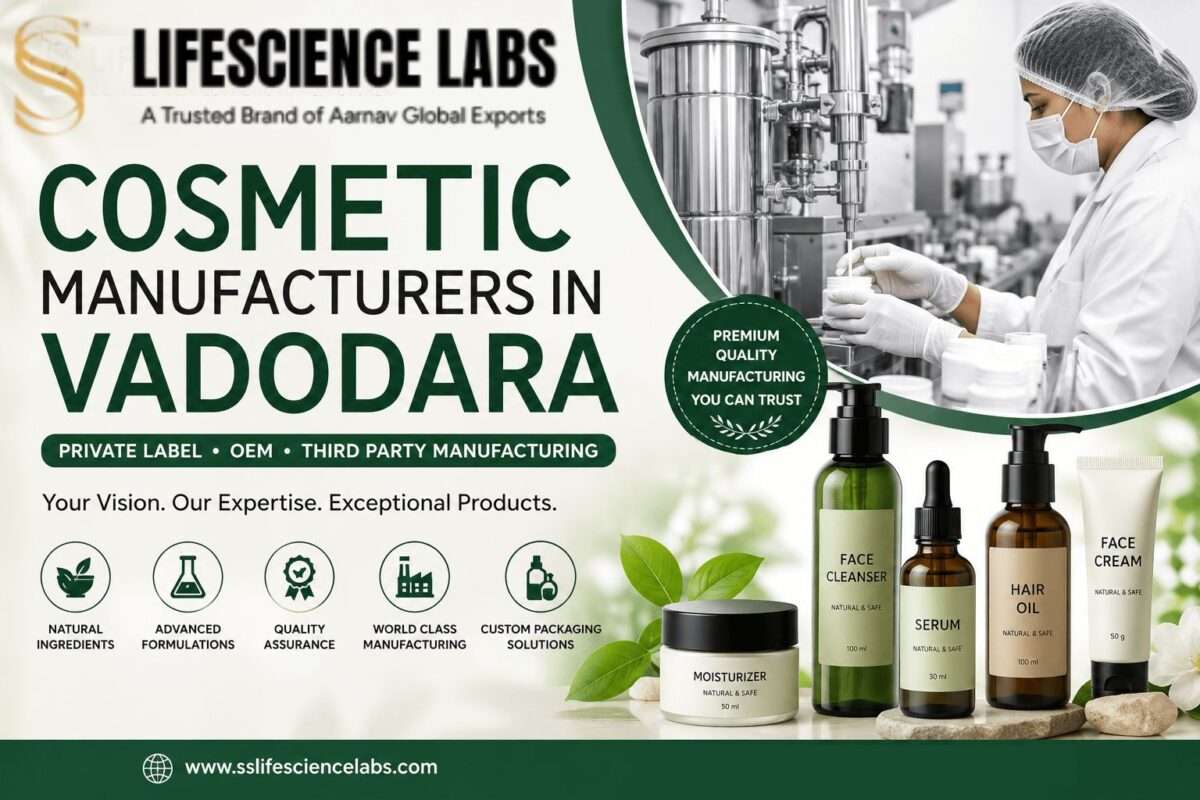
Private Label Cosmetics Supplier in India: Complete OEM & ODM Manufacturing Guide (2026)

Learn more about private label, OEM, and ODM manufacturing options for cosmetic brands.

How to Choose the Best Cosmetic Company in Delhi: A Complete Guide for Beauty Brands

A Delhi-focused guide for brands researching and comparing cosmetic companies.

Top Cosmetics Manufacturers in Delhi: Complete Guide (2026)

Additional guidance for businesses researching cosmetic manufacturers in Delhi and comparing their options.
How to Find Trusted Beauty Product Manufacturers in Delhi: Complete Guide for Brands

A practical guide to help beauty brands find and evaluate trusted beauty product manufacturers in Delhi.

Categories
Blog

How to Find Trusted Beauty Product Manufacturers in Delhi: Complete Guide for Brands

How to Find Trusted Beauty Product Manufacturers in Delhi: Complete Guide for Brands

Finding the right Beauty Product Manufacturers in Delhi is an important decision for anyone planning to start a beauty brand or expand an existing product range. Your manufacturer can affect product quality, consistency, packaging, production planning, cost, and ultimately the experience your customers have with your brand.

Delhi and the surrounding region offer many options for cosmetic and beauty product manufacturing. This gives brands more choice, but it can also make the selection process confusing. Two manufacturers may look similar online while offering very different product categories, minimum order quantities, formulation options, customization, packaging support, and manufacturing services.

This is why choosing a manufacturer should not begin with one question: “Who is offering the lowest price?”

A better approach is to first understand what your brand needs and then compare manufacturers against those requirements.

SS LifeScience Labs works with brands looking for cosmetic and beauty product manufacturing solutions. Whether you are considering SS LifeScience Labs or comparing different manufacturers, your decision should be based on your actual products, target customers, quantities, budget, and future plans.

This guide will help you understand what to check, which questions to ask, how to compare manufacturers, and what to review before moving ahead with bulk production.

What Does a Beauty Product Manufacturer Do?

A beauty product manufacturer helps brands move from a product idea toward a finished product that can eventually be sold in the market.

Depending on the manufacturer and manufacturing model, the process may involve product formulation options, sample development, manufacturing, filling, packaging support, labeling, and other production-related requirements.

However, every manufacturer does not provide exactly the same services.

One company may mainly work with Skin Care Product Manufacturer , while another may offer manufacturing across skincare, haircare, body care, personal care, and other beauty categories.

The level of customization can also differ. Some manufacturers may provide existing product options, while others may support different levels of product development or customization based on the requirements of the brand.

Therefore, seeing the words “cosmetic manufacturer” on a website is not enough to decide whether that company is right for you.

You need to understand whether it can actually support the products you want to launch.

If you are entering private-label manufacturing for the first time, our  How to Choose the Best Private Label Cosmetics Supplier in India 2026: Complete Buyer’s Guide explains the important factors brands should consider while evaluating a manufacturing partner.

Define Your Brand Requirements Before Contacting Manufacturers

One of the most common mistakes new beauty brands make is contacting manufacturers before deciding what they actually want to sell.

You do not need to know the technical formulation of every product before your first discussion. However, you should have a basic idea of your product category, target customer, initial range, positioning, expected quantity, and approximate budget.

For example, simply telling a manufacturer:

“I want to start a beauty brand. Please send me your catalogue and prices.”

may result in a huge list of products without helping you decide what your brand actually needs.

A clearer requirement would be:

“We are planning to launch an initial skincare range with a face cleanser, serum, and moisturizer. We would like to understand the available manufacturing options, MOQ for each product, sample process, customization, packaging support, and commercial requirements.”

This gives the manufacturer useful information and helps keep the discussion focused.

It also makes it easier for you to compare multiple Beauty Product Manufacturers in Delhi because you can send approximately the same requirement to every shortlisted company.

Start With Your Target Customer

Before choosing products, think about the person who is expected to buy them.

Ask yourself:

Who is the product for?

What type of beauty or skincare problem is the customer trying to address?

What price range is appropriate for this customer?

Where do you plan to sell the product?

What type of product experience do you want to create?

These questions can help you avoid building a product range simply because certain products are available in a manufacturer’s catalogue.

For example, if your brand is positioned around a simple skincare routine, launching many unrelated beauty products at the same time may make your positioning less clear.

A smaller and more focused range can sometimes be easier for customers to understand and easier for the brand to market.

Prepare a Simple Product Requirement Sheet

Before contacting manufacturers, prepare a basic requirement sheet.

It does not need to contain complicated technical information. The purpose is simply to organize your ideas before discussions begin.

Requirement What You Need to Decide
Product Category Skincare, haircare, body care, personal care, etc.
Initial Products Products you want to launch first
Target Customer Who you expect to buy them
Brand Positioning Affordable, mid-range, premium, professional, etc.
Approximate Quantity Expected requirement per SKU
Formulation Existing option or customization required
Packaging Own packaging or manufacturer support required
Budget Approximate budget for the initial range
Launch Plan When you expect to launch

You do not need a final answer for every point at this stage.

Even approximate information gives you a much better starting point than entering manufacturer discussions without a clear plan.

If you are still deciding what type of skincare or haircare range to build, Top Trending Skincare and Haircare Products for 2025: What Brands Should Be Offering can provide additional ideas while you research possible product categories.

Understand Private Label, OEM and ODM Before Choosing

While searching for Beauty Product Manufacturers in Delhi, you may frequently see terms such as Private Label, OEM, and ODM.

Do not choose a manufacturing model simply because one term sounds more professional than another.

What matters is the level of product development and customization your brand actually requires.

Private Label Manufacturing

Private label can be relevant for businesses that want products manufactured under their own brand without setting up their own production facility.

The exact level of customization and service available can vary between manufacturers, so always ask what is included.

OEM Manufacturing

OEM may be suitable when a brand has more defined product requirements and needs manufacturing according to agreed specifications.

Again, the exact process and available options depend on the manufacturer.

ODM Manufacturing

ODM can involve broader product development and manufacturing support, depending on the company’s service model.

Instead of assuming what each term means in a particular company, ask the manufacturer to explain what its private label, OEM, or ODM service includes for your specific products.

For a deeper comparison, read Private Label Cosmetics vs OEM vs ODM Cosmetics: Which Manufacturing Model Is Right for Your Brand? before deciding which manufacturing approach fits your business.

Search for Manufacturers Based on Product Fit

Once your basic requirements are clear, you can start building a manufacturer shortlist.

Do not begin by searching only for the “biggest” or “cheapest” manufacturer.

Start by finding companies that appear capable of supporting the product categories you actually need.

If you are planning a skincare range, review the company’s skincare manufacturing options. If haircare, body care, or personal care products are part of your current or future plans, evaluate those capabilities separately.

Visit the manufacturer’s website and understand the services and product categories it presents. Then prepare questions about anything that is important but unclear.

After your initial research, shortlist around three to five relevant manufacturers rather than contacting a very large number of companies.

SS LifeScience Labs can be included in this comparison when brands are evaluating a Cosmetic Products Manufacturer in India for beauty, skincare, haircare, personal care, or related manufacturing requirements.

Send Similar Requirements to Every Shortlisted Manufacturer

A fair comparison requires similar information.

If you ask Manufacturer A for 500 units of three products but ask Manufacturer B for 2,000 units of six products, comparing their quotations will not tell you which manufacturer is actually more suitable.

Prepare one basic enquiry and use the same product requirements when starting discussions with shortlisted manufacturers.

Record the answers in a spreadsheet or document.

You can track:

Comparison Point Manufacturer A Manufacturer B Manufacturer C
Required Products Available Yes/No Yes/No Yes/No
MOQ Suitable Yes/No Yes/No Yes/No
Samples Available Yes/No Yes/No Yes/No
Customization Available Yes/No Yes/No Yes/No
Packaging Support Yes/No Yes/No Yes/No
Commercial Terms Clear Yes/No Yes/No Yes/No
Repeat Order Support Yes/No Yes/No Yes/No
Communication Good/Average/Poor Good/Average/Poor Good/Average/Poor

This makes your decision much easier than trying to remember several WhatsApp chats, calls, catalogues, and quotations.

Understand MOQ Before Finalizing Your Product Range

MOQ means Minimum Order Quantity. It is the minimum quantity a manufacturer requires for a particular product or production arrangement.

This is especially important for new beauty brands.

Suppose you plan to launch eight products and each SKU requires its own minimum quantity. Your total inventory and investment can become much larger than expected.

Ask the manufacturer about the applicable MOQ for each product you are considering.

Also ask whether customization, packaging, formulation requirements, or other project details can affect the required quantity.

Do not automatically choose the manufacturer offering the lowest MOQ. A manageable MOQ is useful, but it should be considered alongside product suitability, samples, manufacturing support, packaging, and overall commercial requirements.

For a new beauty business, launching a smaller number of carefully selected products can sometimes be more practical than creating a large catalogue before you know what customers will actually buy.

Review Samples Before Moving Toward Bulk Production

Samples give you an opportunity to understand the product before committing to a larger order.

Depending on the product, review relevant factors such as appearance, texture, fragrance, feel, usability, and how the product works with the proposed packaging.

Compare the sample against your original product brief instead of judging it only on whether you personally like it.

For example, a rich cream may feel premium, but if your original plan was a lightweight product for your target customer, it may not match the product you intended to create.

Keep simple written notes for every sample.

Instead of writing:

“Sample 2 is good.”

write:

“Face Serum – Sample 02: texture matches the planned direction; fragrance needs further discussion; packaging not yet finalized.”

This becomes particularly useful when several products and sample versions are being reviewed at the same time.

Do Not Choose a Manufacturer Based Only on Price

Price is an important part of manufacturer selection, but it should not decide everything.

A lower manufacturing quotation may not necessarily mean a lower final product cost.

One manufacturer may quote only for manufacturing while another quotation may cover additional requirements. Packaging, printing, samples or development where applicable, transportation, and other agreed expenses can also affect your total investment.

Ask each manufacturer what is included in the quotation and what needs to be considered separately.

This gives you a fairer comparison and helps you understand whether the product fits your planned selling price.

Brands exploring outsourced production can also read  3rd Party Cosmetic Manufacturing in India | OEM Cosmetics for additional information about this manufacturing route.

Think About the Complete Product Cost

Before approving production, consider the complete finished-product cost rather than looking only at the manufacturing price per unit.

Depending on your arrangement, the overall cost may involve manufacturing, primary packaging, labels or printing, outer packaging, product development or samples where applicable, transportation, and other agreed requirements.

Ask for actual project-specific information rather than filling your calculations with random estimated prices.

You also need to leave room in your business plan for costs outside manufacturing, such as marketing, logistics, website operations, marketplace charges where applicable, and other expenses involved in selling the product.

A product may appear affordable during the initial manufacturing discussion but become difficult to price once all relevant business expenses are considered.

Working this out before bulk production gives you more flexibility to adjust the product range or packaging plan if needed.

Evaluate SS LifeScience Labs Using the Same Process

If SS LifeScience Labs is part of your manufacturer shortlist, evaluate it using the same practical criteria you would use for any other company.

Discuss the exact products you want to manufacture, expected quantities, manufacturing model, formulation or customization requirements, sample process, packaging needs, and commercial considerations.

Do not select any manufacturer only because it uses words such as “trusted,” “premium,” or “experienced.” Your own product requirements should remain the basis of the decision.

Brands researching the company’s manufacturing positioning can also read  Why SSL Life Science Labs is a Trusted Cosmetic Products Manufacturer in India as part of their wider research.

The final question should always be whether the available manufacturing solution makes sense for your particular beauty brand.

Check Product Quality Before You Approve Manufacturing

Once you have shortlisted suitable Beauty Product Manufacturers in Delhi, the next step is to look more closely at product quality. A catalogue can show you what a manufacturer offers, but it cannot tell you whether a particular product is right for your brand.

Quality should be discussed before bulk production, not after your products are ready.

Ask the manufacturer how product requirements are managed during production and what quality-related checks are relevant to the products you are planning to manufacture. If a particular certification, manufacturing standard, or testing requirement is important to your business, discuss it directly and ask for relevant information where appropriate.

You do not need to understand every technical part of cosmetic manufacturing. However, you should understand enough about the process to know what you are approving.

The most important point is that the finished product should match the requirements agreed between your brand and the manufacturer.

Product Consistency Matters for Repeat Customers

Your first sample may look and feel exactly how you want it, but consistency becomes even more important after customers start buying the product.

Imagine that customers purchase your moisturizer and like its texture and overall experience. A few months later, they reorder it and notice that the new product feels noticeably different.

From the customer’s point of view, this is not a manufacturing issue. It is a brand experience issue because your name is on the product.

Before approving production, ask how the final product requirements are recorded and referred to when repeat orders are manufactured.

Your brand should also maintain its own records of approved samples, packaging, artwork, and other important product information.

This becomes increasingly important as your product range grows.

Understand Your Formulation Options

Different beauty brands need different levels of formulation support.

Some brands may prefer to evaluate available product options and select something suitable for their target market. Others may have more specific requirements and want to discuss customization.

There is no single approach that works for every brand.

The right choice depends on your target customer, product positioning, budget, expected quantity, and how different you want the product to be from other options in the market.

When discussing formulation with SS LifeScience Labs, explain the product experience you are trying to create instead of simply saying:

“We need a premium serum.”

A more useful brief could explain that you want a lightweight serum for a particular customer segment, have a preferred product feel, want to discuss specific formulation requirements, and plan to sell within a particular market position.

Clear requirements make the conversation much more useful.

Do Not Add Ingredients Only Because They Are Trending

Beauty trends can change quickly. An ingredient may suddenly become popular across social media, advertisements, and competitor products.

That does not mean it belongs in every formulation.

Start with the purpose of the product.

Ask what you want the product to add to your range, who will use it, and how it fits your overall brand positioning.

Then discuss suitable formulation options with the manufacturer.

Adding ingredients simply because they are currently popular can make your product concept unnecessarily complicated. Changes may also affect other aspects of product development.

Your goal should be to create a product with a clear purpose rather than trying to include every trend in one formula.

Give Clear Feedback During Sample Development

Receiving a sample is only part of the development process. The quality of your feedback also matters.

Avoid vague comments such as:

“It doesn’t feel premium enough.”

Explain what you actually want changed.

For example:

“The texture feels heavier than the product direction we planned. We would prefer to discuss a lighter feel for the next version.”

This tells the manufacturer what you are reacting to.

If you are reviewing several products, keep feedback separate for each SKU. Do not combine comments about a serum, moisturizer, cleanser, and shampoo in one unclear message.

This makes revisions easier to track and reduces confusion.

Understand What “Customization” Means for Your Product

You may see the word customization frequently while researching manufacturers, but it can cover different things depending on the company and product.

Ask what can actually be customized for the product you are discussing.

Depending on the project, brands may want to discuss aspects of the formulation, product experience, fragrance, packaging, or other requirements. The available options can differ from product to product.

Also ask whether the requested change affects other parts of the project.

A change that sounds small may affect the sample process, commercial requirements, MOQ, packaging, or production planning.

This is why customization should always have a business reason.

Do not keep changing a product simply because more options are available.

Keep Your Target Customer Involved in Every Product Decision

During product development, it is easy to become focused on what you personally like.

But you are not necessarily the customer.

Suppose you personally prefer a rich moisturizer, while your brand is being developed for customers looking for a lightweight daily-use product. Your personal preference should not automatically override the original product direction.

Return to your target customer whenever you review samples.

Ask:

Does this product fit the customer we are targeting?

Does the experience match our brand positioning?

Would it make sense at our planned selling price?

Does it fit naturally with the other products in our range?

These questions help keep product development connected to the business plan.

Plan Packaging Alongside the Product

Packaging should not be treated as the final decoration added after the product has already been developed.

It is part of the customer experience.

A bottle, pump, tube, jar, or another packaging format should make sense for the product inside it.

Something can look attractive in a photograph but still be inconvenient for customers to use.

For example, the way a product dispenses can affect the experience even when the formulation itself is good.

Discuss packaging requirements early enough that the product and packaging can be considered together.

For brands exploring private-label production, understanding how product development and manufacturing fit together is also important. Our  Private Label Cosmetics Supplier in India: Complete OEM & ODM Manufacturing Guide (2026) provides more information about the overall private-label manufacturing approach.

Make Packaging Match Your Brand Positioning

Packaging does not need to be expensive to be effective.

It needs to make sense for the product and the customer.

If you are building a premium beauty brand, your presentation may be different from a brand focused on an affordable everyday range. But simply choosing expensive packaging will not automatically make customers see the product as premium.

The product, packaging, website, photography, pricing, and overall brand message should feel connected.

New brands should be especially careful about spending too much of their initial budget on packaging before they have tested customer demand.

A beautiful package is useful, but you also need money for inventory, marketing, logistics, website management, and other parts of the business.

Balance presentation with practicality.

Review Artwork Before It Goes Into Production

Once your packaging direction is finalized, artwork and labels become another important approval stage.

Do not approve artwork only because it looks good on a large computer screen.

Think about how it will appear on the actual bottle, tube, jar, or box.

Important text should be readable, the brand name should be presented clearly, and the final artwork should correspond with the product being manufactured.

Any information that needs to follow applicable product labeling or regulatory requirements should be handled appropriately before printing.

Take time to review spellings, product names, quantities, and other important details.

A small mistake in a design file can become a much larger problem if it is repeated across an entire production quantity.

Do Not Finalize Packaging Without Thinking About Shipping

Your product does not stay on a display shelf from the moment it is manufactured.

It may need to travel from the manufacturer to your warehouse, from your warehouse to a marketplace or fulfillment partner, and eventually to the customer.

Packaging decisions should therefore consider handling and transportation as well as appearance.

If you plan to sell primarily online, the customer may receive the product after several stages of shipping.

Think about how the complete product presentation will hold up through that process.

The outer shipping solution is separate from the cosmetic packaging itself, but both contribute to what the customer eventually receives.

Understand Production Planning Before Announcing a Launch Date

Do not announce a major launch date simply because your first sample has been approved.

Several steps may still need to be completed before finished inventory is ready.

Depending on the project, this can include final product approval, packaging arrangements, artwork, commercial confirmation, production, and other agreed stages.

Ask the manufacturer about the expected process for your project before committing to marketing dates.

If you have already paid influencers, scheduled advertising, announced a launch, or started taking customer interest, a delay can create unnecessary pressure.

A better approach is to build reasonable room into your launch plan.

This allows you to focus on getting the product right instead of approving decisions too quickly because a marketing deadline is approaching.

Ask About Repeat Production Before Your First Order

It may seem early to discuss repeat production when you have not even placed the first order, but this information can help you plan ahead.

Ask what you should know if you need the same product again.

For example, understand how the previously approved product requirements will be identified, whether packaging availability needs to be planned, and whether any important commercial or quantity considerations apply to repeat orders.

You do not need to predict exactly how much you will sell.

You simply need to understand how the next order would work if the product becomes successful.

This is one of the differences between thinking about a single manufacturing order and building a beauty brand for the longer term.

Evaluate Communication Throughout the Process

Communication is an important part of your experience with Beauty Product Manufacturers in Delhi.

Pay attention to how clearly important questions are answered.

If you ask about samples, MOQ, packaging, customization, or production, do you understand the response?

If something changes, is the updated requirement clear?

If you are developing several products, does everyone understand which version is currently being discussed?

You should not expect a manufacturer to respond instantly to every message. Some questions may require information from different teams.

What matters is whether important business decisions can be communicated clearly.

Keep Important Approvals in Writing

Calls and meetings can be useful for discussing ideas, but important decisions should also have a written record.

Keep your approved product information, final packaging selection, artwork, quantities, quotation, and other important agreed requirements organized.

If something changes during a call, send or request written confirmation of the updated requirement.

For example:

Face Serum – Final Product Review: Product version approved. Packaging finalized separately. Final quantity to follow the confirmed commercial order.

This is much clearer than depending on memory several months later.

When your range grows, good documentation becomes even more valuable.

Review SS LifeScience Labs Based on Your Actual Requirements

If you are considering SS LifeScience Labs for your beauty brand, use the same quality, formulation, packaging, and communication checks discussed above.

Do not evaluate the company only by the number of products shown in a catalogue.

Share your actual requirements and discuss what manufacturing options are suitable for those products.

If your business is specifically evaluating Delhi-based cosmetic companies, How to Choose the Best Cosmetic Company in Delhi: A Complete Guide for Beauty Brands can also help you understand the wider manufacturer-selection process.

The aim is to determine whether the manufacturing arrangement fits your brand rather than trying to force your product plan into whatever option is easiest to order.

Do a Final Product Review From the Customer’s Point of View

Before moving closer to bulk production, put all the technical and commercial discussions aside for a moment and look at the product like a customer.

Pick up the sample.

Look at the packaging.

Use the product in the way a customer would.

Think about whether the overall experience matches the brand you are trying to build.

A product can meet your internal requirements and still need improvement from a customer-experience perspective.

This final review can reveal practical issues that are easy to miss when you have spent weeks focusing on quotations, sample versions, and manufacturing discussions.

Your customer will never see those discussions.

They will only see and use the finished product.

Check Product Quality Before You Approve Manufacturing

Once you have shortlisted suitable Beauty Product Manufacturers in Delhi, the next step is to look more closely at product quality. A catalogue can show you what a manufacturer offers, but it cannot tell you whether a particular product is right for your brand.

Quality should be discussed before bulk production, not after your products are ready.

Ask the manufacturer how product requirements are managed during production and what quality-related checks are relevant to the products you are planning to manufacture. If a particular certification, manufacturing standard, or testing requirement is important to your business, discuss it directly and ask for relevant information where appropriate.

You do not need to understand every technical part of cosmetic manufacturing. However, you should understand enough about the process to know what you are approving.

The most important point is that the finished product should match the requirements agreed between your brand and the manufacturer.

Product Consistency Matters for Repeat Customers

Your first sample may look and feel exactly how you want it, but consistency becomes even more important after customers start buying the product.

Imagine that customers purchase your moisturizer and like its texture and overall experience. A few months later, they reorder it and notice that the new product feels noticeably different.

From the customer’s point of view, this is not a manufacturing issue. It is a brand experience issue because your name is on the product.

Before approving production, ask how the final product requirements are recorded and referred to when repeat orders are manufactured.

Your brand should also maintain its own records of approved samples, packaging, artwork, and other important product information.

This becomes increasingly important as your product range grows.

Understand Your Formulation Options

Different beauty brands need different levels of formulation support.

Some brands may prefer to evaluate available product options and select something suitable for their target market. Others may have more specific requirements and want to discuss customization.

There is no single approach that works for every brand.

The right choice depends on your target customer, product positioning, budget, expected quantity, and how different you want the product to be from other options in the market.

When discussing formulation with SS LifeScience Labs, explain the product experience you are trying to create instead of simply saying:

“We need a premium serum.”

A more useful brief could explain that you want a lightweight serum for a particular customer segment, have a preferred product feel, want to discuss specific formulation requirements, and plan to sell within a particular market position.

Clear requirements make the conversation much more useful.

Do Not Add Ingredients Only Because They Are Trending

Beauty trends can change quickly. An ingredient may suddenly become popular across social media, advertisements, and competitor products.

That does not mean it belongs in every formulation.

Start with the purpose of the product.

Ask what you want the product to add to your range, who will use it, and how it fits your overall brand positioning.

Then discuss suitable formulation options with the manufacturer.

Adding ingredients simply because they are currently popular can make your product concept unnecessarily complicated. Changes may also affect other aspects of product development.

Your goal should be to create a product with a clear purpose rather than trying to include every trend in one formula.

Give Clear Feedback During Sample Development

Receiving a sample is only part of the development process. The quality of your feedback also matters.

Avoid vague comments such as:

“It doesn’t feel premium enough.”

Explain what you actually want changed.

For example:

“The texture feels heavier than the product direction we planned. We would prefer to discuss a lighter feel for the next version.”

This tells the manufacturer what you are reacting to.

If you are reviewing several products, keep feedback separate for each SKU. Do not combine comments about a serum, moisturizer, cleanser, and shampoo in one unclear message.

This makes revisions easier to track and reduces confusion.

Understand What “Customization” Means for Your Product

You may see the word customization frequently while researching manufacturers, but it can cover different things depending on the company and product.

Ask what can actually be customized for the product you are discussing.

Depending on the project, brands may want to discuss aspects of the formulation, product experience, fragrance, packaging, or other requirements. The available options can differ from product to product.

Also ask whether the requested change affects other parts of the project.

A change that sounds small may affect the sample process, commercial requirements, MOQ, packaging, or production planning.

This is why customization should always have a business reason.

Do not keep changing a product simply because more options are available.

Keep Your Target Customer Involved in Every Product Decision

During product development, it is easy to become focused on what you personally like.

But you are not necessarily the customer.

Suppose you personally prefer a rich moisturizer, while your brand is being developed for customers looking for a lightweight daily-use product. Your personal preference should not automatically override the original product direction.

Return to your target customer whenever you review samples.

Ask:

Does this product fit the customer we are targeting?

Does the experience match our brand positioning?

Would it make sense at our planned selling price?

Does it fit naturally with the other products in our range?

These questions help keep product development connected to the business plan.

Plan Packaging Alongside the Product

Packaging should not be treated as the final decoration added after the product has already been developed.

It is part of the customer experience.

A bottle, pump, tube, jar, or another packaging format should make sense for the product inside it.

Something can look attractive in a photograph but still be inconvenient for customers to use.

For example, the way a product dispenses can affect the experience even when the formulation itself is good.

Discuss packaging requirements early enough that the product and packaging can be considered together.

For brands exploring private-label production, understanding how product development and manufacturing fit together is also important. Our Private Label Cosmetics Supplier in India: Complete OEM & ODM Manufacturing Guide (2026) provides more information about the overall private-label manufacturing approach.

How to Choose the Best Cosmetic Company in Delhi: A Complete Guide for Beauty Brands Match Your Brand Positioning

Packaging does not need to be expensive to be effective.

It needs to make sense for the product and the customer.

If you are building a premium beauty brand, your presentation may be different from a brand focused on an affordable everyday range. But simply choosing expensive packaging will not automatically make customers see the product as premium.

The product, packaging, website, photography, pricing, and overall brand message should feel connected.

New brands should be especially careful about spending too much of their initial budget on packaging before they have tested customer demand.

A beautiful package is useful, but you also need money for inventory, marketing, logistics, website management, and other parts of the business.

Balance presentation with practicality.

Review Artwork Before It Goes Into Production

Once your packaging direction is finalized, artwork and labels become another important approval stage.

Do not approve artwork only because it looks good on a large computer screen.

Think about how it will appear on the actual bottle, tube, jar, or box.

Important text should be readable, the brand name should be presented clearly, and the final artwork should correspond with the product being manufactured.

Any information that needs to follow applicable product labeling or regulatory requirements should be handled appropriately before printing.

Take time to review spellings, product names, quantities, and other important details.

A small mistake in a design file can become a much larger problem if it is repeated across an entire production quantity.

Do Not Finalize Packaging Without Thinking About Shipping

Your product does not stay on a display shelf from the moment it is manufactured.

It may need to travel from the manufacturer to your warehouse, from your warehouse to a marketplace or fulfillment partner, and eventually to the customer.

Packaging decisions should therefore consider handling and transportation as well as appearance.

If you plan to sell primarily online, the customer may receive the product after several stages of shipping.

Think about how the complete product presentation will hold up through that process.

The outer shipping solution is separate from the cosmetic packaging itself, but both contribute to what the customer eventually receives.

Understand Production Planning Before Announcing a Launch Date

Do not announce a major launch date simply because your first sample has been approved.

Several steps may still need to be completed before finished inventory is ready.

Depending on the project, this can include final product approval, packaging arrangements, artwork, commercial confirmation, production, and other agreed stages.

Ask the manufacturer about the expected process for your project before committing to marketing dates.

If you have already paid influencers, scheduled advertising, announced a launch, or started taking customer interest, a delay can create unnecessary pressure.

A better approach is to build reasonable room into your launch plan.

This allows you to focus on getting the product right instead of approving decisions too quickly because a marketing deadline is approaching.

Ask About Repeat Production Before Your First Order

It may seem early to discuss repeat production when you have not even placed the first order, but this information can help you plan ahead.

Ask what you should know if you need the same product again.

For example, understand how the previously approved product requirements will be identified, whether packaging availability needs to be planned, and whether any important commercial or quantity considerations apply to repeat orders.

You do not need to predict exactly how much you will sell.

You simply need to understand how the next order would work if the product becomes successful.

This is one of the differences between thinking about a single manufacturing order and building a beauty brand for the longer term.

Evaluate Communication Throughout the Process

Communication is an important part of your experience with Beauty Product Manufacturers in Delhi.

Pay attention to how clearly important questions are answered.

If you ask about samples, MOQ, packaging, customization, or production, do you understand the response?

If something changes, is the updated requirement clear?

If you are developing several products, does everyone understand which version is currently being discussed?

You should not expect a manufacturer to respond instantly to every message. Some questions may require information from different teams.

What matters is whether important business decisions can be communicated clearly.

Keep Important Approvals in Writing

Calls and meetings can be useful for discussing ideas, but important decisions should also have a written record.

Keep your approved product information, final packaging selection, artwork, quantities, quotation, and other important agreed requirements organized.

If something changes during a call, send or request written confirmation of the updated requirement.

For example:

Face Serum – Final Product Review: Product version approved. Packaging finalized separately. Final quantity to follow the confirmed commercial order.

This is much clearer than depending on memory several months later.

When your range grows, good documentation becomes even more valuable.

Review SS LifeScience Labs Based on Your Actual Requirements

If you are considering SS LifeScience Labs for your beauty brand, use the same quality, formulation, packaging, and communication checks discussed above.

Do not evaluate the company only by the number of products shown in a catalogue.

Share your actual requirements and discuss what manufacturing options are suitable for those products.

If your business is specifically evaluating Delhi-based cosmetic companies,  How to Choose the Best Cosmetic Company in Delhi: A Complete Guide for Beauty Brands can also help you understand the wider manufacturer-selection process.

The aim is to determine whether the manufacturing arrangement fits your brand rather than trying to force your product plan into whatever option is easiest to order.

Do a Final Product Review From the Customer’s Point of View

Before moving closer to bulk production, put all the technical and commercial discussions aside for a moment and look at the product like a customer.

Pick up the sample.

Look at the packaging.

Use the product in the way a customer would.

Think about whether the overall experience matches the brand you are trying to build.

A product can meet your internal requirements and still need improvement from a customer-experience perspective.

This final review can reveal practical issues that are easy to miss when you have spent weeks focusing on quotations, sample versions, and manufacturing discussions.

Your customer will never see those discussions.

They will only see and use the finished product.

Turn Your Product Idea Into a Clear Manufacturing Plan

After selecting the manufacturer you want to work with, the next stage is moving from research and comparison to actual product development and production.

This is where many beauty brands make avoidable mistakes. They may have a clear idea in their mind but fail to communicate it properly to the manufacturer. As a result, several sample revisions are needed, packaging decisions keep changing, or the final cost becomes different from what was originally expected.

Whether you choose SS LifeScience Labs or another option among Beauty Product Manufacturers in Delhi, begin with a clear manufacturing plan.

Your plan should identify the products being developed, approximate quantities, product positioning, required customization, packaging direction, and any important requirements that have already been discussed.

The clearer the starting information, the easier it becomes to manage the stages that follow.

Finalize Your Initial Product Range

Before beginning detailed product development, decide which products will actually be included in your first launch.

You may have shortlisted many interesting products during manufacturer research, but that does not mean all of them need to launch together.

Think about how the products work as a range.

For example, a skincare-focused brand might begin with a cleanser, serum, and moisturizer rather than launching skincare, haircare, body care, and several unrelated products at the same time.

A focused range can make the launch easier to understand for customers. It can also simplify inventory management, product photography, website creation, marketing, and future reorder planning.

You can always expand after you have real information about what customers are buying.

Create a Separate Brief for Every Product

Once you know which products you want to launch, create an individual brief for each SKU.

Do not manage an entire product range through one general description.

A face serum, moisturizer, cleanser, shampoo, and body lotion can have very different requirements.

A basic product brief might include:

Product Requirement Details to Provide
Product Name/Type What you want to manufacture
Target Customer Intended customer group
Product Positioning Affordable, mid-range, premium, etc.
Product Direction The experience you want to create
Customization Requirements you want to discuss
Packaging Preference Bottle, tube, pump, jar, etc.
Approximate Quantity Planned units/SKU
Launch Plan Expected launch period

Keep this document simple.

Its purpose is to make sure both your team and the manufacturer understand the same product direction.

Discuss What Is Practical Before Developing Samples

Your first product idea may change slightly after speaking with the manufacturer, and that is not necessarily a problem.

A manufacturing discussion can help you understand what is practical for your product, budget, quantity, packaging, and expected launch plan.

For example, you may have a particular packaging format in mind but discover that another option works better for the product. A customization request may also affect the development process or commercial requirements.

Discuss these points before moving too far into sample development.

The goal is not to accept every suggestion from the manufacturer. It is to combine your brand direction with practical manufacturing information and make a better product decision.

Develop and Review the First Sample

Once the product direction is clear, the sample stage can begin according to the manufacturing arrangement you have discussed.

Treat the first sample as something to evaluate, not something you automatically have to approve.

Return to your product brief.

Check whether the sample matches the direction you originally discussed. Depending on the product, you may need to review its appearance, texture, fragrance, feel, usability, or other relevant characteristics.

Write down your feedback instead of giving it from memory.

For example:

Face Serum – Sample 01: Overall direction is suitable. Texture needs further discussion. Packaging is not yet finalized.

This creates a clear record of what you liked and what still needs attention.

Handle Sample Revisions One Step at a Time

If the first sample needs changes, keep each revision clearly identified.

You could use a simple system such as:

Face Serum – Sample 01: Initial version
Face Serum – Sample 02: Revised version
Face Serum – Sample 03: Final version under review

This becomes particularly important when several products are being developed simultaneously.

Imagine reviewing four products with three versions of each. Without clear names, you could easily end up discussing the wrong sample.

Avoid messages such as:

“Use the serum you sent before the last one.”

Instead, use the exact sample identification used in your records.

This makes communication with SS LifeScience Labs or another manufacturer much clearer.

Know When to Stop Making Unnecessary Changes

Product development can become an endless process if every sample creates a new idea.

Once the product meets your original brief and fits the target customer, ask whether another change is actually necessary.

Changing something simply because you can change it may add more development time without making the product meaningfully better.

Use your original product requirements as the reference point.

If the sample matches the planned product experience, customer positioning, and business requirements, you may be closer to approval than you think.

The aim is not to create a theoretically perfect product. It is to create a product that is appropriate for the customer and commercially practical for the brand.

Finalize the Product Before Moving to Bulk Production

Once you are satisfied with the product, clearly record which version has been approved.

Do not allow several sample versions to remain informally “almost approved.”

You should be able to identify the final version without confusion.

Keep the approved product information with your other project records.

This can also help later if the product performs well and you need another production run.

At this point, avoid casually requesting additional formulation changes unless there is a genuine reason. A significant change may mean that the product needs to be reviewed again before production.

Finalize Packaging With the Approved Product

The packaging decision should now connect directly with the product you have approved.

Review how the product and packaging work together.

Think about dispensing, usability, presentation, storage, and the experience customers will have when they use it.

Also make sure you know which packaging option has received final approval.

If several bottles, pumps, jars, tubes, or other options were discussed during development, clearly identify the final selection in your project records.

Do not rely on statements such as:

“Use the bottle we discussed earlier.”

Record the actual approved packaging option clearly.

Review the Final Artwork on the Correct Packaging

Once the packaging has been selected, review the final artwork in the context of the actual packaging size.

A design can look very different when moved from a large screen to a small bottle or box.

Check the product name, brand presentation, readability, and other important details carefully.

Where applicable, make sure required product information is handled according to relevant labeling requirements before printing.

You should also make sure the latest approved artwork is the version being used.

Simple file names can help.

For example:

Serum_Label_Final_Approved

is much easier to identify later than files named:

final2, final-new, or latest-final-new2.

Confirm Quantity for Every SKU

Do not approve one total quantity for the complete range without understanding how that inventory is divided.

Record the confirmed quantity for every individual SKU.

For example:

Product Final Quantity
Face Cleanser Confirmed quantity
Face Serum Confirmed quantity
Moisturizer Confirmed quantity
Body Care Product Confirmed quantity

Use your actual confirmed quantities rather than estimated or random numbers.

Your order should reflect your available budget and realistic sales expectations.

If one product is more important to your launch than another, your inventory planning does not necessarily need to be identical across the complete range, subject to the applicable manufacturing requirements.

Review the Final Commercial Information

Before giving the final go-ahead, return to the quotation and commercial discussion.

Make sure the final commercial information reflects the product you are now approving.

This matters because your project may have changed since the first quotation.

Perhaps the packaging changed.

Perhaps the quantity changed.

Perhaps you requested additional customization.

Perhaps one product was removed from the launch.

The final commercial discussion should reflect the final project, not an older version of your requirements.

If something is unclear, clarify it before production rather than making assumptions.

Create a Final Approval Checklist

Before bulk manufacturing starts, review the complete project one final time.

Final Approval Status
Product/SKU confirmed ✓ / Review
Final sample identified ✓ / Review
Requested customization confirmed ✓ / Review
Packaging confirmed ✓ / Review
Artwork reviewed ✓ / Review
Quantity confirmed ✓ / Review
Commercial information understood ✓ / Review
Important requirements recorded ✓ / Review
Production next steps understood ✓ / Review

If an important item still shows Review, resolve it before giving final approval.

This small step can prevent much larger confusion later.

Understand What Happens After Final Approval

Once the product, packaging, quantity, artwork, and commercial requirements are finalized, ask what happens next.

You do not need to manage the manufacturer’s internal production operations. But as the brand owner, you should understand the major stages relevant to your order.

Ask what information is still required from your side and how you will know when the order reaches the next important stage.

Keep communication organized during this period.

If you are manufacturing several SKUs, use product names in messages rather than sending general questions such as:

“What’s the update?”

A clearer question would identify the particular product or order you are asking about.

Do Not Start Heavy Marketing Too Early

Launching a beauty brand is exciting, and it is natural to want to begin promotion quickly.

However, avoid creating a situation where your marketing schedule forces you to rush manufacturing approvals.

If you announce a fixed launch date too early and later discover that packaging, artwork, or another important stage still needs attention, you may feel pressured to approve something simply to meet the deadline.

Plan your marketing around a realistic manufacturing process.

You can prepare your website, content, photography strategy, social media plan, advertising campaigns, and launch assets while manufacturing is progressing.

But major customer-facing commitments should take into account when your finished inventory will realistically be available.

Review the Finished Production Against What You Approved

When the production order is completed, compare the finished products with the requirements you approved.

Look at the complete product experience rather than checking only one element.

Review the product, packaging, labels, presentation, and other relevant details.

Keep notes from your first production experience.

If there is something that should be handled differently during the next order, record it while the information is fresh.

This turns your first manufacturing run into useful information for future production rather than treating every order as a completely separate project.

Use Your First Launch to Learn What Customers Actually Want

Once products reach customers, you finally gain information that no manufacturer catalogue or competitor research can give you: real customer behaviour.

Pay attention to which products sell faster.

Look at repeat purchases.

Read customer questions and reviews.

Notice whether customers repeatedly mention the same positive feature or practical issue.

Do not react to one isolated comment by immediately changing the product. Look for patterns.

If several customers mention the same issue, it may deserve attention before the next production run.

Likewise, if customers repeatedly praise something about a product, think carefully before changing it.

Plan Repeat Orders Before Inventory Becomes Critical

If a product begins selling consistently, do not wait until the last few units remain before thinking about manufacturing again.

Monitor inventory and sales regularly.

Your reorder planning should consider how quickly stock is selling and what process is required before the next production run becomes available.

As your brand grows, this becomes increasingly important.

Running out of a popular product can interrupt sales, advertising, and repeat purchases.

On the other hand, ordering too much inventory too early can tie up cash that could be used elsewhere in the business.

Good reorder planning tries to balance both risks.

Use Sales Data to Decide Which Products to Expand

Your first launch may change your assumptions about the market.

Suppose you launch a cleanser, serum, moisturizer, and body lotion. You may expect the moisturizer to become your bestseller but discover that customers respond much more strongly to the serum.

That information should influence your next decision.

Instead of immediately launching several unrelated products, you might strengthen the category customers are already buying.

Future products should ideally have a clear role in the range.

This creates a more customer-led approach to product expansion rather than adding products simply because they are available to manufacture.

Build a Repeatable Manufacturing Process

Once you have completed the process successfully, turn it into a workflow that can be used again.

A simple structure could be:

Product Idea → Product Brief → Manufacturer Discussion → Sample → Feedback → Final Sample → Packaging → Artwork → Commercial Confirmation → Final Approval → Production → Finished Product Review → Customer Feedback → Reorder Planning

This becomes increasingly useful as your product catalogue grows.

When your brand has only two or three products, it may be possible to remember most details.

When it grows to ten, twenty, or more SKUs, relying on memory becomes much harder.

A structured process allows your team and manufacturing partner to work from clearer information.

Keep SS LifeScience Labs Updated With Clear Product Information

If you decide to work with SS LifeScience Labs, keep communication product-specific as your range develops.

When discussing a repeat order, identify the product clearly.

When requesting a new product, provide a fresh brief.

When requesting a change to an existing product, clearly separate that change from any new product development.

This helps prevent different projects from becoming mixed together.

A good manufacturer relationship should become easier to manage over time because both sides have clearer records and understand the process being followed.

The aim is not simply to complete one production order. It is to create a manufacturing workflow that remains manageable as your beauty brand develops.

Make the Final Manufacturer Decision Based on Overall Business Fit

After product planning, sample development, packaging decisions, commercial discussions, and manufacturer verification, you should have enough information to make a final decision.

When choosing between Beauty Product Manufacturers in Delhi, avoid searching for a manufacturer that looks perfect in every possible area. Instead, focus on the company that fits the requirements that matter most to your brand.

For one business, manageable order quantities may be the priority. Another may need greater customization. An established beauty brand may care more about repeat production and the ability to support a growing range.

Your final decision should reflect the stage your business is currently at.

New Beauty Brands Should Control Their Initial Risk

A new beauty brand usually has limited sales data.

You may have competitor research and a strong product idea, but until customers actually begin buying, you do not know exactly which products will perform best.

For this reason, avoid building your first manufacturing plan around unrealistic sales expectations.

Focus on a product range that you can realistically manage.

You need enough inventory to launch properly, but unnecessarily large quantities can tie up money that may also be needed for marketing, website development, product photography, logistics, and customer acquisition.

Your first production run should help you enter the market and learn from real customers.

Established Brands Should Use Their Existing Sales Data

An established beauty brand has an advantage: previous sales information.

If you already know how quickly a product sells, how often customers reorder it, and which SKUs perform best, use that information when discussing manufacturing quantities.

Do not automatically order the same quantity of every product.

Your bestselling products may require different inventory planning from slower-moving products.

Historical sales can also help you identify seasonal demand and understand when repeat manufacturing needs to begin.

As your brand grows, manufacturing should become increasingly connected to actual sales rather than estimates.

Balance Price, Product Quality and Business Requirements

It is easy to focus heavily on manufacturing price because it directly affects your investment.

However, the lowest quotation should not automatically win.

Consider what you are receiving for the quoted price and whether it matches your requirements.

At the same time, do not assume that a more expensive option must be better simply because it costs more.

The best commercial decision is usually the option that provides the right balance for your particular product and customer.

Ask yourself whether the finished product can be sold at your planned price while still leaving enough room for the other costs involved in operating and growing the business.

Do Not Build a Large Catalogue Just to Look Established

New beauty brands sometimes believe they need many products to look professional.

That is not necessarily true.

A focused range can make your positioning much clearer.

Every additional SKU requires its own inventory, packaging, content, product page, photography, marketing, stock management, and eventually repeat-order planning.

If you launch too many products at once, your investment becomes spread across the entire range before you know which products customers actually want.

Start with products that have a clear reason to exist.

You can expand later using real customer and sales information.

Check Everything Again Before Making the Final Payment

Before making an important production payment, review the latest version of your project.

Do not rely on the first quotation or an old discussion because your requirements may have changed during product development.

Check the final product, approved sample, quantity, packaging, artwork, customization, and commercial information.

If you originally planned six products but eventually selected four, make sure the final order reflects those four.

If the packaging changed during development, make sure the latest selection is the one being used.

If the quantity changed, check that the final commercial information reflects the updated quantity.

A short final review can prevent a much larger misunderstanding later.

Ask Yourself These Questions Before Confirming the Order

Before giving your final approval, you should be able to answer these questions clearly:

Which products are being manufactured?

Which product or sample versions have been approved?

What quantity has been confirmed for each SKU?

Which packaging option has been finalized?

Which artwork version has been approved?

What customization has been agreed?

What is included in the final commercial arrangement?

Is anything still waiting for approval from our side?

What happens after the order is confirmed?

How will we approach repeat production if the products sell well?

If an important answer is still unclear, resolve it before proceeding.

Choose a Manufacturer That Can Support Your Next Stage

Your first order is important, but think one step beyond it.

If the product succeeds, what happens next?

You may need another production run. Your quantity may increase. You may want to add another product to the same range.

Discuss these possibilities without making unrealistic forecasts.

You do not need a manufacturer that promises to support every possible product you might launch over the next ten years.

You need one that fits your current requirements and appears capable of supporting your reasonable next stage.

This is a more practical way to think about a long-term manufacturing relationship.

Use Customer Demand to Guide Future Production

After launch, manufacturing decisions should gradually become more data-driven.

Suppose you launch four products and discover that one generates significantly more repeat purchases than the others.

That product may deserve greater attention in your next production plan.

Look at sales speed, repeat orders, customer feedback, inventory levels, and your marketing plans before deciding the next quantity.

Do not continue ordering identical quantities simply because that was how your first order was structured.

As your business develops, each SKU should increasingly be managed according to its actual performance.

Know When to Improve an Existing Product

Customer feedback can sometimes reveal opportunities for improvement.

If several customers independently mention the same packaging issue, it may be worth reviewing before the next order.

If customers consistently praise the product itself but find the packaging inconvenient, you may not need to change the formulation at all.

Separate the actual problem from the rest of the product.

Likewise, avoid changing a successful formulation simply because you want to make something “new.”

Existing customers may already like the product exactly as it is.

Make changes when there is a clear product, customer, or business reason.

Know When to Add a New Product

Adding a new SKU should have a purpose.

Ask what gap it fills in your existing range.

For example, if customers regularly buy two skincare products together, another complementary product may make sense.

If customers repeatedly ask for a particular category, that can also provide useful direction.

Do not add products only because you received a new manufacturer catalogue.

Every new product needs investment and attention.

A smaller collection of products that sell consistently can be more valuable than a very large catalogue with weak demand.

Review Your Manufacturing Relationship as Your Brand Grows

The manufacturer that fits your first launch may continue to work well as your business grows.

If so, maintaining a clear working relationship can make future production easier.

However, your requirements can also change.

You may need larger quantities, different product categories, additional customization, or a different type of packaging support later.

Review your manufacturing arrangement based on actual business requirements rather than assuming that it must remain unchanged forever.

At the same time, do not change a manufacturer without a clear reason if the existing relationship is working well.

Changing suppliers can create its own development, communication, and operational work.

When SS LifeScience Labs May Be Suitable for Your Brand

Brands evaluating SS LifeScience Labs should begin by sharing specific product requirements.

Explain what you want to manufacture, the approximate quantities you are considering, your product positioning, customization needs, and packaging requirements.

This creates a more useful discussion than simply asking:

“What is your lowest price?”

SS LifeScience Labs can then be evaluated against the same factors discussed throughout this guide, including product fit, manufacturing options, samples, order requirements, packaging, commercial clarity, and repeat production needs.

Brands specifically considering private-label manufacturing can also review  Private Label Cosmetics Supplier in India: Complete OEM & ODM Manufacturing Guide (2026) for more information about the manufacturing model.

Location Matters, but It Should Not Decide Everything

If you are searching specifically for Beauty Product Manufacturers in Delhi, location is clearly part of your manufacturer research.

However, location should be considered alongside manufacturing suitability.

A company being nearby does not automatically mean it is the right manufacturing partner.

Your product requirements, available manufacturing options, MOQ, customization, packaging, communication, commercial fit, and future needs are also important.

Evaluate the complete manufacturing arrangement rather than choosing a company only because of its location.

For broader Delhi-focused research,  How to Choose the Best Cosmetic Company in Delhi: A Complete Guide for Beauty Brands provides additional guidance for brands comparing cosmetic companies in the region.

Build a Professional Relationship With Your Manufacturer

Once you have selected a manufacturing partner, communication should become more organized over time.

Keep product-specific records.

Use clear product names when discussing reorders.

Separate new product development from changes to existing products.

Keep the latest approved artwork and packaging information easy to identify.

If your requirements change, explain the change clearly instead of assuming that the manufacturer remembers every previous conversation.

These habits become particularly important as your range grows.

A brand managing three products can work relatively simply. A business managing twenty SKUs needs a much more organized system.

Measure Manufacturer Performance After the First Order

Your manufacturer evaluation should not stop the day your first production order is completed.

The first order gives you real experience to review.

Consider whether communication remained clear throughout the project, whether the final products matched what was approved, and whether there were issues that should be addressed before another order.

Keep these notes internally.

When you plan the next production run, review them before repeating the process.

This helps your manufacturing workflow improve over time rather than making the same mistakes with every order.

Focus on Building Products Customers Want to Buy Again

The long-term goal is not simply to manufacture products.

It is to build products that customers value enough to purchase and, where relevant, purchase again.

Manufacturing, packaging, marketing, pricing, customer service, and product experience all contribute to that goal.

When comparing Beauty Product Manufacturers in Delhi, keep this bigger objective in mind.

The right manufacturing partner should fit into your business strategy rather than becoming the strategy itself.

For SS LifeScience Labs, this means the decision should ultimately depend on whether its available manufacturing solutions match the real requirements of your beauty brand and provide a practical foundation for your current products and future growth.

Frequently Asked Questions About Beauty Product Manufacturers in Delhi

1. How do I find reliable Beauty Product Manufacturers in Delhi?

Start by defining the exact products you want to manufacture. Then shortlist manufacturers that work with those product categories and compare their manufacturing options, MOQ, samples, customization, packaging support, commercial terms, and communication.

Do not select a company only because it appears first in search results or offers the lowest quotation. The manufacturer should fit your complete product and business requirements.

2. What should I ask a beauty product manufacturer before placing an order?

Ask about the products you want to manufacture, MOQ for each SKU, sample process, customization options, packaging support, commercial requirements, and the steps involved before bulk production.

You should also understand how product approvals are recorded and how repeat orders will be managed if your products perform well.

3. What is MOQ in beauty product manufacturing?

MOQ stands for Minimum Order Quantity. It is the minimum quantity required for a particular product or production arrangement.

MOQ can vary depending on the product and manufacturing requirements. New brands should consider the total inventory investment across all SKUs rather than looking at the MOQ of only one product.

4. Should I choose the cheapest beauty product manufacturer?

Not necessarily. A low quotation can be attractive, but you need to understand what is included.

Compare the complete manufacturing arrangement, including the product, applicable packaging requirements, customization, quantities, and other commercial considerations discussed for your project.

The cheapest initial quotation is not always the best overall business option.

5. Should I review samples before bulk manufacturing?

Yes. Samples help you evaluate whether the proposed product matches your original brief before you commit to bulk production.

Depending on the product, you may review factors such as texture, appearance, fragrance, feel, usability, and how it works with the proposed packaging.

Keep a clear record of the final sample or product version you approve.

6. What is the difference between private label, OEM and ODM cosmetics?

The exact services can vary between manufacturers.

Private label generally allows brands to sell products under their own brand using the manufacturing options available from a supplier. OEM may involve manufacturing based on more defined brand requirements, while ODM can involve broader product development and manufacturing support.

Always ask the manufacturer what each model specifically includes for your project instead of relying only on these terms.

7. Can a new beauty brand start with only a few products?

Yes. A new beauty brand does not need a large catalogue to look professional.

Starting with a focused range can make inventory, marketing, photography, website management, and repeat-order planning easier.

Once you have real sales and customer feedback, you can decide which categories deserve expansion.

8. How should I compare different cosmetic manufacturers?

Give shortlisted manufacturers approximately the same product requirements and compare them using the same criteria.

Consider product fit, samples, MOQ, customization, packaging support, commercial clarity, communication, and repeat-order requirements.

This creates a more useful comparison than looking only at price.

9. How important is packaging when selecting a manufacturer?

Packaging is an important part of the finished product experience.

It should work properly with the product, be practical for customers, and fit your brand positioning. Packaging decisions should therefore be considered alongside product development rather than being left until the very end.

10. When should I place a repeat manufacturing order?

Do not wait until inventory reaches zero.

Monitor stock levels and sales regularly. If a product is selling consistently, begin planning the next production run early enough to account for the manufacturing process required for your order.

This can reduce the risk of a successful product going out of stock.

11. How can I reduce risk when launching my first beauty products?

Start with a clear target customer and a focused product range. Avoid ordering unnecessarily large quantities before you have real sales data.

Review samples carefully, understand the complete commercial requirements, and keep enough budget available for marketing, logistics, and other business expenses.

After launch, use customer feedback and sales information to guide your next production decision.

12. What should I check before approving bulk manufacturing?

Before approval, confirm the final product or sample, packaging, artwork, quantity, customization, and commercial information.

Make sure important requirements are recorded clearly and that you understand what happens after approval.

If an important point is still unclear, resolve it before production begins.

13. Can SS LifeScience Labs work with new beauty brands?

Brands considering SS LifeScience Labs should share their specific product requirements, approximate quantities, customization needs, packaging requirements, and other project details.

The available manufacturing solution can then be evaluated against the needs of the particular brand rather than assuming one manufacturing model will suit every business.

14. Can SS LifeScience Labs support private label cosmetic manufacturing?

Brands exploring private-label options can discuss their specific requirements with SS LifeScience Labs and understand which available manufacturing options are relevant to their project.

For a more detailed explanation of this route, read  How to Choose the Best Private Label Cosmetics Supplier in India 2026: Complete Buyer’s Guide.

15. Is Delhi location enough to choose a beauty product manufacturer?

No. Location can be useful when researching Beauty Product Manufacturers in Delhi, but it should not be the only selection factor.

Product capabilities, MOQ, samples, customization, packaging, commercial requirements, communication, and future production needs should also be considered.

The manufacturer should ultimately fit your business requirements.

Final Thoughts

Finding trusted Beauty Product Manufacturers in Delhi requires more than searching online and collecting quotations. The manufacturer you choose can influence your product development, packaging, inventory planning, customer experience, and ability to manage future production.

Start with your own business requirements. Decide who your target customer is, which products you want to launch, how you want to position them, and approximately how much inventory your business can realistically manage.

Then compare manufacturers using the same criteria. Review samples against your original product brief, understand MOQ and customization requirements, evaluate packaging, clarify the commercial arrangement, and keep important approvals organized before moving to bulk production.

For brands evaluating SS LifeScience Labs, the same practical selection process should apply. Discuss your exact requirements and determine whether the available manufacturing solution fits your product range, quantities, positioning, and future plans.

Most importantly, do not think of manufacturing as the final goal. The goal is to create products that solve a real customer need, fit your brand positioning, and give customers a reason to return.

A strong manufacturing process should also improve over time. Your first launch gives you sales information and customer feedback that can help you make better decisions about repeat orders, inventory, and future products.

Related Blogs for Beauty & Cosmetic Brands

If you are planning to start, expand, or improve a cosmetic brand, these guides can help you understand manufacturer selection, private label production, OEM, ODM, skincare trends, and cosmetic manufacturing in more detail.

How to Choose the Best Private Label Cosmetics Supplier in India 2026: Complete Buyer’s Guide

A detailed guide for brands comparing private-label cosmetic suppliers and planning their first or next manufacturing project.

Top Trending Skincare and Haircare Products for 2025: What Brands Should Be Offering

Useful for brands researching skincare and haircare categories while planning future product ranges.

Private Label Cosmetics vs OEM vs ODM Cosmetics: Which Manufacturing Model Is Right for Your Brand?

Understand the differences between common cosmetic manufacturing models before deciding which approach fits your requirements.

Why SSL Life Science Labs is a Trusted Cosmetic Products Manufacturer in India

Learn more about SS LifeScience Labs and its positioning within cosmetic product manufacturing.

Cosmetic Products Manufacturer in India | OEM Cosmetic Manufacturer

Additional information for businesses researching cosmetic product and OEM manufacturing options in India.

3rd Party Cosmetic Manufacturing in India | OEM Cosmetics

A useful resource for brands exploring third-party cosmetic production and OEM manufacturing.

Private Label Cosmetics Supplier in India: Complete OEM & ODM Manufacturing Guide (2026)

Learn more about private label, OEM, and ODM manufacturing options for cosmetic brands.

How to Choose the Best Cosmetic Company in Delhi: A Complete Guide for Beauty Brands

A Delhi-focused guide for brands researching and comparing cosmetic companies.

Top Cosmetics Manufacturers in Delhi: Complete Guide (2026)

Additional guidance for businesses researching cosmetic manufacturers in Delhi and comparing their options.
Categories
Blog

Top Cosmetics Manufacturers in Delhi: Complete Guide (2026)

Top Cosmetics Manufacturers in Delhi: Complete Guide (2026)

The Indian beauty and personal care industry has experienced remarkable growth over the last few years, and Delhi has become one of the country’s leading destinations for cosmetic manufacturing. From innovative skincare formulations to premium haircare, personal care, wellness, and beauty products, manufacturers in Delhi now serve thousands of brands across India and international markets.

Whether you’re planning to launch a new cosmetic brand, expand an existing product range, or partner with an experienced manufacturer, selecting the right company is one of the most important business decisions you’ll make. A reliable manufacturing partner not only ensures consistent product quality but also helps improve product development, packaging, regulatory compliance, and long-term brand growth.

However, with hundreds of companies claiming to be among the top cosmetics manufacturers in Delhi, choosing the right one isn’t always easy. Some manufacturers specialize in OEM production, while others focus on private label cosmetics, contract manufacturing, or third-party manufacturing. Understanding these differences helps you make an informed decision based on your business goals.

If you’re still evaluating manufacturers, we also recommend reading our detailed guide How to Choose the Best Cosmetic Company in Delhi: A Complete Guide, where we explain the key factors businesses should consider before selecting a manufacturing partner.

Businesses today need more than just a factory. They need an experienced company that understands market trends, develops innovative formulations, follows strict quality standards, and supports brands from product development to final packaging. This is where experienced companies like SS LifeScience Labs help businesses build reliable and competitive beauty brands.

If you’re looking for an experienced OEM Cosmetic Manufacturer, partnering with a company that offers research-driven formulations, quality manufacturing, and complete branding support can significantly improve your chances of long-term success.

Why Delhi Has Become India’s Cosmetic Manufacturing Hub

Delhi has established itself as one of India’s strongest cosmetic manufacturing centers because of its well-developed industrial ecosystem, skilled workforce, excellent transportation network, and easy availability of packaging materials and raw ingredients. Manufacturers located in Delhi can efficiently serve customers across North India while also exporting products to international markets.

Another major advantage is access to experienced formulation scientists, cosmetic chemists, packaging specialists, and regulatory professionals. This enables manufacturers to develop products that meet both domestic and international quality standards.

Unlike many smaller manufacturing regions, Delhi offers businesses a complete ecosystem. Raw material suppliers, packaging companies, printing vendors, logistics providers, and testing laboratories are all available within a short distance. This reduces production delays and improves manufacturing efficiency.

Companies that invest in advanced manufacturing facilities, quality control systems, and continuous research often become long-term partners for growing cosmetic brands rather than simply acting as production units.

To understand what makes an experienced manufacturer different from an ordinary one, you can also explore Why SS LifeScience Labs is a Trusted Cosmetic Products Manufacturer in India, where we discuss the qualities that businesses should look for before choosing a manufacturing partner.

The Growing Demand for Cosmetic Manufacturing in Delhi

The demand for professionally manufactured cosmetic products continues to increase because today’s consumers expect high-quality, safe, and effective beauty products. Social media, e-commerce platforms, and growing awareness about skincare and personal care have created enormous opportunities for both new and established beauty brands.

Instead of investing heavily in setting up their own manufacturing facilities, many entrepreneurs now prefer working with professional manufacturers who already have the infrastructure, technical expertise, and regulatory knowledge required for cosmetic production.

This approach allows businesses to focus on branding, marketing, and customer acquisition while leaving product development and manufacturing to experienced professionals.

Manufacturers like SS LifeScience Labs support brands through every stage of the journey—from product formulation and ingredient selection to packaging, quality testing, and bulk production. This makes launching a cosmetic brand significantly faster and more cost-effective.

Businesses looking for a trusted Cosmetic Products Manufacturer should always evaluate the company’s manufacturing capabilities, certifications, research expertise, and long-term production capacity rather than making decisions based only on pricing.

What Makes the Best Cosmetics Manufacturers in Delhi?

Not every cosmetic manufacturer offers the same level of expertise or service. Some companies specialize in bulk production, while others focus on customized formulations, premium packaging, or complete private label solutions.

The best cosmetics manufacturers usually stand out because they combine technical knowledge with modern manufacturing infrastructure and strong quality assurance systems. Instead of simply producing products, they work closely with brands to develop formulations that match market demand and customer expectations.

A reliable manufacturer should provide transparent communication, clear production timelines, strict quality control, and flexibility for future product expansion. Businesses also benefit when manufacturers offer services such as packaging consultation, regulatory guidance, formulation customization, and product innovation.

If your goal is to launch products under your own brand name without building a manufacturing unit, working with an experienced Private Label Cosmetics Supplier can simplify the entire process—from product development to packaging and market launch.

For businesses comparing manufacturing models, our detailed article   Private Label Cosmetics vs OEM vs ODM Cosmetics: Which Manufacturing Model Is Right for Your Brand? explains the advantages of each option and helps you choose the most suitable approach.

Manufacturing Standards & Certifications You Should Never Ignore

One of the biggest mistakes businesses make while selecting a cosmetic manufacturer is focusing only on pricing instead of quality standards. A lower manufacturing cost may look attractive initially, but poor quality control can lead to inconsistent products, customer complaints, regulatory issues, and long-term damage to your brand reputation.

The top cosmetics manufacturers in Delhi follow strict manufacturing practices to ensure every product is safe, effective, and consistent. Before finalizing any manufacturing partner, ask about their certifications, production process, quality testing methods, and compliance standards.

A professional cosmetic manufacturer should ideally follow:

  • Good Manufacturing Practices (GMP)
  • ISO-certified quality management systems
  • Batch-wise quality inspection
  • Raw material verification
  • Stability testing
  • Microbiological testing
  • Finished product quality checks

These processes help maintain consistency across every production batch and reduce the chances of product defects.

Companies like SS LifeScience Labs focus on quality at every stage—from ingredient selection and formulation development to manufacturing, filling, packaging, and final dispatch. This ensures businesses receive products that meet customer expectations and industry standards.

When comparing different manufacturers, don’t hesitate to ask for product samples, quality reports, and information about their manufacturing workflow. A reliable manufacturer will always be transparent about its quality assurance process.

OEM, Private Label, ODM & Contract Manufacturing – Which One is Right for Your Business?

Many entrepreneurs use these manufacturing terms interchangeably, but each model serves a different business need. Understanding these differences helps you choose the right production strategy and avoid unnecessary costs.

Manufacturing Model Best For Product Customization Time to Launch
OEM Manufacturing Brands wanting unique formulations High Medium
Private Label Manufacturing Quick product launch Medium Fast
ODM Manufacturing Ready-made customized solutions Medium Fast
Contract Manufacturing Large-scale production Depends on agreement Medium

If your goal is to build a completely unique product with custom ingredients, fragrance, texture, and packaging, OEM manufacturing is usually the ideal option.

Businesses looking to enter the market quickly often choose private label manufacturing because they can launch products using pre-developed formulations while focusing on branding and marketing.

Contract manufacturing is generally suitable for companies with established formulations that simply need a trusted production partner.

If you’re unsure which manufacturing model suits your business, our detailed guide

Why Research & Development (R&D) Makes a Huge Difference

The cosmetic industry changes every year. Consumer preferences evolve, new ingredients become popular, and beauty trends continue to shift rapidly. Manufacturers that invest in Research & Development (R&D) are better equipped to help brands stay competitive.

A dedicated R&D team helps businesses:

  • Develop customized formulations
  • Improve existing products
  • Introduce trending active ingredients
  • Enhance product performance
  • Ensure formulation stability
  • Create innovative skincare and personal care solutions

For example, ingredients like Niacinamide, Ceramides, Vitamin C, Hyaluronic Acid, Peptides, and botanical extracts have become increasingly popular because of changing consumer demand. Manufacturers with strong R&D capabilities can quickly develop products incorporating these ingredients while maintaining quality and safety.

At SS LifeScience Labs, product innovation is an ongoing process. The company continuously evaluates new ingredients, manufacturing technologies, and consumer trends to help brands launch products that meet current market expectations rather than relying on outdated formulations.

If you’re planning to expand your skincare range, you may also find our article Top Trending Skincare and Haircare Products for 2025: What Brands Should Be Offering useful for understanding current market demand.

Product Quality Is More Than Just the Formula

Many businesses assume that a good cosmetic product depends only on its formulation. In reality, product quality is influenced by every stage of the manufacturing process.

A high-quality manufacturer pays equal attention to:

  • Ingredient sourcing
  • Water purification systems
  • Manufacturing hygiene
  • Automated production equipment
  • Batch consistency
  • Packaging quality
  • Storage conditions
  • Final quality inspection

Even the best formulation can fail if production standards are inconsistent or packaging is poor. That’s why experienced cosmetic manufacturers invest heavily in quality management systems rather than simply increasing production capacity.

Businesses should always evaluate a manufacturer’s infrastructure before placing large orders. Visiting the manufacturing facility or requesting a virtual factory tour can provide valuable insights into production quality, cleanliness, and operational efficiency.

Product Categories Offered by Leading Cosmetic Manufacturers

One of the biggest advantages of working with an experienced cosmetic manufacturer is access to multiple product categories under one roof. This makes future product expansion much easier because you don’t have to search for a new manufacturer every time you launch a new product line.

Leading cosmetic manufacturers typically produce:

  • Facial Serums
  • Face Wash
  • Moisturizers
  • Sunscreens
  • Night Creams
  • Hair Oils
  • Shampoos
  • Conditioners
  • Body Lotions
  • Body Wash
  • Face Masks
  • Essential Oils
  • Personal Care Products
  • Wellness Products

Businesses planning to build a premium skincare brand should always partner with an experienced Skin Care Product Manufacturer that offers formulation expertise, quality assurance, and scalable production.

Similarly, if you’re planning to expand into wellness products, working with an experienced  Aromatherapy Oils Manufacturer can help you introduce premium essential oils and aromatherapy solutions while maintaining product purity and consistency.

How to Choose the Right Cosmetics Manufacturer in Delhi

Selecting the right manufacturing partner is about much more than comparing quotations. A low manufacturing cost may reduce your initial investment, but it cannot compensate for inconsistent product quality, delayed deliveries, or poor customer experience. A reliable manufacturer should become a long-term business partner that supports your brand as it grows.

The first step is understanding your business objectives. Some brands want completely customized formulations, while others need ready-to-market products under their own label. Defining your goals before approaching manufacturers helps narrow down the most suitable production model and saves valuable time during product development.

If you’re still evaluating manufacturers, our comprehensive guide How to Choose the Best Cosmetic Company in Delhi: A Complete Guide explains the complete selection process in greater detail.

Evaluate the Manufacturer Beyond Pricing

Many businesses compare manufacturers only on cost, but experienced buyers know that product quality, technical expertise, and manufacturing consistency are far more valuable in the long run.

Before finalizing any manufacturer, evaluate:

  • Years of industry experience
  • Manufacturing infrastructure
  • Product portfolio
  • R&D capabilities
  • Production capacity
  • Packaging support
  • Certifications
  • Client satisfaction
  • Scalability for future expansion

An experienced manufacturer should also be able to recommend improvements instead of simply accepting your product requirements. Their expertise can help improve formulation performance, packaging quality, and overall product positioning in the market.

Companies like SS LifeScience Labs work closely with businesses during product planning, helping them develop products that align with both consumer expectations and current beauty industry trends.

Ask the Right Questions Before Signing an Agreement

Professional cosmetic manufacturers welcome detailed discussions because transparency builds long-term business relationships.

Before selecting a manufacturer, ask questions such as:

  • Can they manufacture according to your formulation requirements?
  • What certifications do they follow?
  • What are the minimum order quantities (MOQ)?
  • Can they support future production scaling?
  • Do they provide packaging consultation?
  • How is quality tested before dispatch?
  • What is their average production timeline?

Clear answers to these questions help businesses avoid misunderstandings later and establish realistic expectations from the beginning.

If your business is planning to launch products under its own brand, you should also read  How to Choose the Best Private Label Cosmetics Supplier in India: Complete Buyer’s Guide 2026, which explains how to evaluate private label manufacturers step by step.

Common Mistakes Businesses Make While Choosing a Manufacturer

One of the biggest reasons cosmetic brands struggle after launch is choosing the wrong manufacturing partner. These mistakes are often avoidable with proper research.

Some of the most common mistakes include:

Choosing the cheapest manufacturer without evaluating product quality, ignoring certifications, skipping sample testing, overlooking production capacity, selecting manufacturers with limited R&D support, and failing to discuss future scalability.

Another common mistake is assuming that every cosmetic manufacturer offers the same services. In reality, some specialize in OEM manufacturing, while others focus on private label or contract manufacturing. Selecting the wrong manufacturing model can increase costs and delay product launches.

Businesses should always invest time in comparing capabilities rather than simply comparing prices.

Why Manufacturing Infrastructure Matters

Modern manufacturing facilities directly influence product consistency, production speed, and quality assurance.

Leading cosmetics manufacturers in Delhi invest in:

  • Automated production equipment
  • Stainless-steel manufacturing systems
  • Controlled production environments
  • Advanced filling and packaging lines
  • Dedicated quality control laboratories
  • Hygienic storage facilities

These investments reduce human error and ensure every production batch maintains the same quality standards.

Manufacturers with advanced infrastructure are also better prepared to handle increasing production volumes as your business expands.

Why More Brands Prefer OEM Manufacturing Today

OEM manufacturing has become increasingly popular because businesses want unique products rather than selling the same formulations available in the market.

An experienced OEM Cosmetic Manufacturer allows brands to customize ingredients, fragrance, texture, packaging, branding, and product positioning according to their target audience.

Instead of competing solely on price, OEM products help businesses differentiate themselves through innovation and quality.

If you’re comparing manufacturing models, our guide  Private Label Cosmetics vs OEM vs ODM Cosmetics: Which Manufacturing Model Is Right for Your Brand? provides a detailed comparison that can help you make the right decision.

Third-Party Manufacturing – Is It the Right Choice?

Third-party manufacturing is an excellent option for businesses that already understand their product requirements but don’t want to invest in manufacturing infrastructure.

Benefits include:

  • Lower operational investment
  • Faster production
  • Professional manufacturing
  • Better scalability
  • Reduced operational complexity

However, selecting the right third-party manufacturing partner remains essential because product quality ultimately reflects your brand, not the manufacturer.

To understand this manufacturing model in detail, you can also explore 3rd Party Cosmetic Manufacturing in India by SS LifeScience Labs – OEM, Private Label & Cosmetic Products Manufacturer.

Why SS LifeScience Labs Stands Out Among Cosmetics Manufacturers in Delhi

While many manufacturers focus only on production, SS LifeScience Labs takes a more comprehensive approach by supporting brands throughout their entire product journey.

From formulation development and ingredient selection to manufacturing, quality testing, packaging, and branding consultation, the company works with startups, distributors, exporters, and established cosmetic businesses.

Its focus on research, innovation, strict quality standards, and customer collaboration makes it a trusted partner for businesses looking to launch premium skincare, haircare, personal care, and wellness products.

Rather than offering one-size-fits-all solutions, SS LifeScience Labs helps brands develop products that match their business goals and market positioning.

The Future of Cosmetic Manufacturing in Delhi

The cosmetic industry is evolving faster than ever before. Today’s consumers are no longer purchasing beauty products based solely on attractive packaging or brand popularity. They expect scientifically formulated, safe, effective, and transparent products that deliver real results. This shift is transforming how cosmetic manufacturers develop, produce, and market their products.

Delhi has become one of the biggest beneficiaries of this transformation. With modern manufacturing infrastructure, access to experienced cosmetic chemists, and increasing investment in research and development, many cosmetics manufacturers in Delhi are now producing products that meet both Indian and international quality standards.

Brands entering the market today should look for manufacturing partners that continuously invest in innovation instead of relying on outdated formulations. Companies that adapt to changing consumer preferences are far more likely to help brands remain competitive over the long term.

Clean Beauty and Ingredient Transparency Are Becoming Industry Standards

Modern consumers carefully read ingredient labels before making purchasing decisions. They want products that combine effective active ingredients with safe manufacturing practices.

Some of today’s most popular ingredients include:

  • Hyaluronic Acid
  • Niacinamide
  • Vitamin C
  • Ceramides
  • Retinol
  • Peptides
  • Aloe Vera
  • Green Tea Extract
  • Botanical Oils

Consumers also appreciate brands that clearly explain product benefits instead of making unrealistic marketing claims.

An experienced Skin Care Product Manufacturer understands these market expectations and develops formulations that balance performance, safety, and regulatory compliance.

Businesses planning to expand their skincare portfolio should also explore our detailed article  Top Trending Skincare and Haircare Products for 2025: What Brands Should Be Offering, which discusses emerging product categories and consumer preferences.

Sustainability Is No Longer Optional

Sustainability has become a major purchasing factor in the beauty industry. Consumers increasingly prefer brands that use environmentally responsible manufacturing practices, recyclable packaging, and ethically sourced ingredients.

Leading cosmetic manufacturers now focus on:

  • Sustainable ingredient sourcing
  • Eco-friendly packaging materials
  • Efficient production systems
  • Reduced manufacturing waste
  • Responsible quality management

Although product quality remains the primary factor, sustainability has become an important competitive advantage for growing cosmetic brands.

Businesses choosing manufacturing partners should ask how the company approaches environmental responsibility because this increasingly influences customer trust and long-term brand reputation.

Why Innovation Determines Long-Term Success

Successful cosmetic brands constantly introduce new products instead of relying on the same formulations year after year.

Manufacturers with strong innovation capabilities help brands:

  • Launch seasonal products
  • Upgrade existing formulations
  • Improve product performance
  • Introduce premium ingredients
  • Respond quickly to market trends

Companies that actively invest in Research & Development help brands remain competitive even as consumer preferences evolve.

This is one reason many businesses prefer working with experienced SS LifeScience Labs, where continuous product innovation and quality improvement are integrated into the manufacturing process rather than treated as occasional projects.

Export Opportunities Are Growing Rapidly

Delhi-based cosmetic manufacturers are no longer serving only the domestic market. Growing international demand has created excellent export opportunities for Indian beauty brands.

Products manufactured in India are increasingly supplied to:

  • Middle East
  • Africa
  • Southeast Asia
  • Europe
  • Australia
  • North America

Businesses planning future exports should choose manufacturers that understand international documentation, product compliance, labeling requirements, and quality expectations.

Working with an experienced  Cosmetic Products Manufacturer ensures your products are manufactured according to standards that support both domestic distribution and international expansion.

Why Long-Term Partnerships Deliver Better Results

Many businesses change manufacturers frequently in search of lower pricing. While this may reduce short-term costs, it often creates formulation inconsistencies, packaging differences, production delays, and customer dissatisfaction.

Instead, successful brands usually build long-term relationships with manufacturers who understand their products, business goals, and quality expectations.

A reliable manufacturing partner becomes an extension of your business by supporting:

  • Product development
  • New launches
  • Packaging improvements
  • Manufacturing scalability
  • Regulatory compliance
  • Quality consistency

This partnership approach allows businesses to focus on marketing, sales, and customer experience while production remains in trusted hands.

Why Businesses Choose SS LifeScience Labs

Choosing the right cosmetic manufacturer is about more than production capacity. Businesses need a partner that combines technical expertise with consistent quality and long-term support.

SS LifeScience Labs provides complete cosmetic manufacturing solutions including:

  • OEM Manufacturing
  • Private Label Manufacturing
  • ODM Solutions
  • Third-Party Manufacturing
  • Custom Formulations
  • Product Development
  • Premium Packaging Support
  • Quality Testing
  • Bulk Manufacturing

Whether you’re launching your first beauty product or expanding an established brand, the company works closely with businesses to deliver high-quality cosmetic products that meet current market expectations.

If you’re planning to build your own cosmetic brand, our comprehensive guide Private Label Cosmetics Supplier in India | OEM & ODM Cosmetic Manufacturing Guide 2026 explains how businesses can successfully launch products through professional manufacturing partnerships.

Expert Advice Before Choosing a Cosmetic Manufacturer

Before making your final decision, remember that the best manufacturer isn’t necessarily the one offering the lowest quotation.

Instead, prioritize:

  • Proven industry experience
  • Modern manufacturing infrastructure
  • Product quality
  • Research & Development
  • Regulatory compliance
  • Transparent communication
  • Long-term scalability
  • Reliable customer support

Taking time to evaluate these factors can save your business high costs and help establish a stronger, more trusted beauty brand.

Frequently Asked Questions (FAQs)

1. Why is Delhi considered one of the best locations for cosmetic manufacturing?

Delhi has become a major cosmetic manufacturing hub because of its advanced industrial infrastructure, experienced workforce, easy access to raw materials, packaging suppliers, and excellent logistics. These advantages enable manufacturers to produce high-quality skincare, haircare, and personal care products efficiently while serving both domestic and international markets.

2. How do I choose the best cosmetics manufacturer in Delhi?

Look for a manufacturer with proven industry experience, GMP-compliant manufacturing, modern production facilities, quality certifications, Research & Development capabilities, transparent communication, and the ability to scale production as your business grows. Price should never be the only deciding factor.

3. What is the difference between OEM and Private Label cosmetic manufacturing?

OEM manufacturing allows businesses to create customized formulations according to their own requirements, while Private Label manufacturing enables brands to launch products using ready-made formulations under their own brand name. Both models have different advantages depending on business goals.

4. What certifications should a cosmetic manufacturer have?

A professional cosmetic manufacturer should follow Good Manufacturing Practices (GMP), maintain ISO-certified quality management systems, conduct batch-wise quality testing, and ensure proper documentation throughout the manufacturing process. These standards help maintain product safety, consistency, and regulatory compliance.

5. Can startups launch their own cosmetic brand without setting up a factory?

Yes. Many startups successfully launch cosmetic brands by partnering with experienced manufacturers offering OEM, Private Label, or Third-Party Manufacturing services. This significantly reduces investment while allowing businesses to focus on branding, sales, and marketing.

6. Which cosmetic products are commonly manufactured in Delhi?

Leading cosmetic manufacturers in Delhi produce a wide range of products, including face serums, moisturizers, face washes, sunscreens, shampoos, conditioners, body lotions, body washes, facial creams, essential oils, wellness products, and personal care products.

7. Why is Research & Development important in cosmetic manufacturing?

Research & Development helps manufacturers create innovative formulations, improve existing products, incorporate trending ingredients, ensure product stability, and meet changing consumer preferences. Strong R&D capabilities give beauty brands a significant competitive advantage.

8. Can cosmetic manufacturers also provide packaging and branding support?

Yes. Many experienced manufacturers offer complete solutions that include product formulation, packaging consultation, label development, filling, quality testing, and manufacturing support, allowing businesses to launch products more efficiently.

9. Are Delhi-based cosmetic manufacturers suitable for export businesses?

Yes. Many manufacturers in Delhi produce cosmetic products for domestic as well as international markets. Businesses planning exports should choose manufacturers experienced in international quality standards, documentation, and regulatory compliance.

10. Why do businesses choose SS LifeScience Labs?

Businesses choose SS LifeScience Labs because of its commitment to quality manufacturing, customized formulations, advanced production infrastructure, Research & Development expertise, and complete OEM, Private Label, ODM, and Third-Party Manufacturing solutions. The company focuses on helping brands build reliable and high-quality cosmetic product portfolios.

Conclusion

Choosing the right Cosmetics Manufacturers in Delhi is one of the most important decisions for any beauty brand. A reliable manufacturing partner not only produces high-quality products but also contributes to product innovation, consistent quality, regulatory compliance, and long-term business growth.

Instead of selecting a manufacturer based solely on pricing, businesses should evaluate manufacturing experience, quality standards, Research & Development capabilities, production infrastructure, packaging support, and customer service. These factors have a direct impact on the quality of your products and the reputation of your brand.

With increasing demand for skincare, haircare, personal care, and wellness products, working with an experienced manufacturer has become more important than ever. Companies that continuously invest in innovation and quality help businesses stay competitive in today’s rapidly evolving beauty industry.

SS LifeScience Labs combines advanced manufacturing capabilities, experienced technical teams, and customer-focused solutions to support startups, distributors, exporters, and established cosmetic brands. Whether your requirement is OEM manufacturing, Private Label production, or complete cosmetic product development, choosing the right partner today can help build a stronger and more successful beauty brand tomorrow.

Related Articles

To learn more about cosmetic manufacturing and build a stronger understanding of the beauty industry, explore these helpful resources:

Categories
Blog

How to Choose the Best Cosmetic Company in Delhi: A Complete Guide for Beauty Brands

How to Choose the Best Cosmetic Company in Delhi: A Complete Guide for Beauty Brands

Launching a successful beauty brand starts with one of the most important decisions you’ll ever make—choosing the right Cosmetic Company in Delhi. Whether you’re planning to introduce skincare, haircare, personal care, or cosmetic products, the quality of your manufacturing partner directly impacts your product performance, customer satisfaction, and long-term business growth.

Delhi has emerged as one of India’s leading cosmetic manufacturing hubs due to its advanced infrastructure, experienced manufacturers, skilled workforce, and easy access to packaging suppliers and logistics. However, with hundreds of manufacturers claiming to be the best, finding the right partner can quickly become overwhelming.

Many businesses make the mistake of selecting a manufacturer based only on price. While competitive pricing is important, factors like product quality, certifications, research & development, manufacturing capacity, packaging support, and regulatory compliance are equally important. A trusted manufacturer doesn’t just produce products—it becomes a long-term business partner that helps your brand grow.

If you’re looking for an experienced  Cosmetic Products Manufacturer, always choose a company that offers transparent manufacturing processes, consistent quality standards, and complete support from formulation development to final product packaging.

Why Choosing the Right Cosmetic Company Matters

The Indian beauty and personal care industry is expanding rapidly, creating excellent opportunities for startups, salons, distributors, exporters, and established brands. However, increasing competition also means customers expect high-quality products that are safe, effective, and professionally manufactured.

A poor manufacturing decision can result in inconsistent product quality, delayed deliveries, customer complaints, and damage to your brand’s reputation. On the other hand, an experienced manufacturer helps maintain product consistency, ensures compliance with industry standards, and supports future product expansion.

Companies like SS LifeScience Labshttps://sslifesciencelabs.com/ understand that every business has unique requirements. Whether you need customized formulations, premium packaging, or large-scale production, working with an experienced manufacturing partner makes the entire process more efficient and reliable.

If you’re evaluating manufacturing partners for your brand, you may also find our guide on  Why SS LifeScience Labs is a Trusted Cosmetic Products Manufacturer in India helpful to understand what separates an experienced manufacturer from the rest.

What Services Should a Professional Cosmetic Company Offer?

Not every cosmetic manufacturer provides the same level of service. Some companies only manufacture products, while others offer complete end-to-end solutions that help brands launch faster and scale efficiently.

An ideal cosmetic manufacturing partner should offer:

  • OEM Manufacturing
  • ODM Manufacturing
  • Private Label Manufacturing
  • Third-Party Manufacturing
  • Contract Manufacturing
  • Product Formulation
  • Packaging & Label Design
  • Quality Testing
  • Regulatory Documentation
  • Bulk Manufacturing

Businesses looking for customized formulations and complete product ownership usually prefer working with an OEM Cosmetic Manufacturer, as it provides greater flexibility in formulation development, ingredient selection, packaging, and branding.

To understand the differences between these manufacturing models, you can also explore our detailed guide on Private Label Cosmetics vs OEM vs ODM Cosmetics: Which Manufacturing Model Is Right for Your Brand? It explains which option is best for startups, distributors, and established cosmetic brands.

Key Factors to Consider Before Choosing a Cosmetic Company in Delhi

Selecting the right cosmetic manufacturer requires proper research rather than making a quick decision based on pricing.

Here are the most important factors every business should evaluate.

1. Manufacturing Experience

Experience is one of the strongest indicators of product quality and manufacturing reliability.

An experienced cosmetic company understands formulation science, ingredient compatibility, production processes, and quality control much better than a newly established manufacturer. Years of industry experience also help manufacturers identify potential production challenges before they affect your business.

When comparing multiple manufacturers, ask questions like:

  • How many years have they been manufacturing cosmetic products?
  • Which product categories do they specialize in?
  • Do they manufacture for startups as well as established brands?
  • Can they handle future bulk production requirements?

A manufacturer with proven industry experience reduces operational risks and helps businesses launch products more confidently.

2. Product Portfolio

A reliable cosmetic company should offer multiple product categories under one roof. This makes future business expansion easier because you don’t have to change manufacturers every time you launch a new product.

Popular product categories include:

  • Face Wash
  • Face Serum
  • Moisturizer
  • Sunscreen
  • Shampoo
  • Hair Oil
  • Body Lotion
  • Face Cream
  • Essential Oils
  • Personal Care Products

If your goal is to launch products under your own brand name without setting up a manufacturing unit, partnering with an experienced  Private Label Cosmetics Supplier can significantly simplify formulation, packaging, branding, and production.

Before selecting a manufacturing partner, you should also read our comprehensive guide How to Choose the Best Private Label Cosmetics Supplier in India: Complete Buyer’s Guide 2026, where we explain the complete evaluation process in detail.

3. Research & Development (R&D) Capabilities

The beauty industry changes quickly, with new ingredients, formulations, and consumer preferences emerging every year.

A manufacturer with a dedicated Research & Development team can help businesses:

  • Develop customized formulations
  • Improve existing products
  • Introduce trending ingredients
  • Create unique cosmetic concepts
  • Stay ahead of market competition

Innovation plays a major role in building a successful beauty brand. Manufacturers investing in continuous research help businesses launch products that meet current market trends instead of following outdated formulations.

Companies like SS LifeScience Labs continuously focus on product innovation, quality improvement, and formulation development to help brands remain competitive in the fast-growing cosmetic industry.

4. Manufacturing Standards & Certifications

Never choose a cosmetic manufacturer without verifying its quality standards and certifications. A professional manufacturer follows strict production guidelines to ensure every product is safe, effective, and consistent.

Before finalizing a Cosmetic Company in Delhi, ask whether the company follows:

  • GMP (Good Manufacturing Practices)
  • ISO Quality Standards
  • Batch-wise Quality Testing
  • Raw Material Verification
  • Stability Testing
  • Microbiological Testing
  • Product Safety Documentation

These standards not only improve product quality but also help brands build customer trust and comply with industry regulations.

Manufacturers that maintain high-quality production systems are generally more reliable for long-term partnerships than companies focusing only on low-cost manufacturing.

5. Manufacturing Infrastructure & Production Capacity

A cosmetic company’s infrastructure directly affects the quality and consistency of every product you sell.

During your evaluation, look for manufacturers that have:

  • Modern production machines
  • Automated filling and packaging units
  • Dedicated Quality Control laboratories
  • Experienced technical staff
  • Clean manufacturing environment
  • Efficient warehouse management

Companies like SS LifeScience Labs invest in advanced manufacturing facilities to ensure every batch is produced under controlled conditions while maintaining high-quality standards.

If you want to understand how a professional manufacturing setup works from formulation to final packaging, you can also explore  Cosmetic Products Manufacturer in India Offering OEM Cosmetic Manufacturer Services by SS LifeScience Labs.

OEM vs Private Label vs Contract Manufacturing

Choosing the right manufacturing model depends on your business goals, investment, and product requirements.

Comparison Table

Manufacturing Type Best For Product Customization Investment
OEM Manufacturing Unique formulations High Medium–High
Private Label Quick market launch Medium Low–Medium
ODM Manufacturing Ready-made customized products Medium Medium
Contract Manufacturing Large-scale production Depends on agreement Medium–High

If you already have your own product concept and want complete control over ingredients and formulation, OEM manufacturing is usually the best option. On the other hand, Private Label manufacturing is ideal for businesses that want to launch products quickly without spending months on formulation development.

For businesses still comparing these options, our detailed guide on  Private Label Cosmetics vs OEM vs ODM Cosmetics: Which Manufacturing Model Is Right for Your Brand? explains the advantages, limitations, and ideal use cases of each manufacturing model.

Why Skin Care Manufacturing Expertise Matters

Skin care products require specialized formulation knowledge, ingredient compatibility testing, stability analysis, and strict quality control.

Products such as:

  • Face Serum
  • Moisturizer
  • Face Wash
  • Sunscreen
  • Night Cream
  • Face Mask
  • Cleansers
  • Toners

must be developed carefully to ensure both safety and effectiveness.

Businesses planning to build a skincare brand should always work with an experienced Skin Care Product Manufacturer that understands formulation science, active ingredients, and quality assurance.

Consumer demand for skincare products is also changing rapidly. Ingredients like Vitamin C, Niacinamide, Hyaluronic Acid, Ceramides, and natural botanical extracts continue to dominate the market.

To understand current consumer preferences and high-demand products, read our guide Top Trending Skincare and Haircare Products for 2025: What Brands Should Be Offering.

Private Label Manufacturing for Growing Beauty Brands

Private Label manufacturing has become one of the fastest-growing business models in the cosmetic industry because it allows entrepreneurs to launch products under their own brand name without investing in a manufacturing facility.

Some major benefits include:

  • Faster product launch
  • Lower investment
  • Professional manufacturing
  • Custom branding
  • Flexible packaging
  • Better scalability

If you’re planning to start your own cosmetic brand, partnering with an experienced  Private Label Cosmetics Supplier can significantly reduce operational complexity while allowing you to focus on branding, marketing, and sales.

For a step-by-step buying process, don’t miss our complete guide  How to Choose the Best Private Label Cosmetics Supplier in India: Complete Buyer’s Guide 2026.

Should You Consider Third-Party Manufacturing?

Many startups assume third-party manufacturing and private label manufacturing are exactly the same. In reality, there are important differences.

Third-party manufacturing is ideal for businesses that want products manufactured according to agreed specifications while outsourcing production entirely.

Benefits include:

  • Lower manufacturing investment
  • Professional production
  • Better scalability
  • Faster market entry
  • Reduced operational costs

If you’re evaluating this option, our article 3rd Party Cosmetic Manufacturing in India by SS LifeScience Labs – OEM, Private Label & Cosmetic Products Manufacturer explains the complete process, benefits, and factors to consider before choosing a manufacturing partner.

Growing Demand for Aromatherapy Products

The global wellness industry has significantly increased demand for essential oils and aromatherapy products. Many cosmetic brands now include aromatherapy oils as part of their skincare and personal care product portfolio.

Popular products include:

  • Lavender Oil
  • Tea Tree Oil
  • Peppermint Oil
  • Rosemary Oil
  • Lemon Oil
  • Eucalyptus Oil
  • Orange Oil

Choosing an experienced Aromatherapy Oils Manufacturer helps ensure product purity, quality, and consistency while meeting customer expectations for premium wellness products.

Common Mistakes Businesses Should Avoid

Many businesses make avoidable mistakes while selecting a cosmetic manufacturer.

Some of the most common include:

❌ Choosing the lowest quotation without checking quality

❌ Ignoring certifications

❌ Not requesting product samples

❌ Skipping quality testing

❌ Ignoring R&D capabilities

❌ Choosing manufacturers with limited production capacity

❌ Overlooking packaging quality

❌ Focusing only on price instead of long-term value

Selecting the right manufacturing partner is an investment in your brand’s future rather than simply a purchasing decision.

Expert Checklist Before Choosing a Cosmetic Company in Delhi

Before signing any manufacturing agreement, use this checklist to evaluate your shortlisted manufacturer.

✔️ GMP & ISO-certified manufacturing facility

✔️ Strong Research & Development (R&D) team

✔️ High-quality raw material sourcing

✔️ Product sample testing before bulk production

✔️ OEM, ODM & Private Label manufacturing support

✔️ Modern manufacturing infrastructure

✔️ Quality control & batch testing

✔️ Custom packaging & branding support

✔️ Transparent pricing with no hidden charges

✔️ Ability to scale production as your business grows

Following this checklist can help you avoid costly mistakes and choose a manufacturing partner that supports your long-term business goals.

Why Businesses Trust SS LifeScience Labs

Finding the right manufacturing partner is about more than production capacity. You need a company that understands formulation, quality, compliance, branding, and long-term business growth.

SS LifeScience Labs offers comprehensive cosmetic manufacturing solutions for startups, distributors, exporters, and established beauty brands. From formulation development and quality manufacturing to packaging and branding support, the company focuses on delivering reliable cosmetic products that meet industry standards.

Whether you’re planning to launch skincare, haircare, personal care, or wellness products, choosing the right manufacturing partner can significantly improve your product quality and customer satisfaction.

To learn more about complete manufacturing solutions and service offerings, you can also explore Private Label Cosmetics Supplier in India | OEM & ODM Cosmetic Manufacturing Guide 2026.

Frequently Asked Questions (FAQs)

1. How do I choose the best Cosmetic Company in Delhi?

Look for a manufacturer with proven experience, GMP-compliant manufacturing, quality certifications, R&D capabilities, product customization options, and reliable customer support. Request product samples before placing a bulk order.

2. What is the difference between OEM and Private Label manufacturing?

OEM manufacturing allows businesses to develop customized formulations according to their requirements, while Private Label manufacturing uses ready-made formulations sold under your brand name.

3. Can startups launch their own cosmetic brand without a manufacturing unit?

Yes. Many startups begin with Private Label or OEM manufacturing because it reduces investment while allowing them to build their own cosmetic brand.

4. Does SS LifeScience Labs provide skincare and haircare manufacturing?

Yes. SS LifeScience Labs manufactures a wide range of skincare, haircare, personal care, wellness, and cosmetic products with customization options for growing brands.

5. Why is quality testing important in cosmetic manufacturing?

Quality testing ensures every product batch meets safety, stability, performance, and regulatory standards before reaching customers.

6. What certifications should I check before choosing a cosmetic manufacturer?

Look for GMP compliance, ISO certifications, quality control systems, stability testing, and proper manufacturing documentation.

7. Do cosmetic manufacturers also produce aromatherapy products?

Yes. Many professional manufacturers also produce premium essential oils and wellness products. Choosing an experienced Aromatherapy Oils Manufacturer helps ensure purity, consistency, and high-quality production standards.

Conclusion

Choosing the best Cosmetic Company in Delhi is one of the most important decisions for any beauty brand. Instead of selecting a manufacturer based only on pricing, evaluate their experience, manufacturing infrastructure, certifications, product quality, research capabilities, and long-term support.

A trusted manufacturing partner can help you launch innovative products, maintain consistent quality, and expand your business with confidence. Companies like SS LifeScience Labs combine advanced manufacturing capabilities with customized solutions, making them a reliable choice for businesses looking to build a successful cosmetic brand.

By following the strategies and evaluation tips shared in this guide, you can confidently select a manufacturing partner that aligns with your business goals and supports sustainable growth in the competitive beauty industry.

Related Articles

Continue exploring our expert resources to learn more about cosmetic manufacturing, OEM services, private label solutions, and beauty industry trends:

Categories
Blog

Private Label Cosmetics Supplier in India: Complete OEM & ODM Manufacturing Guide (2026)

Private Label Cosmetics Supplier in India: Complete OEM & ODM Manufacturing Guide (2026)


The global beauty and personal care industry is evolving faster than ever, creating exciting opportunities for entrepreneurs, startups, retailers, distributors, salons, and established brands. However, launching a successful cosmetic brand requires more than just a great idea. It demands premium-quality products, attractive packaging, regulatory compliance, and a reliable manufacturing partner. This is where a Private Label Cosmetics Supplier plays a vital role.

Instead of investing heavily in manufacturing infrastructure, businesses can collaborate with an experienced Private Label Cosmetics Supplier in India to develop and market high-quality skincare, haircare, body care, and personal care products under their own brand name. This approach reduces investment, shortens product development time, and allows brands to focus on marketing and business growth.

Today, India has become one of the preferred destinations for cosmetic manufacturing due to its advanced production facilities, skilled professionals, cost-effective manufacturing, and growing research capabilities. Whether you are planning to launch your first cosmetic product or expand an existing beauty brand, choosing the right manufacturing partner can significantly impact your long-term success.

If you’re exploring the fundamentals of selecting the right manufacturing partner, read our detailed guide on How to Choose the Best Private Label Cosmetics Supplier in India, where we explain the most important factors businesses should evaluate before making a decision.

What is a Private Label Cosmetics Supplier?

A Private Label Cosmetics Supplier is a company that manufactures cosmetic and personal care products which are sold under another company’s brand name. Instead of building your own production facility, you partner with a manufacturer that handles formulation, product development, quality testing, packaging, labeling, and production.

This business model has become extremely popular because it enables brands to launch premium products without the challenges of operating a manufacturing plant. From startups to multinational companies, businesses rely on experienced Private Label Cosmetics Manufacturers to deliver consistent quality and scalable production.

Most professional suppliers provide complete manufacturing support, including:

  • Product formulation
  • Ingredient sourcing
  • Product development
  • Quality assurance
  • Packaging solutions
  • Label design support
  • Bulk production
  • Regulatory documentation
  • Logistics support

This allows businesses to concentrate on branding, customer acquisition, and sales while manufacturing experts handle production.

Why is India Becoming a Global Hub for Private Label Cosmetic Manufacturing?

India has emerged as one of the fastest-growing cosmetic manufacturing markets due to its strong production capabilities, competitive pricing, and access to high-quality raw materials.

Working with a Private Label Cosmetics Manufacturer Supplier in India offers several advantages for both domestic and international brands.

Cost-Effective Manufacturing

Compared to many global markets, cosmetic manufacturing in India provides excellent value while maintaining international quality standards. This makes it easier for startups and growing businesses to introduce premium cosmetic products without excessive production costs.

Advanced Manufacturing Infrastructure

Modern manufacturing facilities utilize advanced equipment, automated production lines, and strict quality control systems to maintain consistency across every batch.

Research & Product Innovation

Leading manufacturers continuously invest in research and development to create innovative cosmetic formulations that meet changing consumer demands and market trends.

Businesses looking for complete manufacturing solutions can also explore our Private Label Cosmetics Supplier services, where we provide OEM, ODM, custom formulation, packaging, branding, and end-to-end cosmetic manufacturing support.

Who Can Benefit from a Private Label Cosmetics Supplier?

Private label manufacturing is suitable for businesses of all sizes. Whether you are introducing a single skincare product or launching a complete beauty brand, this manufacturing model provides flexibility and scalability.

Some of the businesses that commonly use private label cosmetic manufacturing include:

  • Beauty startups
  • Cosmetic brands
  • E-commerce sellers
  • Retail chains
  • Pharmacy brands
  • Dermatology clinics
  • Beauty salons
  • Spa chains
  • Wellness companies
  • Export businesses
  • Supermarkets
  • Distributors

The ability to customize products according to target customers makes private label manufacturing one of the most practical business models in the beauty industry.

Major Categories Offered by a Private Label Cosmetics Supplier

An experienced Private Label Cosmetics Supplier usually manufactures products across multiple cosmetic categories.

Skin Care Products

The skincare segment continues to dominate the beauty industry due to increasing consumer awareness about healthy skin. Manufacturers develop customized formulations for different skin types and customer preferences.

Popular skincare products include:

  • Face Wash
  • Face Serum
  • Moisturizer
  • Toner
  • Sunscreen
  • Face Cream
  • Night Cream
  • Face Mask
  • Scrub
  • Cleanser

Businesses planning to expand their skincare portfolio can explore our  Skin Care Product range, which includes premium formulations developed for modern skincare brands.

Hair Care Products

Haircare remains one of the fastest-growing cosmetic segments. Manufacturers produce customized formulations suitable for different hair types and consumer needs.

Common products include:

  • Shampoo
  • Conditioner
  • Hair Oil
  • Hair Serum
  • Hair Mask
  • Scalp Treatment
  • Hair Growth Solutions
  • Anti-Dandruff Shampoo

Body Care Products

A reliable Private Label Body Care Manufacturer develops products that help brands build a complete personal care portfolio.

Popular body care products include:

  • Body Lotion
  • Body Butter
  • Body Wash
  • Shower Gel
  • Body Scrub
  • Hand Cream
  • Foot Cream

These products are often customized according to fragrance, texture, ingredients, and packaging preferences.

Personal Care Products

Many manufacturers also specialize in personal hygiene and wellness products, enabling brands to offer complete personal care solutions.

Examples include:

  • Intimate Wash
  • Roll-On Deodorant
  • Hand Wash
  • Face Mist
  • Lip Care
  • Personal Hygiene Products

A trusted Private Label Personal Care Manufacturer ensures every product meets quality standards while maintaining consistency across production batches.

Why Businesses Prefer Private Label Manufacturing

Launching a cosmetic brand through private label manufacturing provides several long-term business advantages:

  • Lower investment compared to setting up a factory
  • Faster product launches
  • Professional manufacturing expertise
  • Flexible production capacity
  • Better quality control
  • Customized product formulations
  • Attractive packaging options
  • Easier business scalability
  • Reduced operational risks
  • Faster entry into competitive markets

As consumer demand continues to grow, businesses that partner with experienced cosmetic manufacturers are often better positioned to introduce innovative products and respond quickly to changing market trends.

Private Label Cosmetics vs OEM vs ODM vs White Label Cosmetics

Many businesses entering the beauty industry are confused by terms like Private Label, OEM, ODM, and White Label Cosmetics. Although these manufacturing models are closely related, each serves a different business objective. Understanding these differences helps brands choose the most suitable manufacturing partner and product development strategy.

Private Label Cosmetics

Private label manufacturing allows businesses to sell cosmetic products under their own brand name while the manufacturing process is handled by an experienced supplier. Companies can often customize formulations, fragrances, ingredients, packaging, labels, and branding according to their target market.

This model is ideal for startups, salons, retailers, e-commerce sellers, and growing cosmetic brands that want to build long-term brand value without investing in their own production facility.

If you want a detailed comparison of these manufacturing models, read our Private Label Cosmetics vs OEM vs ODM Cosmetics guide, where each model is explained with practical business examples.

OEM Cosmetic Manufacturing

OEM (Original Equipment Manufacturer) refers to manufacturing products according to the client’s specifications. The brand generally provides product requirements, while the manufacturer handles production using its technical expertise and manufacturing infrastructure.

An experienced OEM Cosmetic Manufacturer supports businesses with:

  • Product development
  • Formula optimization
  • Quality testing
  • Bulk production
  • Packaging
  • Regulatory compliance

OEM manufacturing is widely preferred by businesses looking for customized cosmetic products with complete control over product positioning.

ODM Cosmetic Manufacturing

ODM (Original Design Manufacturer) is suitable for businesses that want ready-to-market cosmetic formulations developed by the manufacturer. Instead of creating a completely new formulation, brands select from existing proven products and customize branding, packaging, and labeling.

This approach significantly reduces product development time while allowing businesses to launch products quickly.

White Label Cosmetics

White Label Cosmetics are standardized products manufactured in bulk and sold to multiple brands with different packaging and brand identities.

White label manufacturing is generally preferred by businesses looking for:

  • Faster product launches
  • Lower development costs
  • Proven formulations
  • Simple branding process

However, brands seeking unique formulations often choose Private Label Cosmetic Manufacturing instead of standard white label products.

How Private Label Cosmetic Manufacturing Works

A professional Private Label Cosmetics Supplier follows a structured manufacturing process that ensures product quality, consistency, and regulatory compliance.

Step 1 – Business Consultation

The process begins with understanding the brand’s vision, target customers, product category, pricing strategy, and packaging requirements.

This consultation helps manufacturers recommend suitable formulations and manufacturing options.

Step 2 – Product Selection & Formulation

Businesses can either choose from existing formulations or request completely customized cosmetic formulations developed according to their specific requirements.

Customization may include:

  • Active ingredients
  • Texture
  • Fragrance
  • Product performance
  • Color
  • Product consistency

Step 3 – Product Testing

Every cosmetic product undergoes multiple quality checks before production.

Testing may include:

  • Stability testing
  • Microbiological testing
  • Performance testing
  • Packaging compatibility
  • Safety evaluation

Quality testing helps maintain consistency while ensuring products meet applicable manufacturing standards.

Step 4 – Packaging & Branding

Packaging plays a significant role in customer purchasing decisions.

Manufacturers assist businesses with:

  • Bottle selection
  • Jar selection
  • Tube packaging
  • Label printing
  • Carton design
  • Branding support

A professionally designed package increases product appeal and strengthens overall brand identity.

Businesses looking to build a complete beauty portfolio should also explore the Top Trending Skincare and Haircare Products for 2025, which highlights fast-growing cosmetic categories and current consumer demand.

Step 5 – Bulk Manufacturing

Once approvals are completed, production begins according to agreed specifications.

Modern manufacturing facilities maintain:

  • Batch consistency
  • Production records
  • Hygiene standards
  • Ingredient traceability
  • Quality inspections

This ensures every batch meets the expected quality level before dispatch.

Step 6 – Delivery & Business Support

After manufacturing, products are packed and delivered according to client requirements.

Many leading manufacturers also provide continuous support for:

  • Product expansion
  • Packaging upgrades
  • New product development
  • Formula improvements
  • Export documentation

This long-term partnership helps businesses scale their cosmetic brands more efficiently.

How to Choose the Best Private Label Cosmetics Supplier

Selecting the right manufacturing partner directly affects product quality, customer satisfaction, and business growth.

Before finalizing any supplier, consider the following factors.

Manufacturing Experience

Choose a manufacturer with proven industry experience across skincare, haircare, body care, and personal care categories.

Product Customization

A reliable supplier should provide flexible customization options rather than limiting brands to standard formulations.

Quality Standards

Verify whether the manufacturer follows recognized quality systems and maintains proper production standards.

Research & Development

Strong R&D capabilities allow manufacturers to develop innovative formulations that align with changing market trends and consumer expectations.

Production Capacity

Your manufacturing partner should be capable of handling both small and large production volumes as your business grows.

Companies looking for complete manufacturing expertise can also read  Why SSL Life Science Labs is a Trusted Cosmetic Products Manufacturer in India, which explains the factors that contribute to long-term manufacturing reliability.

Common Mistakes Businesses Should Avoid

Many new cosmetic brands make avoidable mistakes during the supplier selection process.

Some common examples include:

  • Choosing manufacturers based only on price
  • Ignoring product quality
  • Not reviewing manufacturing capabilities
  • Overlooking packaging quality
  • Skipping product testing
  • Failing to verify certifications
  • Selecting suppliers without long-term scalability

Avoiding these mistakes helps businesses build stronger brands and improve customer trust over time.

Why Choose SS LifeScience Labs as Your Private Label Cosmetics Supplier?

Choosing the right manufacturing partner is one of the most important decisions for any beauty brand. A reliable manufacturer not only produces high-quality products but also supports businesses with formulation development, packaging, branding, quality assurance, and long-term product expansion.

SS LifeScience Labs has established itself as a trusted Private Label Cosmetics Supplier by offering complete manufacturing solutions for skincare, haircare, body care, personal care, baby care, men’s grooming, and wellness products. Our experienced team works closely with startups, retailers, distributors, exporters, and established cosmetic brands to develop products that align with market trends and customer expectations.

As a leading OEM Cosmetic Manufacturer, we focus on innovation, premium ingredients, customized formulations, and consistent production quality. Every product undergoes strict quality control procedures to maintain safety, performance, and consistency.

Businesses looking for complete manufacturing capabilities can also explore our Cosmetic Products Manufacturer solutions to understand our full range of cosmetic manufacturing services.

Growing Demand for Private Label Cosmetics

Consumer preferences are changing rapidly. Today’s customers are looking for premium ingredients, sustainable packaging, clean beauty products, and innovative formulations.

Because of this shift, more businesses are partnering with experienced Private Label Cosmetics Manufacturers to launch customized beauty products without investing in expensive manufacturing facilities.

Current market trends include:

  • Clean Beauty Products
  • Natural Ingredients
  • Vegan Cosmetics
  • Sulfate-Free Products
  • Cruelty-Free Beauty Products
  • Dermatologically Tested Products
  • Eco-Friendly Packaging
  • Personalized Skincare
  • Functional Haircare
  • Wellness-Based Cosmetics

Brands that quickly adapt to these trends often build stronger customer trust and long-term brand recognition.

Expanding Beyond Skincare

Many successful cosmetic brands begin with skincare but later expand into wellness and essential oil categories.

Adding premium essential oils to your product portfolio helps businesses serve a broader customer base while strengthening overall brand value.

Businesses interested in expanding their wellness portfolio can explore our Aromatherapy Oils Manufacturer range, which includes premium essential oils developed for beauty, wellness, spa, and personal care brands.

The Future of Private Label Cosmetic Manufacturing

The future of cosmetic manufacturing will be driven by innovation, sustainability, and personalization.

Manufacturers are increasingly investing in:

  • AI-assisted product development
  • Ingredient transparency
  • Sustainable packaging
  • Green manufacturing
  • Advanced R&D
  • Smart quality control
  • Custom skincare solutions
  • Personalized beauty products

Working with an experienced Private Label Cosmetics Supplier in India enables brands to respond quickly to changing consumer demands while maintaining product quality and business scalability.

Businesses exploring India’s growing manufacturing ecosystem can also read our Cosmetic Products Manufacturer in India article, which explains why India has become a preferred destination for cosmetic manufacturing.

Conclusion

Launching a successful beauty brand requires much more than an attractive logo or creative marketing. Product quality, consistent manufacturing, customized formulations, reliable packaging, and long-term manufacturing support all contribute to sustainable business growth.

A trusted Private Label Cosmetics Supplier provides businesses with everything needed to build a competitive cosmetic brand—from research and formulation to production, packaging, quality testing, and delivery.

Whether you are planning to launch skincare, haircare, body care, personal care, or wellness products, partnering with an experienced manufacturer helps reduce operational complexity while improving product quality and market readiness.

If you’re also evaluating outsourcing options, our guide on 3rd Party Cosmetic Manufacturing in India explains how third-party manufacturing works and how businesses can benefit from it alongside private label solutions.

Frequently Asked Questions (FAQs)

1. What is a Private Label Cosmetics Supplier?

A Private Label Cosmetics Supplier manufactures cosmetic products that businesses sell under their own brand name. The supplier manages formulation, manufacturing, quality testing, packaging, and production while the brand focuses on marketing and sales.

2. What is the difference between Private Label and OEM Cosmetics?

Private Label Cosmetics allow brands to sell products under their own label with varying levels of customization. OEM manufacturing generally involves producing products according to a client’s specific product requirements and manufacturing specifications.


3. Can startups work with a Private Label Cosmetics Supplier?

Yes. Many manufacturers support startups by offering flexible production quantities, product development guidance, branding assistance, and packaging solutions that help new businesses launch their cosmetic brands efficiently.

4. What products can be manufactured under Private Label?

Manufacturers can produce a wide range of products, including skincare, haircare, body care, personal care, baby care, men’s grooming, wellness products, and essential oils, depending on their capabilities.

5. What should I look for before choosing a manufacturer?

Evaluate manufacturing experience, product quality, formulation expertise, customization options, quality control systems, production capacity, certifications, and long-term business support before selecting a manufacturing partner.

6. Does Private Label Cosmetic Manufacturing reduce business costs?

Yes. Since businesses do not need to establish their own manufacturing facility, private label manufacturing generally reduces infrastructure investment while allowing brands to focus on growth and customer acquisition.

7. What is OEM ODM Cosmetic Manufacturing?

OEM involves manufacturing products according to client requirements, while ODM provides ready-developed formulations that businesses can brand and sell under their own name.

8. Can I customize cosmetic formulations?

Yes. Many professional manufacturers offer customized formulations based on ingredients, fragrance, texture, performance, packaging, and target customer requirements.

9. Is India a good destination for Private Label Cosmetic Manufacturing?

India has become a preferred manufacturing destination because of its advanced production facilities, skilled workforce, competitive manufacturing costs, and growing research capabilities.

10. How long does Private Label Cosmetic Manufacturing take?

Production timelines vary depending on formulation complexity, packaging requirements, testing, and order quantity. Discuss expected timelines with your manufacturing partner during project planning.

11. Can manufacturers help with packaging and branding?

Yes. Many suppliers provide packaging selection, label support, branding assistance, and product presentation guidance to help businesses launch market-ready cosmetic products.

12. Why choose SS LifeScience Labs?

SS LifeScience Labs offers complete OEM, ODM, Private Label Cosmetic Manufacturing, customized formulations, packaging support, quality-focused production, and end-to-end manufacturing solutions for businesses looking to build and expand successful cosmetic brands.

Call to Action

Looking for a reliable Private Label Cosmetics Supplier in India for your next beauty brand?

SS LifeScience Labs provides complete OEM, ODM, Private Label Cosmetic Manufacturing, custom formulations, premium packaging, quality testing, and scalable production solutions to help startups, retailers, distributors, and established brands launch high-quality cosmetic products with confidence.

👉 Contact our team today to discuss your cosmetic manufacturing requirements and start building your brand with an experienced manufacturing partner.